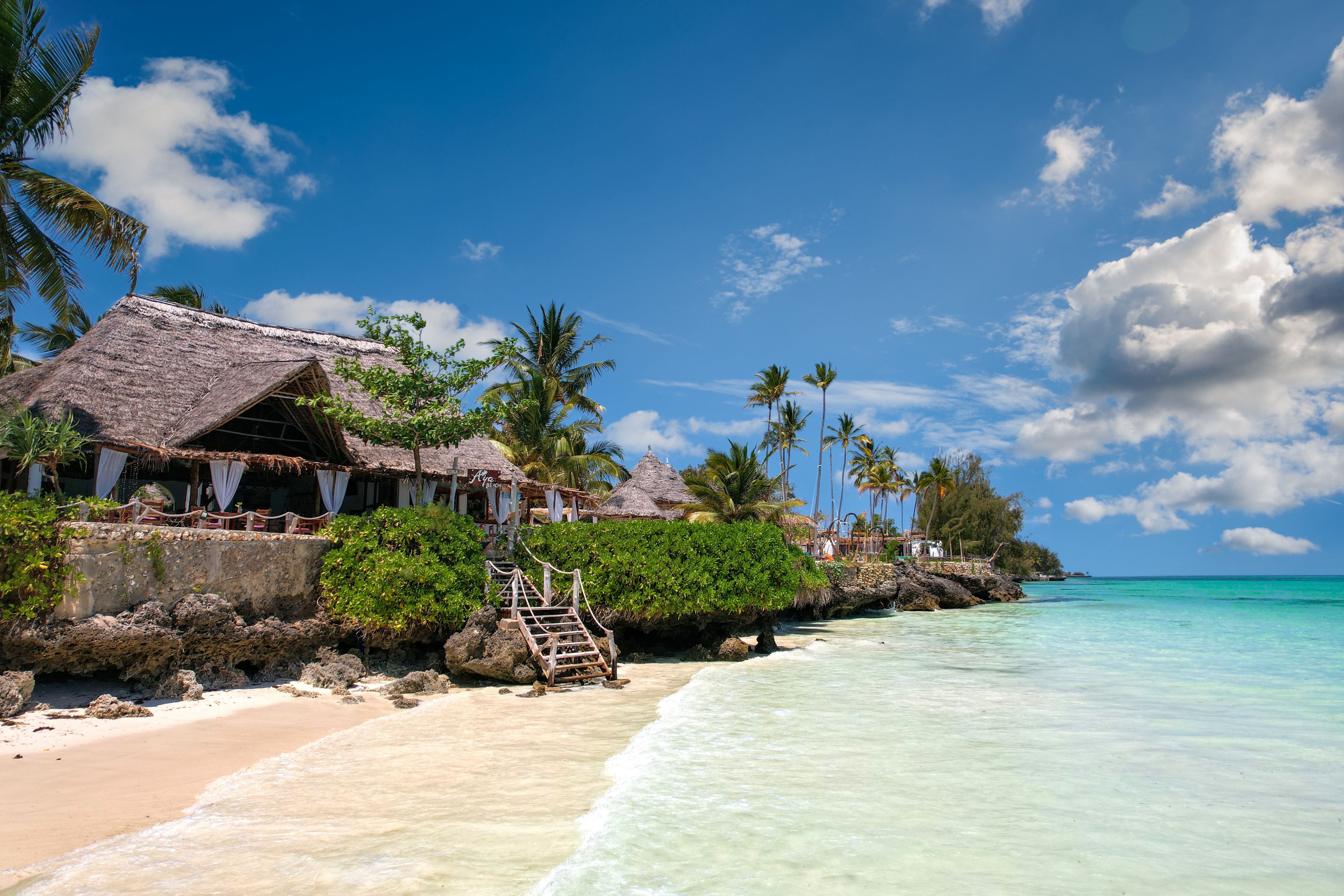
Zanzibar — Mnemba Atoll and the Indian Ocean

Indian Ocean, Tanzania · Spice Island & Reef

Zanzibar

Mnemba Island's atoll reef, Stone Town's carved Omani doorways, and a spice tour through clove plantations that scented the Indian Ocean trade for six centuries. The Spice Island, completely itself.

No need to read on

Skip ahead — plan your Zanzibar escape now.

Tell us your dates and your pace. Personalised suggestions, never confirmed reservations.

Plan My Escape — £19.99

The Case for Going

Six centuries of Indian Ocean trading, a UNESCO city, and a private coral atoll.

Zanzibar was for six centuries the most strategically important island in the Indian Ocean — the hub of the Arab spice and slave trade, the capital of the Omani Sultanate at its most expansive, and the destination from which explorers (Livingstone, Burton, Stanley) organised their African expeditions. Stone Town, the UNESCO-listed old quarter of the main island, is the physical legacy of this history: narrow streets of Omani merchant houses with carved wooden doors of extraordinary intricacy, a 19th-century slave market site occupied now by the Anglican cathedral that the British built as an act of abolition, and a sea-front promenade where the dhow traffic of the historic port remains visible.

The Indian Ocean beach that extends north and east from Stone Town is what most visitors now come for: a coastline of extraordinary colour, with the Indian Ocean's characteristic turquoise clarity above white sand and coral, and the Mnemba Atoll offshore providing the reef system that makes Zanzibar the most accomplished diving destination in East Africa.

The combination — cultural depth in Stone Town, marine richness at Mnemba, and the spice island interior — makes Zanzibar the most rewarding beach extension to a Tanzania safari or an Indian Ocean destination in its own right.

The Destination at a Glance

A Tanzanian archipelago in the Indian Ocean: UNESCO Stone Town, the Mnemba coral atoll, and six centuries of spice trading.

The Zanzibar Archipelago consists of the main island (Unguja, usually called Zanzibar) and the northern island of Pemba, plus smaller islands including Mnemba, Chumbe, and Chapwani. Abeid Amani Karume International Airport (ZNZ) on the main island receives connections from Dar es Salaam (20 minutes, several daily flights), Nairobi (1.5 hours), and Kilimanjaro. Direct UK flights from London connect through Nairobi (Kenya Airways, approximately 9 hours), Addis Ababa (Ethiopian Airlines, 9 hours), or Doha (Qatar Airways, 10 hours).

Stone Town (Mji Mkongwe in Swahili) is the UNESCO-listed historical quarter of Zanzibar Town on the west coast: a 2.6-square-kilometre area of Swahili Arab architecture that has been inhabited continuously since the 16th century and remains one of the few historical trading port cities in Africa that is both living (predominantly resident population) and intact (building fabric largely original). The east and north-east coasts (Nungwi, Kendwa, Matemwe) are the principal beach resort areas; the south-east (Bwejuu, Paje) has the most consistent wind for water sports.

Best Time to Visit

When to go.

Jun – Oct

Long Dry Season

The most reliable Zanzibar window: consistent sunshine, low humidity, calm seas on the west coast. The best diving visibility of the year. Humpback whales south of the island. Combine with the Serengeti Migration.

Dec – Feb

Short Dry Season

Warmer and slightly more humid than the long dry season. The east coast beaches are calmer than in the south-east monsoon. The north-east monsoon brings clear water to the Mnemba reef. Good visibility for snorkelling.

Our Pick

August

The long dry season's most settled month. Mnemba's reef at its clearest. The whale shark season beginning (October peak). The island's most consistent weather window for both diving and beach.

Where to Stay

Five worth knowing.

01

Mnemba Island Lodge

Mnemba Atoll, north-east coast

Six &Beyond's private island property one kilometre offshore from Zanzibar's north-east coast — eleven bandas (thatched beach cottages) on a coral atoll of extraordinary marine richness. Mnemba is accessed by traditional dhow from the mainland; the atoll is encircled by the Mnemba Conservation Area, one of the Indian Ocean's finest protected reef systems. Humpback dolphins, green sea turtles, and the reef fish diversity that makes Zanzibar's offshore atolls the most celebrated diving destination in East Africa are all present within swimming distance of the bandas.

Best for

Couples who want the most marine-focused and most secluded luxury property in the Zanzibar archipelago — the Mnemba reef and the private atoll character are without equivalent in East Africa.

02

The Residence Zanzibar

Kizimkazi, south-west coast

Sixty-six pool villas in a coconut estate above the south-west coast — the quietest and least-developed coast of the island — with a private beach of extraordinary quality. The Residence's villa design (Swahili architecture with private infinity pools facing the Indian Ocean) and the south coast location (where the humpback dolphins that inhabit the channels between Zanzibar and the mainland are most reliably encountered) make it the most complete luxury address on the island for couples who prioritise privacy over north-coast access to Stone Town.

Best for

Couples who want the private pool villa experience on Zanzibar's quietest coast, with humpback dolphin encounters and the finest beach on the south-west of the island.

03

Baraza Resort & Spa

Bwejuu, south-east coast

A thirty-villa boutique resort on the south-east coast of Zanzibar, decorated in the Swahili Arab style of the island's historical trading culture: carved wooden doors, brass lanterns, four-poster beds draped in white cotton, and a courtyard architecture that references the old palaces of Stone Town. The Frangipani Spa is the island's most accomplished wellness offering; the beach at Bwejuu — a shallow, seagrass-bed lagoon of extraordinary calmness — is ideal for swimming at all stages of the tide.

Best for

Couples who want the most architecturally authentic Swahili Arab design experience in a Zanzibar luxury resort — the Baraza's carved doors and courtyard design are the island's most complete cultural aesthetic.

04

Zuri Zanzibar

Kendwa Beach, north-west

A boutique hotel of seventy rooms above Kendwa Beach on the north-west coast — the beach where the famous Kendwa Rocks full moon parties take place, but Zuri's slightly northern position removes it from the party atmosphere without removing it from the beach quality. Kendwa's beach is significant: the north-west coast beaches are the only ones in Zanzibar where the tide difference is minimal, meaning the beach is swimmable at all times (the east coast beaches are inaccessible at low tide when the Indian Ocean retreats to the horizon).

Best for

Couples who want Zanzibar's most consistently swimmable beach (no tidal retreat) in a boutique hotel away from the all-inclusive development of the north coast.

05

Emerson Spice

Stone Town, Unguja

A boutique hotel of eleven rooms in two converted historical townhouses in the heart of Stone Town — the UNESCO-listed Swahili Arab trading city that is the cultural and historical heart of Zanzibar. The rooftop restaurant, The Tower Top, serves dinner to twelve guests at sunset, with views across Stone Town's roofscape and harbour that are the most cinematic in the archipelago. Emerson Spice is not a beach property; it is the correct base from which to understand the island's culture before relocating to the beach resorts for the remainder of the stay.

Best for

Couples who want to begin their Zanzibar visit in the cultural heart — Emerson Spice's Stone Town position and rooftop dinner experience are the most immersive introduction to the island's Swahili Arab heritage.

Spice, Stone Town & Reef

What to do.

Stone Town walking tour

Stone Town's UNESCO-listed streetscape is best navigated on foot with a local guide who can unlock the history behind the carved Omani doorways (the number of brass studs indicates the family's wealth and trading position), the Anglican Cathedral built on the slave market site in 1873, and the Hamamni Persian Baths (the first public baths in sub-Saharan Africa, built by Sultan Barghash in the 1880s). The Old Fort, the Palace Museum, and the Darajani covered market (the island's primary food market, active since 1904) complete the essential Stone Town circuit.

Mnemba Atoll diving

The Mnemba Atoll Conservation Area — the protected marine zone surrounding the private island — is East Africa's finest reef system: 25+ metre visibility in the dry season, turtle encounters at every dive, the full complement of Indian Ocean reef fish, and the occasional humpback dolphin pod transiting the atoll. Mnemba Island Lodge guests have dedicated dive support; the One Ocean dive centre at Matemwe Beach on the north-east mainland serves non-island divers. The whale shark aggregation around Mnemba (October through February) produces sightings of the world's largest fish in water shallow enough for snorkelling.

Spice farm tour

The agricultural interior of Zanzibar's main island has been a spice-growing zone since the Omani Sultanate established clove plantations in the early 19th century. A guided spice farm tour (half-day, departing from Stone Town, visiting one or more farms at Kizimbani and Kidichi) is a multi-sensory education in the raw materials of the Indian Ocean spice trade: cloves picked from the branch, cinnamon bark stripped and curled, nutmeg with its red mace covering intact, vanilla pods in various stages of curing. The guides offer a running demonstration of each spice's culinary and traditional medical uses.

Dhow sunset cruise

The traditional wooden dhows that were the workhorses of the Indian Ocean trading system are still built and operated in Zanzibar by craftsmen using techniques continuous from the 8th century. A sunset cruise from Stone Town harbour on a traditional dhow — through the channel between the island and the mainland as the sky turns the characteristic East African orange and pink — is the most atmospheric evening activity on the island. Most cruises include cold beer or wine, a snorkelling stop above the shallow reef on the west coast's sandbank, and the arrival back in Stone Town harbour as the muezzin calls for Maghrib prayer from the mosques of Stone Town.

What to Eat and Drink

Zanzibari pizza, grilled octopus, and the spice chai of Forodhani Gardens.

Zanzibar's food culture is a fusion of Swahili, Arabic, Indian, and Portuguese influences — the accumulated culinary legacy of six centuries of Indian Ocean trading. The Zanzibari pizza (urojo) — a flatbread of rice flour and egg, filled with minced meat, cheese, and local herbs and cooked on a flat iron griddle — is the island's most distinctive street food, sold from the evening food stalls at Forodhani Gardens in Stone Town from dusk. The grilled octopus (pweza wa kupaka), marinated in coconut milk and grilled over charcoal at the same stalls, is the most characteristic Swahili seafood preparation.

The Emerson Spice rooftop restaurant (Tower Top, twelve seats, dinner by candlelight above Stone Town's roofscape) is the most atmospheric dining setting in Zanzibar and serves the most accomplished interpretation of Swahili Arab cooking: the biryani (rice cooked in a sealed pot with meat, dried fruits, and a spice blend of Zanzibar's own production) is the correct thing to order. The Forodhani Night Market — the evening food market in the old fort gardens — is the democratic version: fresh juice, grilled seafood, and the sugar cane juice press that never stops turning.

The Bespoke Horizons View

Africa's most complete island destination.

Zanzibar works as the perfect finale to a Tanzania safari: the Indian Ocean beach after the Serengeti dust, the dhow sunset after the jeep game drive. But it also works in its own right — Stone Town has a historical depth that few African cities approach, and Mnemba's reef is genuinely exceptional.

We build the ten-night Tanzania trip as Serengeti (five nights, migration timing dependent) and Zanzibar (five nights, split between two nights at Emerson Spice in Stone Town and three nights at the Residence or Mnemba). The Stone Town spice farm morning, the Mnemba dive, and the Forodhani night market between them cover the island's essential registers.

The dhow at sunset over the channel, Stone Town's minarets behind, the reef below. The Indian Ocean trading route, still making sense.

Essential Information

The practical detail.

Currency
Tanzanian Shilling (TZS); USD accepted at all hotels and tourist areas
Language
Swahili (Kiswahili) and English; English widely spoken at hotels
Flights from UK
9–10 hours (via Nairobi, Addis Ababa, or Doha; no direct UK service)
Time zone
GMT +3
Visa
e-Visa required for UK citizens: apply online at tanzaniaimmigration.go.tz, USD 50
Tides
The east coast beaches have extreme tidal variation — the sea retreats to the horizon at low tide; choose west or north-west beaches for all-day swimming
Ramadan
Zanzibar has a majority Muslim population; modest dress in Stone Town and villages is appreciated
Budget range
£300–£1,500+ per person per night at Mnemba Island and the finest villa resorts

Frequently Asked

Questions, considered.

Plan Your Zanzibar Escape

Your personalised Zanzibar itinerary, in your inbox within minutes.

Two nights at Emerson Spice in Stone Town, the spice farm morning, and Mnemba or The Residence for the beach — the Zanzibar itinerary that does justice to six centuries of Indian Ocean history and the finest reef in East Africa.

Bespoke Horizons provides personalised travel planning and itinerary suggestions. We are not a booking agent and all recommendations are non-binding.

Ready to plan your Zanzibar escape?

Plan My Escape — £19.99