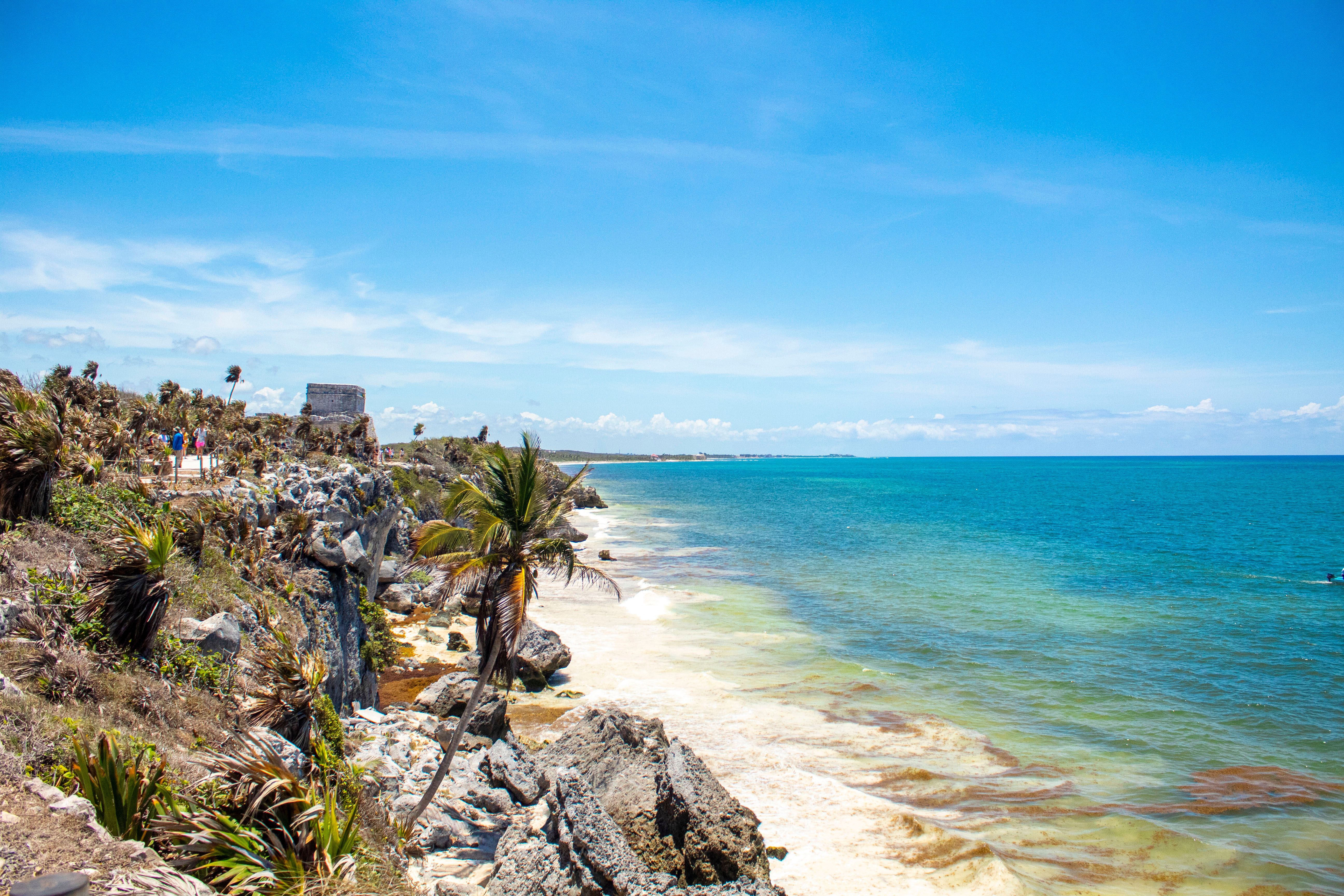
Tulum — Mayan ruins on the Caribbean cliff and the cenote swimming below

Mexico, Yucatán Peninsula · Mayan Coast

Tulum

Azulik's suspended treehouses above the jungle canopy. Cenote water filtered by limestone to perfect clarity. Mayan ruins on a cliff above the Caribbean. The Yucatán's most compelling luxury destination.

No need to read on

Skip ahead — plan your Tulum escape now.

Tell us your dates and your pace. Personalised suggestions, never confirmed reservations.

Plan My Escape — £19.99

The Case for Going

The only resort destination in the Americas where the hotel is in the jungle, the swimming is in a sacred limestone sinkhole, and the ruins are directly above the Caribbean.

Tulum is the most discussed and most photographed luxury beach destination in Latin America — and for reasons that go beyond the Caribbean water. The Tulum coast's defining characteristic is its combination of elements that occur nowhere else simultaneously: the eco-hotel strip of barefoot-luxury boutique properties built from local materials in the jungle directly behind the beach; the cenotes (the sacred limestone sinkholes that access the world's largest underground river network); and the Tulum archaeological site (the only Mayan walled city on the Caribbean, positioned on a cliff with the Caribbean stretching south to infinity below).

The Tulum boutique hotel scene — concentrated on the 15-kilometre Boca Paila road between Tulum town and the Sian Ka'an Biosphere Reserve — is the most sophisticated eco-luxury destination in North America: Azulik's suspended jungle treehouses, Nomade's yoga-and-DJ-residency programme, and the new generation of spa hotels (Chablé Maroma) that reference Mayan healing traditions in architecturally ambitious frameworks have made Tulum the most internationally discussed hotel destination between Miami and Patagonia.

The cenotes — 6,000+ of them under the Yucatán Peninsula, connected by a river system of 1,400 kilometres mapped so far — provide the most physically distinct swimming experience in travel: 24°C limestone-filtered water of drinking clarity, in pools from cave-dark underground chambers to sunlit open-air amphitheatres. The Gran Cenote, Dos Ojos, and the Cenote Azul within 15 kilometres of Tulum are the three most visited; the lesser-known cenotes of the Cobá jungle are accessible by bicycle.

The Destination at a Glance

A Yucatán resort town on the Caribbean coast: the Tulum hotel zone (15 km of eco-hotels on the beach road), the archaeological site, and access to 6,000+ cenotes.

Tulum is 130 kilometres south of Cancún International Airport on the Carretera Costera 307 highway — 90 minutes by car or private transfer. The new Tren Maya railway (Cancún to Tulum) provides an alternative when fully operational. Tulum divides into two zones: Tulum Pueblo (the town, with restaurants, shops, the ADO bus terminal, and affordable accommodation) and the Zona Hotelera (the hotel road, 2 kilometres from the town, where the boutique eco-hotels are located directly behind the beach).

The Sian Ka'an Biosphere Reserve — a UNESCO World Heritage Site of 526,000 hectares (jungle, wetlands, coral reef, and mangrove) immediately south of Tulum's hotel zone — is the natural boundary that prevents development extending further south and is the reason the Tulum coast retains its ecosystem character. Day trips into Sian Ka'an (boat tours through the lagoon systems, snorkelling on the Caribbean reef, bird watching in the mangrove) are organised from the Tulum hotel zone.

Best Time to Visit

When to go.

Dec – Apr

Dry Season

Tulum's principal season: low humidity, consistent sunshine, 26–30°C. The Christmas–New Year period is peak demand (book Azulik 6+ months in advance). February–April is the sweet spot: post-Christmas rates, consistently perfect weather.

May – Jun

Shoulder

Building humidity and occasional rain, but lower rates and fewer visitors. The Caribbean water is warmest (30°C). Sea turtle nesting begins at Tulum's beach (May–October). Good snorkelling conditions.

Our Pick

February

The optimal combination: post-January peak rates, consistent dry weather (28°C, no humidity), the Caribbean at its clearest for snorkelling, and the Tulum hotel zone at its least crowded before the spring break surge begins in March.

Where to Stay

Five worth knowing.

01

Azulik Tulum

Tulum Beach Road, jungle zone

The most visually extraordinary hotel in Mexico — a network of treehouses and jungle villas connected by suspended bridges above the Tulum jungle canopy, with private plunge pools, open-air bathtubs, and no glass in any window (the jungle is the wall). Azulik is fundamentally an art installation that happens to accommodate guests: the Uh May Gallery (the largest gallery complex in Mexico, hosting international contemporary art exhibitions across 11 interconnected spaces) and the Muluk restaurant (suspended above the jungle, open only to hotel guests) make Azulik the most culturally ambitious hotel project in the Mexican Caribbean. Adults-only, vegan menu on request, plastic-free throughout.

Best for

Couples who want the most aesthetically extraordinary hotel in Mexico — the suspended bridges, the open-jungle architecture, and the Uh May Gallery make Azulik the most discussed hotel property in the Yucatán.

02

Chablé Maroma

Maroma Beach, Riviera Maya

Fifty rooms and suites in a luxury eco-hotel on Maroma Beach — the stretch of Riviera Maya coastline that consistently polls as Mexico's finest beach, with the widest sand, the most transparent Caribbean water, and the lowest tourist density on the Yucatán's hotel coast. The Chablé Maroma spa (Chaká, operated by the Chablé brand's Mayan wellness philosophy) conducts temazcal ceremonies, traditional Mayan medicinal plant treatments, and water therapy in a dedicated spa villa complex. The hotel's architectural integration (concrete and local stone, open-sided corridors, the jungle continuous with the hotel interior) makes it the most architecturally considered luxury hotel on this coast.

Best for

Couples who want the finest beach on the Riviera Maya combined with the most accomplished Mayan wellness spa programme — the Chaká spa's temazcal and plant medicine traditions are the most authentic in the Yucatán.

03

Nomade Tulum

Tulum Beach Road

A boutique hotel of seventeen tents and bungalows on the Tulum beach road — the original 'glamping in the jungle' concept in Tulum, now refined into a holistic wellness destination with a daily programme of yoga, meditation, shamanic ceremonies, and temazcal sweat lodge. Nomade's beach position (the Tulum hotel zone beach, with the Mayan ruins visible on the cliff 1 kilometre south) and the combination of beach, wellness, and late-night music programme (Nomade's DJ residency and live music line-up is the most celebrated on the Tulum coast) make it the most socially vibrant of the Tulum boutique properties.

Best for

Couples who want the most socially engaged Tulum experience — the Nomade wellness programme during the day and the music and communal dining at night are the most distinctive combination on the Tulum coast.

04

Be Tulum

Tulum Beach Road

Twenty-six suites in a bare-concrete-and-wood boutique hotel on the beach road — the most design-consistent of the Tulum property portfolio, with a minimalist aesthetic (white linen, raw concrete, driftwood furniture) that references the Tulum jungle architecture vocabulary without the theatrical excess of Azulik. The Be Tulum beach (the widest section of the Tulum hotel zone beach) and the rooftop cenote (a natural limestone pool incorporated into the rooftop design — the only hotel in the Yucatán with a rooftop cenote) are the property's defining features. Adults-only.

Best for

Couples who want the most minimally designed and consistently aesthetic boutique experience in Tulum — Be Tulum's rooftop cenote and its restrained design vocabulary are the most photogenic on the hotel road.

05

Papaya Playa Project

Tulum Beach Road, southern zone

A festival-hotel hybrid of 160 bungalows and camping sites on the southernmost section of the Tulum beach road, positioned between the jungle and the Caribbean in a format that deliberately blurs the line between boutique hotel and music festival residency. Papaya Playa's Full Moon Party (monthly, the largest beach party in the Mexican Caribbean) and the year-round music and arts programme make it the social epicentre of Tulum's beach scene; the bungalows (from palm-thatched basic to architect-designed premium beach cabañas) accommodate every commitment level to the programme.

Best for

Couples who want the most socially immersive and music-programme-focused Tulum experience — the Full Moon Party and the curated DJ and live music residency are the most celebrated events in the Mexican Caribbean.

Cenotes, Ruins & Jungle Yoga

What to do.

Gran Cenote and Dos Ojos

The cenote experience is most accessible at Gran Cenote (4 kilometres from Tulum town, reachable by bicycle): an open-air limestone pool of extraordinary clarity (visibility 10+ metres), surrounded by stalactites and stalagmites where an underground chamber opens to the sky, with resident freshwater turtles (Pseudemys scripta, the red-eared slider, endemic to the Yucatán cenote system) swimming around snorkellers. Dos Ojos (two interconnected cenotes at 7 kilometres from Gran Cenote, accessed by a short walk through jungle) offers a more complex cave snorkelling experience: the underground corridor between the two cenotes passes through a cave system where the sunlight enters from the ceiling openings, creating the shafts-of-light effect that the Yucatán's best cenote photography captures.

Tulum ruins at dawn

The Tulum archaeological site opens at 08:00; arriving at this time (before the tour buses from Cancún arrive at 09:30) provides a private-feeling visit in the flat morning light that the site's east-facing cliff orientation produces. The Castillo (the main pyramid, 12 metres high, positioned on the cliff edge above the Caribbean) in the early morning light, with the sea below and the jungle extending behind, is one of the most photographed Mayan sites in the world for good reason — the combination of tropical sea, cliff, and Mayan architecture doesn't occur anywhere else. The beach within the site walls (accessible via steps from the cliff) is swimmable; nesting sea turtles use it in summer.

Temazcal ceremony

The temazcal (from the Nahuatl temazcalli, 'house of heat') is a pre-Columbian Mesoamerican sweat lodge: a low, dome-shaped clay structure over a pit of heated volcanic stones, enclosed by blankets or palm fronds, in which participants sit and sweat through a ceremony conducted by a shaman (the temascalero) involving medicinal plant steam, chant, and prayer. The temazcal experience at Azulik, Chablé Maroma, or any of the Tulum spa hotels is conducted with authentic ceremony rather than as a tourist recreation — the temascalero's knowledge (of the plant preparations, the prayer sequences, and the therapeutic intentions) is traditional and specific to the Mayan healing tradition. The physical intensity (45–60 minutes in temperatures of 50°C+) combined with the ceremonial context produces an experience that is simultaneously sauna, meditation, and cultural immersion.

Cobá cycling

The Cobá archaeological site — a Mayan city of 50,000 people at its 600 CE peak, now accessible via a 3-kilometre bicycle path through the jungle from the town of Cobá (45 minutes from Tulum) — is the least-touristy major Mayan site on the Yucatán Peninsula. The Nohoch Mul pyramid (the tallest in the Yucatán, 42 metres, currently closed to climbing) and the network of sacbé (raised white limestone causeways) that connected Cobá to satellite cities as far as 100 kilometres away are the principal features; the surrounding jungle is inhabited by Yucatán spider monkeys, coatimundis, and the Yucatán grey squirrel. Cycling through the jungle to the pyramid base and then swimming in the cenotes at the site boundary completes the most physically varied day trip available from Tulum.

What to Eat and Drink

Cochinita pibil tacos, mezcal negronis, and the best octopus tostada outside Mexico City.

Tulum's restaurant scene is the most internationally discussed in Latin America after Mexico City and Lima: Hartwood (the wood-fire cooking of Eric Werner, who runs the restaurant entirely on open flame with ingredients sourced daily from local farms and fishermen) is the most celebrated restaurant in the Mexican Caribbean; Arca (Mexican regional cooking using jungle herbs and Yucatán ingredients, also wood-fired) and Gitano (mezcal cocktails and a social scene that draws an international crowd to a palm-shaded outdoor room) complete the essential Tulum restaurant circuit. Reservations at Hartwood are the most competitive in Mexico: the restaurant accepts reservations only at 14:00 for the following day's dinner, by telephone.

The food of Tulum Pueblo (the town, as opposed to the hotel zone restaurants) is the correct economic counterpoint: Los Aguachiles (cochinita pibil tacos — the Yucatán's slow-roasted achiote pork — the best in the region), El Camello Jr (ceviche, tostadas, and seafood cocktails at the town market standard), and the taco stands on the main road at lunchtime. Mezcal (the Oaxacan agave spirit that is more complex and more terroir-specific than its better-known cousin tequila) is the definitive Tulum drink; the mezcal bar at Gitano and the cocktail programme at Azulik's Muluk restaurant are the most accomplished.

The Bespoke Horizons View

The most culturally layered beach destination in the Americas.

Tulum has the reputation of a party destination (the DJ culture, the social media presence) that somewhat obscures its genuine cultural depth: the cenote system is one of the most remarkable hydrological features on earth; the Mayan archaeological site is genuinely significant; and the traditional healing culture (temazcal, cacao ceremony, medicinal plant knowledge) is more authentic in Tulum than anywhere in the Mexican Caribbean.

Seven nights is the correct Tulum allocation: two mornings at the ruins (one at 08:00 for the site, one for the beach below), two cenote days, one temazcal, one Hartwood dinner, and enough beach time to justify the trip. Azulik for the architecture; Chablé Maroma for the beach and spa. The combination of both (split between the two) is the most complete Tulum experience.

The Castillo above the Caribbean at 08:15, before anyone else arrives. The jungle behind, the sea below, and a Mayan city that chose the most beautiful cliff on the coast to build its last fort. Good choice.

Essential Information

The practical detail.

Currency
Mexican Peso (MXN); USD widely accepted throughout the Riviera Maya tourist zone; most Tulum hotels price and accept payment in USD
Language
Spanish; English spoken throughout the tourism zone and at all hotels
Flights from UK
10–11 hours to Cancún International (CUN) from London (Virgin Atlantic direct, British Airways, or via Madrid and Miami); Tulum is 130 km south of Cancún — 90 minutes by highway or 2 hours by the Tren Maya (when operational)
Time zone
GMT -5 (CST; no daylight saving in Quintana Roo state)
Visa
No visa required for UK citizens; Tourist Card (FMM) required at entry, issued free on arrival or via airline; stays up to 180 days
Water
Do not drink tap water; buy bottled water or use the hotel's filtered water; this applies to ice in local restaurants outside hotels
Hurricane season
The Caribbean hurricane season runs June–November; Tulum has been directly impacted by hurricanes in recent decades; travel insurance with hurricane cover is strongly recommended
Budget range
Azulik from £400 per villa per night; Chablé Maroma from £500; Be Tulum from £250; Nomade from £200

Frequently Asked

Questions, considered.

Plan Your Tulum Escape

Your personalised Tulum itinerary, in your inbox within minutes.

Azulik's jungle treehouses, the Gran Cenote and Dos Ojos, the Castillo at dawn, and the Hartwood dinner — the Tulum itinerary that uses the Yucatán fully, not just the beach.

Bespoke Horizons provides personalised travel planning and itinerary suggestions. We are not a booking agent and all recommendations are non-binding.

Ready to plan your Tulum escape?

Plan My Escape — £19.99