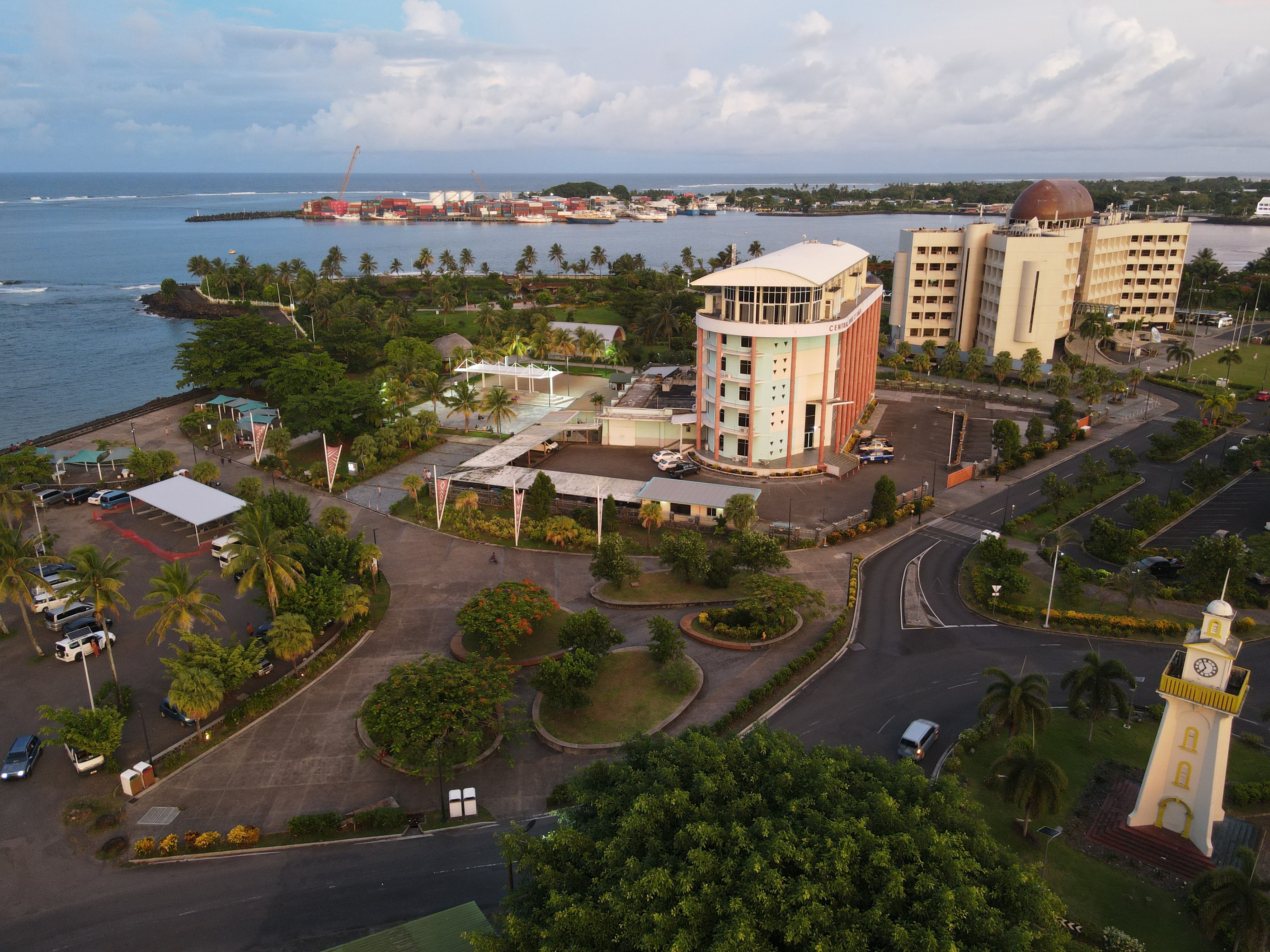
Samoa — the tropical reef, rainforest, and volcanic coastline of the South Pacific's most culturally intact Polynesian nation

Independent State of Samoa, South Pacific · Fa'a Samoa · The Samoan Way

Samoa

The To Sua Ocean Trench at 09:00. The Mount Vaea tomb of Robert Louis Stevenson. The palolo worm harvest in the pre-dawn reef. The oldest tattooing tradition on earth. Fa'a Samoa — the most intact traditional Polynesian culture in the South Pacific, in the island nation that skipped a day to align itself with tomorrow.

No need to read on

Skip ahead — plan your Samoa escape now.

Tell us your dates and your pace. Personalised suggestions, never confirmed reservations.

Plan My Escape — £19.99

The Case for Going

The Pacific island nation with the most intact traditional Polynesian culture, the most extraordinary single natural attraction in the South Pacific, and a literary heritage that draws from Stevenson's 1890 conviction that these islands were the finest place on earth to die.

Samoa (the independent western islands of the Samoan archipelago, independent since 1962, the first Pacific nation to achieve independence in the post-war era) is the least commercially developed of the luxury South Pacific destinations and the one with the strongest claim to an authentic encounter with a living traditional culture. Fa'a Samoa (the Samoan Way — the aiga extended family system, the matai chiefly governance, the communal land tenure, the fa'alavelave mutual obligation ceremonies) is not a cultural performance arranged for tourism but the active social and political structure within which the Samoan population lives daily. The 94% of Samoan land held under customary tenure (neither privately owned nor state-owned but family land governed by chiefly authority) and the Sunday church culture (the most church-attending nation per capita in the Pacific, the Catholic, Congregationalist, Methodist, and LDS communities providing the ritual structure of weekly Samoan life) mean that the culture encountered in Samoa is genuine rather than reconstructed.

The To Sua Ocean Trench (a collapsed lava tube filled with ocean water, the single most visually extraordinary natural swimming site in the South Pacific), the Robert Louis Stevenson Museum (Villa Vailima, his home for four years, the tomb at the summit of Mount Vaea with the most famous epitaph in Pacific literature), and the tatau tradition (the Samoan pe'a and malu — the oldest continuously practised tattoo tradition in the world, the origin of the English word 'tattoo' — practised by master tufuga ta tatau using traditional hand-tapping instruments) make Samoa the South Pacific destination with the most concentrated literary, cultural, and natural experience.

The infrastructure is limited. The traffic between cultural encounters is forest and reef and volcanic coastline. Samoa is for the Pacific traveller who wants to go somewhere that hasn't been finished by the tourism industry yet.

The Destination at a Glance

Two main islands: Upolu (the hub — Apia the capital, the south coast resorts, the To Sua Trench, the Stevenson Museum) and Savaii (the remote, unchanged, larger island — Le Lagoto, the Afu Aau waterfall, the ancient star mounds).

Upolu (the smaller and more visited main island, home to Apia the capital and 75% of Samoa's population) provides the most concentrated itinerary: the south coast circuit (To Sua Ocean Trench, the Lalomanu Beach — the most photographed beach in Samoa, a white sand arc flanked by coconut palms at the island's eastern tip — the Piula Cave Pool, and the Sinalei and Saletoga south coast resorts), the Apia cultural circuit (the Robert Louis Stevenson Museum and Mount Vaea tomb, the Palolo Deep Marine Reserve for snorkelling, the Sunday flea market and the fa'asamoa church visit), and the cross-island road (the trans-Upolu highway through the centre of the island, from Apia to the south coast, passing through the most intact remnant of Upolu's original tropical forest).

Savaii (the larger island, 1,700 square kilometres, accessible by the 1.5-hour ferry from Mulifanua on Upolu) is the unchanged Samoa that Upolu's increasing tourist circuit cannot provide: the largest active lava field in the southern hemisphere (the 1905–1911 Saleaula lava eruption field on the northeast coast, with the half-submerged village ruins still visible under the solidified lava flow), the ancient star mounds (the Pulemelei Mound — the largest ancient structure in Polynesia at 65 by 60 metres, built between 1100 and 1400 CE, its function unknown), and the most pristine reef available in the Samoan archipelago. Le Lagoto on the northwest coast is the reason to stay.

Best Time to Visit

When to go.

May – Oct

Dry Season

The most reliable weather: lower humidity (average 70%), clearest reef visibility, and the least risk of the heavy rain that can make the To Sua Trench access road impassable. The south coast resorts are at their most comfortable and the reef snorkelling at its best.

Oct – Nov

Palolo Season

The palolo worm harvest (the most anticipated annual food event in Samoa, the pre-dawn reef swarming in October and November) is the most unique seasonal experience in the Pacific. October–November visitors who time their stay around the lunar calendar can witness — and participate in — one of the most extraordinary annual cultural-natural events in the South Pacific.

Our Pick

July

The peak of the dry season: the best To Sua Trench swimming conditions, the clearest south coast reef visibility, and the most comfortable evening temperatures for outdoor fale dining. The Sinalei and Saletoga at their most enjoyable.

Where to Stay

Five worth knowing.

01

Sinalei Reef Resort & Spa

Siumu, Upolu Island

28 fales and villas on the south coast of Upolu Island — the finest luxury resort in Samoa and the property that most completely realises the promise of fa'a Samoa (the Samoan Way, the traditional cultural code that governs all social and family life in the archipelago) within a luxury hotel context. The Sinalei's position on the Siumu coast (the most accessible section of the south coast, 45 minutes from Faleolo Airport, on a private beach with a functioning fringing reef accessible directly from the resort beach) and the spa programme (the most comprehensive spa in Samoa, incorporating traditional Samoan healing practices — the hot stone massage using the same volcanic river stones used in Samoan earth ovens, the coconut oil body treatment using the pure-pressed coconut oil of the Samoan estates, the umu-heat body wrap using the earth-oven heat technique as the distinctive treatment on the menu) make it the most culturally embedded luxury property in Samoa. The Sinalei is the consistent choice of the Samoan government for official visitor accommodation and the repeat destination for the returning Pacific traveller who wants the most refined single property in the country.

Best for

Couples who want the most refined and most culturally authentic luxury resort experience in Samoa — the Sinalei's south coast beach position, the traditional Samoan spa programme, and the government-endorsed quality standard make it the most complete luxury property in the archipelago.

02

Le Lagoto Beach Resort

Savaii Island

Ten beachfront fales on the northwest coast of Savaii Island — the most remote and most pristine luxury property in Samoa, accessible by the 1.5-hour Samoa Shipping Corporation ferry crossing from Upolu to the world's most unchanged Polynesian island. Le Lagoto's position on Savaii (the larger and far less visited of the two main Samoan islands, with a fraction of Upolu's tourist infrastructure, the island covering 1,700 square kilometres of which 80% is undeveloped rainforest and farmland) and the property's remote beach (the northwest coast of Savaii has the most sheltered and most consistently calm beach water in the country, protected from the prevailing southeastern swell by the island's bulk) make it the most genuinely isolated luxury property in Samoa. The adjacent snorkelling reef (accessible from the beach, one of the least dived reefs in the South Pacific — Savaii's distance from the Upolu tourist circuit means the reefs are in the most pristine condition available in Samoa) and the walking access to the Afu Aau waterfall (the most accessible freshwater waterfall on Savaii, 20 minutes from the resort) provide the most natural environment available at any Samoan luxury property.

Best for

Couples who want the most isolated and most pristine luxury retreat in Samoa — Le Lagoto's Savaii Island position, the undived fringing reef, and the 1.5-hour ferry crossing from the Upolu tourist circuit make it the most genuinely remote luxury property in the South Pacific.

03

Return to Paradise Resort

Lefaga, Upolu Island

Named for the 1953 Gary Cooper film directed by Mark Robson (an adaptation of the James Michener Pacific Islands novel, shot on the Lefaga beach that the Resort now occupies) — the Return to Paradise Beach is the most cinematically resonant single beach in Samoa, a 2-kilometre curve of white sand on the south-west coast of Upolu, enclosed by coconut palms and reef in the form of a classical Pacific paradise location. The 40 fales and rooms on the Lefaga beach provide the most romantically storied accommodation in Samoa: the beach on which the film was shot, the island landscape unchanged since 1953, and the reef that was too perfect for a 1950s studio to fabricate. The resort's Sunday fia fia cultural evening (the most elaborate traditional entertainment programme available at any Samoan resort, with the fire dancing, the Samoan slap dance, and the umu earth-oven feast presentation forming the most theatrically complete single evening in Samoan tourism) and the beach's own swimming quality (the Lefaga beach is the finest swimming beach on Upolu's west coast, the enclosed lagoon providing calm water in all swell directions) make it the most atmospherically charged property in the country.

Best for

Couples who want the most romantically storied and most atmospherically distinctive luxury resort in Samoa — the Return to Paradise's 1953 film heritage, the Lefaga beach quality, and the Sunday fia fia cultural programme make it the most historically evocative property in the archipelago.

04

Sheraton Samoa Aggie Grey's Hotel & Bungalows

Apia, Upolu Island

161 rooms and bungalows in Apia — the most historically significant hotel in Samoa and the only internationally branded luxury property in the capital, the hotel built on the site of Aggie Grey's original guesthouse (Aggie Grey, a mixed-heritage Samoan woman who opened a wartime hamburger stand for American soldiers stationed in Samoa in 1942, which became the most celebrated Pacific island hotel of the mid-twentieth century, the hotel that James Michener used as the model for 'Bloody Mary' in South Pacific, and the regular stopover of every major Pacific literary and film personality from the 1940s through the 1980s). The Sheraton's Apia Harbour location (the most convenient hotel position in Samoa for the Robert Louis Stevenson Museum, the Faleolo market, the central Apia street food circuit, and the Sunday fa'a Samoa church service circuit — all within a 20-minute drive) and the hotel's historical dining room (the most interesting restaurant context in Samoa, in the building that Aggie Grey herself supervised for 40 years) make it the best base for the culturally and historically focused Samoa itinerary.

Best for

Couples who want the most historically significant and most convenient Apia base for the Robert Louis Stevenson Museum, the Apia cultural circuit, and the central Upolu island experiences — the Aggie Grey's heritage, the harbour location, and the international Sheraton standard make it the best-positioned urban luxury property in Samoa.

05

Saletoga Sands Resort & Spa

Saletoga, Upolu Island

42 fales and units on the south coast of Upolu — the most conveniently positioned luxury resort for the To Sua Ocean Trench visit (the most extraordinary natural swimming experience in Samoa, 10 minutes from the resort by car) and the most consistently praised mid-range luxury property on the south coast for the couple who wants the south coast location without the Sinalei's full-service luxury pricing. The Saletoga's beach (a sheltered south coast beach with the most consistent snorkelling reef available within direct beach access on Upolu) and the spa programme (incorporating traditional Samoan remedies alongside the standard international treatment menu) provide a complete beach resort experience at a price point that makes a multi-night south coast stay more accessible. The resort's position on the south coast circuit (the To Sua Ocean Trench, the Lalomanu Beach, the Piula Cave Pool, and the Robert Louis Stevenson Museum are all within 30 minutes of the property) makes it the ideal base for the culturally active south coast programme.

Best for

Couples who want the most conveniently positioned south coast luxury resort for the To Sua Ocean Trench and Lalomanu Beach programme — the Saletoga's south coast position, the direct beach reef snorkelling, and the 10-minute proximity to To Sua make it the best-value luxury base for the south coast Upolu circuit.

Trench, Tomb & Tatau

What to do.

To Sua Ocean Trench

The To Sua Ocean Trench (30 metres across, 30 metres deep, connected to the sea by an underground lava tunnel) at 09:00 when the early light penetrates the full depth of the collapsed tube and the water colour shifts from green to turquoise as the sun's angle changes — this is the most photographically extraordinary natural swimming site in the South Pacific, a place that requires the physical descent (the 20-metre wooden ladder down the trench wall to the swim platform) to understand. The experience of swimming in a sealed volcanic chamber, the walls rising 30 metres above you to a circle of sky, the water temperature warmer than the ocean by 2–3°C in the enclosed tube, is unlike any other swimming experience available in the Pacific. The village entry fee (approximately £7) and the 45-minute drive from the south coast resorts make it the most accessible extraordinary natural experience in Samoa. Arrive by 09:00 at the latest in the dry season — the trench has a limited capacity and the experience is diminished when the platform is crowded.

Mount Vaea and the Stevenson tomb

The Mount Vaea summit trail (from Villa Vailima, the Robert Louis Stevenson Museum at the trail's start, 2 hours return on a well-maintained but steep path through the secondary forest of the Vailima estate, rising to 472 metres above sea level) leads to the tomb of Robert Louis Stevenson at the summit — the most literarily significant single site in the Pacific. The tomb inscription ('Under the wide and starry sky, / Dig the grave and let me lie. / Glad did I live and gladly die, / And I laid me down with a will' — written by Stevenson himself, the requiem poem composed in 1884, 10 years before his death) and the view from the summit (across Apia Harbour and the reef to the sea, the same view Stevenson had from his study window at Vailima in his final years) make the summit the most affecting single location in Samoa. The Museum visit before the walk (2 hours for the full museum, the first-floor manuscript collection the most rewarding section) provides the biographical context that makes the tomb summit more meaningful.

Lalomanu Beach and the east coast

Lalomanu Beach (at the eastern tip of Upolu, 90 minutes from Apia on the coastal road, the beach a 2-kilometre arc of white sand framed by coconut palms and the village's small fale guesthouses) is the most photographed beach in Samoa and the most frequently cited as the finest traditional beach experience available in the country — the fale (open-sided Samoan sleeping huts, directly on the beach, the most immediate sand-to-sleeping-surface ratio of any Pacific accommodation) are operated by the Lalomanu village families and provide the most authentic Samoan beach experience available to visitors. The Lalomanu reef (accessible directly from the beach, the coral reef in reasonable health for an easily accessible south coast site) and the morning light on the eastern-facing beach (the sun rising directly in front of the beach, the light on the water at 07:00 the most rewarding photography light available on the Samoan coast) make it the most essential half-day or overnight addition to any Upolu south coast itinerary.

The Saleaula lava field on Savaii

The Saleaula lava field (on the northeast coast of Savaii, accessible by the cross-island road from the Salelologa ferry terminal, 90 minutes) is the largest active lava field in the southern hemisphere and the most dramatic geological landscape in Samoa: the 1905–1911 eruption of the Matavanu volcano (the last major eruption in Savaii's history) produced a lava flow that overwhelmed the entire north-east coast, burying the village of Saleaula and the church above it under 15 metres of solidified basalt. The church (its partially submerged walls still visible at the lava field's edge, the bell tower protruding from the black rock surface) and the lava field's surface (a vast plain of dark, fractured basalt with occasional steam vents and the faint smell of sulfur on warm days) provide the most geologically dramatic single landscape in Samoa. The adjacent village of Saleaula operates a community guide programme for the lava field visit.

What to Eat and Drink

The umu earth oven, the palusami, the Apia fresh market, and the palolo worm consumed raw from the dawn reef.

Samoan cuisine is the most directly rooted in traditional Pacific food practices of any Polynesian island group visited by international luxury travellers. The umu (the Samoan earth oven, fired with volcanic stones, used for Sunday meals in most Samoan households and for the fa'asamoa communal celebrations) produces the most authentic version of the Pacific island feast: the palusami (taro leaves wrapped in coconut cream, cooked in the umu until the leaves become a rich, savoury packet of concentrated coconut and taro flavour — the most specifically Samoan single dish), the fa'ausi (taro cooked in coconut cream and caramelised sugar, the national dessert), and the oka (raw fish in coconut cream and lime, the Samoan version of the Polynesian raw fish dish, distinguished from the Tahitian version by the addition of spring onion and sea salt from the Samoan reef flats).

The Apia fresh market (the central Fugalei Market in Apia's commercial centre, open daily, most active on Saturday mornings) provides the best single overview of Samoan agricultural production: the taro (the staple crop in over 30 varieties, more varieties than are available anywhere else in the Pacific), the breadfruit (in season October–February, best consumed as the baked whole breadfruit — ulu — at the market's food stalls), and the coconut cream (freshly pressed at the market from mature coconuts, available by the litre for resort self-catering). Giordano's Italian Restaurant (the most consistently praised independent restaurant in Apia, a 1970s-founded Italian family restaurant that has served every visiting dignitary to Samoa for 50 years) and Scalini (the most fashionable modern restaurant in Apia, Pacific fusion kitchen) provide the best international dining circuit available in the capital.

The Bespoke Horizons View

The Pacific island destination that hasn't been smoothed into a resort brochure yet — the most intact traditional culture, the most extraordinary single natural attraction, and a literary legacy that Stevenson chose over Edinburgh, London, and the rest of the world.

Samoa is for the traveller who has done Bora Bora and Fiji and wants the Pacific without the infrastructure that comes with two million visitors a year. The luxury accommodation is good; the Sinalei is genuinely refined. But the extraordinary experiences in Samoa happen outside the resort: the To Sua Trench at 09:00, the Mount Vaea summit in the early morning before the day tour groups arrive, the Lalomanu village fale at dawn with the east-facing beach in the first light.

Our recommendation: three nights at the Sinalei Reef Resort (the south coast circuit, the To Sua Trench, the Lalomanu Beach overnight), two nights in Apia (the Robert Louis Stevenson Museum and Mount Vaea, the Fugalei Market, the Palolo Deep snorkel), and three nights at Le Lagoto on Savaii (the Saleaula lava field, the Pulemelei star mound, the pristine northwest reef). Eight nights total.

Stevenson wrote about Samoa: 'I never lived anywhere so beautiful.' He had tried the Alps, the South of France, and the rest of Europe. He died here at 44 and asked to be buried at the summit. Read him before you come. Understand why when you arrive.

Essential Information

The practical detail.

Currency
Samoan Tālā (WST); 1 GBP ≈ 2.80 WST. USD accepted at most tourist businesses; Australian dollars accepted in some tourist areas
Language
Samoan (official, the most widely spoken Polynesian language in the world with approximately 500,000 native speakers); English (official, spoken by most tourism-sector workers)
Flights from UK
Faleolo International Airport (APW), Apia, from London via Auckland (Air New Zealand, 25 hours) or via Sydney (Samoa Airways/Virgin Australia, 26 hours). No direct service from London; minimum one Pacific Hub connection required
Time zone
GMT +13 (WST; Samoa standard time, west of the International Date Line since Samoa moved east of the line on 29 December 2011 — the country skipped a day to align its trading week with Australia and New Zealand)
Visa
No visa required for UK citizens for stays up to 60 days
Fa'a Samoa
Fa'a Samoa ('the Samoan Way') is the traditional cultural code that governs all aspects of social life in Samoa — the aiga (extended family) structure, the matai (chiefly title) system of village and family governance, the communal land tenure (most Samoan land is customary land that cannot be bought or sold), and the fa'alavelave (mutual obligation ceremony system, in which community members are expected to contribute materially to family life events — weddings, funerals, and title ceremonies). Visitors who stay in locally-operated fales or engage with Samoan communities will encounter fa'a Samoa in practice.
Tatau
The Samoan tatau (traditional tattoo) is the oldest continuously practised tattooing tradition in the world and the origin of the English word 'tattoo' (derived from the Samoan 'tatau,' recorded by European sailors in the eighteenth century). The pe'a (the male full-body tattoo from the waist to the knees) and the malu (the female thigh tattoo) are the traditional forms, administered by tufuga ta tatau (specialist tattooing masters from specific hereditary lineages) using traditional hand-tapping tools rather than electric equipment. The process takes weeks and carries deep cultural meaning — the wearing of the tatau is a marker of commitment to fa'a Samoa and a source of family prestige.
Budget range
Sinalei Reef Resort from £380 per fale per night; Le Lagoto from £280; Return to Paradise from £250; Sheraton Aggie Grey's from £220; Saletoga Sands from £180

Frequently Asked

Questions, considered.

Plan Your Samoa Escape

Your personalised Samoa itinerary, in your inbox within minutes.

The To Sua Trench timing, the Savaii ferry schedule, the palolo harvest lunar calendar, the Mount Vaea walk route and the Stevenson Museum opening hours — the Samoa itinerary that covers both islands and the south coast circuit without a wasted day.

Bespoke Horizons provides personalised travel planning and itinerary suggestions. We are not a booking agent and all recommendations are non-binding.

Ready to plan your Samoa escape?

Plan My Escape — £19.99