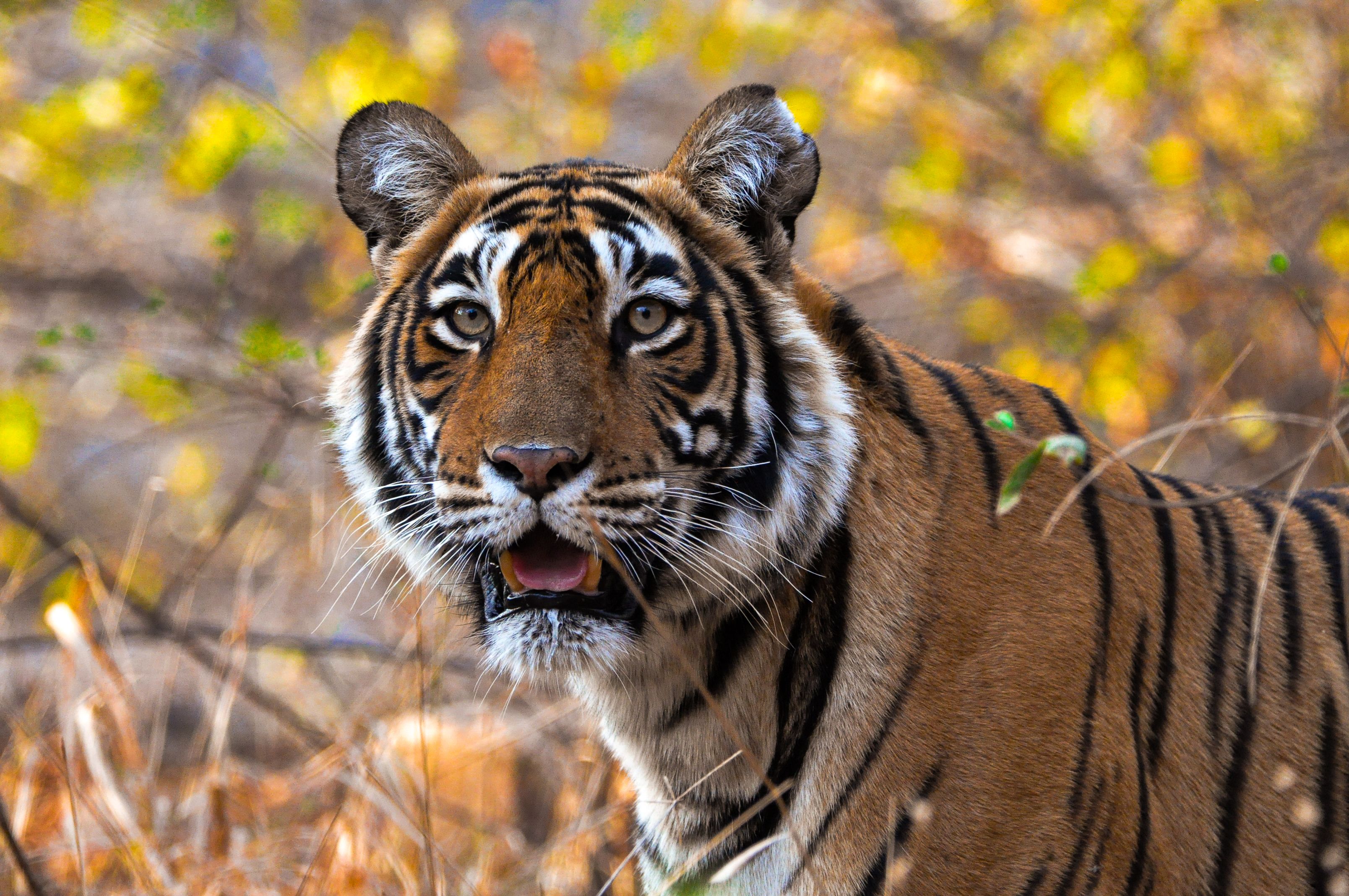
Ranthambore — Bengal tigers in an ancient fort landscape

Rajasthan, India · Tiger Safari & Mughal Heritage

Ranthambore

The Oberoi Vanyavilas tent, a Bengal tiger at dawn in Zone 3, and a 10th-century fort rising from the jungle behind it. India's tiger safari, in its most dramatic setting.

No need to read on

Skip ahead — plan your Ranthambore escape now.

Tell us your dates and your pace. Personalised suggestions, never confirmed reservations.

Plan My Escape — £19.99

The Case for Going

Seventy Bengal tigers in a landscape that was a maharaja's hunting ground.

Ranthambore National Park occupies 1,334 square kilometres of the Rajasthan scrub jungle in the foothills of the Aravalli and Vindhya ranges, surrounding a 10th-century fort on a hill that the park's tigers have incorporated into their territories. The juxtaposition — Bengal tigers patrolling the ruins of a medieval fort complex in a landscape of dappled morning light — is specific to Ranthambore and responsible for some of the most reproduced wildlife photography in India.

The park has approximately 70 tigers — one of the highest densities in India relative to available core zone habitat. The morning drive, departing at 6am into the park zones, produces tiger sightings with a frequency that the East African parks cannot match for this species. The Oberoi Vanyavilas, adjacent to the park boundary, provides the setting from which this encounter is best approached: mahua-grove tents, outdoor copper baths, and the Oberoi service standard that has no equivalent in Indian luxury hospitality.

As a component of the classic Rajasthan circuit — Jaipur an hour away, Agra four hours east, the Blue City of Jodhpur further west — Ranthambore provides a natural encounter of extraordinary intensity at the centre of a cultural itinerary of equal richness. There is no equivalent three-day experience in India.

The Destination at a Glance

India's most accessible and most photogenic tiger reserve: 70 tigers, a 10th-century fort, and the Oberoi at the gate.

Ranthambore is located in the Sawai Madhopur district of Rajasthan, 180 kilometres south of Jaipur. Sawai Madhopur railway station is served by the Rajdhani Express from Delhi (4.5 hours) and the Intercity Express from Jaipur (2.5 hours). Private road transfers from Jaipur airport take approximately 3 hours. There is no airport at Sawai Madhopur; the nearest is Jaipur (Sanganer Airport, JAI).

The park is divided into ten zones, managed by the forest department. Zones 1–5 are the core zones with the highest tiger density; zones 6–10 are the buffer zone extensions added in 2012 when two tigers were relocated to reduce territorial conflict. Safari permits are issued online through the official forest department website and sell out weeks in advance for the peak season (February–April). The park has two daily safari slots: morning (6:00–9:30am) and afternoon (2:30–6:00pm). Each zone receives a limited number of gypsies (6-seat jeeps) per session.

Best Time to Visit

When to go.

Oct – Jan

Cool Season

The vegetation is lush after the monsoon, which makes sightings slightly harder but the landscape greener and more beautiful. Cool mornings (10–15°C). The most comfortable season for game drives.

Feb – May

Peak Tiger Season

Vegetation thins as the heat rises, forcing tigers to the lakes and waterholes at predictable intervals. The highest sighting frequency of the year. April and May are hot (38–42°C) but most productive.

Our Pick

March

The vegetation is thinning, the heat is not yet extreme, and the tigers are beginning to concentrate at the water sources. Comfortable morning temperatures; excellent light for photography. Book permits months ahead.

Where to Stay

Five worth knowing.

01

Oberoi Vanyavilas

Adjacent to Ranthambore National Park, Sawai Madhopur

The finest safari lodge in India and one of the finest in the world: twenty-five tented suites surrounded by 20 acres of forest on the boundary of Ranthambore National Park. The tents are no casual description — each is a fully equipped canvas villa with carved wooden furniture, private bath, and outdoor copper tub, arrayed beneath a canopy of mahua trees. The Oberoi service standard, delivered in an environment of complete wildness, represents the most accomplished luxury safari proposition in Asia.

Best for

Couples for whom the finest Indian tiger safari experience is the objective — the Oberoi service, the tent design, and the park access make Vanyavilas the Indian equivalent of Kenya's finest safari lodges.

02

Aman-i-Khás

Sherpur-Khiljipur, Ranthambore buffer zone

Ten tented suites in the Ranthambore buffer zone, designed with an elegance that the Aman brand brings to any context: the Mughal tent aesthetic — hand-blocked cotton, carved inlay furniture, the proportions of Mughal court camping — expressed in the most luxurious functional terms. Three meals daily, a guide assigned to each suite for the duration of stay, and the buffer zone position (which provides encounters with the broader Ranthambore wildlife while the park drives target tigers in the core zones) distinguish this from a conventional park-adjacent lodge.

Best for

Couples for whom the Aman design sensibility and the Mughal tent aesthetic are as important as the tiger encounters — the most beautiful lodge setting in the Ranthambore region.

03

SUJÁN Sher Bagh

Adjacent to zone 6, Ranthambore National Park

Twelve tented suites in the SUJÁN group's Ranthambore property — a camp with deep roots in the Indian conservation movement. The SUJÁN group was established by the Jaipur royal family and works closely with the tiger conservation foundation; their guides have among the longest track records in the park. The camp's position adjacent to zone 6 — the zone that historically has had the highest density of tigers in Ranthambore — is a practical as well as aesthetic advantage.

Best for

Couples who want the best guides and the best historical tiger zone access alongside a camp aesthetic rooted in Indian conservation heritage.

04

Tiger Den Resort & Spa

Sawai Madhopur town

A more accessible price point than the Oberoi or Aman, and worth knowing for couples whose primary investment is the safari experience rather than the lodge: competent rooms, a swimming pool, attentive management, and direct access to the park booking system that positions it well for guests who prefer to allocate budget to multiple zones and additional drives. The food is reliably good Rajasthani cooking.

Best for

Couples who want to allocate the majority of their Ranthambore budget to the game drives themselves — more drives across more zones rather than the most elaborate tented suite.

05

Nahargarh Ranthambhore

Sawai Madhopur, 3km from park gate

A luxury boutique property that brings the Rajput architectural vocabulary — jharokha balconies, jaali screens, sandstone courtyards — to the Ranthambore lodge context. The pool, the spa, and the evening cultural programme (Rajasthani folk performances, henna, cooking classes) add a cultural dimension to the tiger-drive schedule that the more austere safari camps deliberately omit. A more rounded destination for couples who want Rajasthan culture alongside the park.

Best for

Couples who want the Rajput architecture and cultural programme alongside the tiger safari — a more complete Rajasthan experience than a pure safari camp provides.

Tigers, Forts & Rajput Palaces

What to do.

Morning tiger safari — zones 3 and 4

The park's morning drive in Zone 3 (Rajbagh Lake) or Zone 4 (Malik Talao) represents the highest probability of a tiger encounter at Ranthambore. Zone 3's lake is particularly productive in February through April, when tigers patrol the lake shore at dawn and are visible from considerable distance in the thinning vegetation. A responsible naturalist guide — assigned through the lodge in advance and familiar with individual tigers' territories by name — is the difference between a gypsy that blunders onto a sighting and one that is positioned correctly before the tiger appears.

Ranthambore Fort

The 10th-century fort that gives the park its name occupies a hill at the centre of the park, its battlements and temples visible from the lakeside drives below. Access to the fort — one of Rajasthan's oldest, predating the more celebrated forts at Jaipur and Jodhpur — is restricted during park hours but available by prior arrangement with the forest department outside safari times. The temple of Ganesh at the fort's summit (the only Ganesh temple visited by tigers, according to local tradition) is an active shrine that the forest department maintains even within the restricted park boundary.

Jaipur day trip: Amber Fort and City Palace

Jaipur, the capital of Rajasthan, is two hours from Ranthambore and the most straightforward day trip from the park. The Amber Fort — the 16th-century hill fort of the Rajput Kachwaha dynasty, with its mirrored hall of the Sheesh Mahal and elephant battery — requires a half-day minimum. The City Palace complex in the walled city of Jaipur contains the Maharaja's private palace (still inhabited), the Jantar Mantar astronomical observatory (the world's largest masonry sundial), and the Hawa Mahal (Palace of the Winds). A private guide through both sites takes approximately six hours.

Village walk and conservation visit

The villages surrounding Ranthambore — Sherpur, Bakasula, Khiljipur — have been living alongside the tiger population for generations, with the complex relationship that tiger conservation and agricultural livelihood inevitably create. The lodges' naturalist guides conduct village walks that introduce the conservation programme, the man-animal conflict mitigation work funded by the park authority, and the livelihoods that tourism has generated in the buffer zone. These are not performative cultural visits; they are an honest account of how tiger conservation actually functions in a populated landscape.

What to Eat and Drink

Rajasthani dal baati churma and the Oberoi's forest clearing dinner.

Rajasthani cooking is the cuisine of a desert state: robust, spiced, and reliant on preserved ingredients and dairy in a region where fresh vegetables were historically scarce. The dal baati churma — baked wheat dough balls (baati) broken into lentil broth (dal) with a sweetened wheat crumble (churma) — is Rajasthan's defining dish: the version at the Oberoi Vanyavilas, prepared in the wood oven, is as good as it gets in a luxury context. The gatte ki sabzi (gram flour dumplings in a spiced yoghurt curry) and the ker sangri (a desert bean and berry preparation unique to Rajasthan) are the other essential encounters.

The Oberoi Vanyavilas offers the most atmospheric dinner setting in the Ranthambore region: a clearing in the mahua grove, lit by lanterns, with the jungle sounds audible from the table. On some evenings, the dinner is arranged around a traditional Rajasthani fire performance. Both Aman-i-Khás and SUJÁN Sher Bagh serve nightly candlelit dinners in the camp as the alternative; the setting in each case is the attraction alongside the food.

The Bespoke Horizons View

India's tiger, in India's most dramatic setting.

Ranthambore is the answer to the question that serious wildlife travellers bring to India: where do I find the Bengal tiger, reliably and in a setting of genuine beauty? The answer has been Ranthambore for forty years, and nothing that has emerged since has displaced it. The fort in the background of every tiger photograph taken at Rajbagh Lake is not coincidence; it is what the park is.

We build the Ranthambore stay as three nights — morning and afternoon drives each day across two or three different zones — with arrival from Jaipur and onward travel to Agra or deeper into Rajasthan. The Oberoi Vanyavilas is the non-negotiable accommodation recommendation; Aman-i-Khás for those for whom the Aman aesthetic matters more than the park-fence proximity.

A Bengal tiger at Rajbagh Lake, the 10th-century fort rising in the mist behind it, the gypsy engine off. Nothing moves for several minutes. India at its most complete.

Essential Information

The practical detail.

Currency
Indian Rupee (INR); cards accepted at luxury lodges; ATMs in Sawai Madhopur
Language
Hindi and Rajasthani locally; English at all luxury lodges and guides
Getting there
Fly to Jaipur (2.5 hours from Ranthambore by road) or direct train: Sawai Madhopur station from Delhi (4–5 hours, Rajdhani Express)
Time zone
GMT +5:30
Visa
e-Visa required for UK citizens: apply online, USD 25, 60-day validity
Park zones
10 zones; zones 1–5 are core (prime tiger territory); book in advance through official safari system
Safari vehicles
6-seat gypsies (jeep) or 20-seat canters; gypsies recommended for flexibility
Budget range
£300–£1,500+ per person per night at Oberoi Vanyavilas and Aman-i-Khás

Frequently Asked

Questions, considered.

Plan Your Ranthambore Escape

Your personalised Ranthambore itinerary, in your inbox within minutes.

The Oberoi Vanyavilas, six zone drives across your stay, the right zones at the right time of year — and the Rajasthan circuit to frame it. India's tiger, properly planned.

Bespoke Horizons provides personalised travel planning and itinerary suggestions. We are not a booking agent and all recommendations are non-binding.

Ready to plan your Ranthambore escape?

Plan My Escape — £19.99