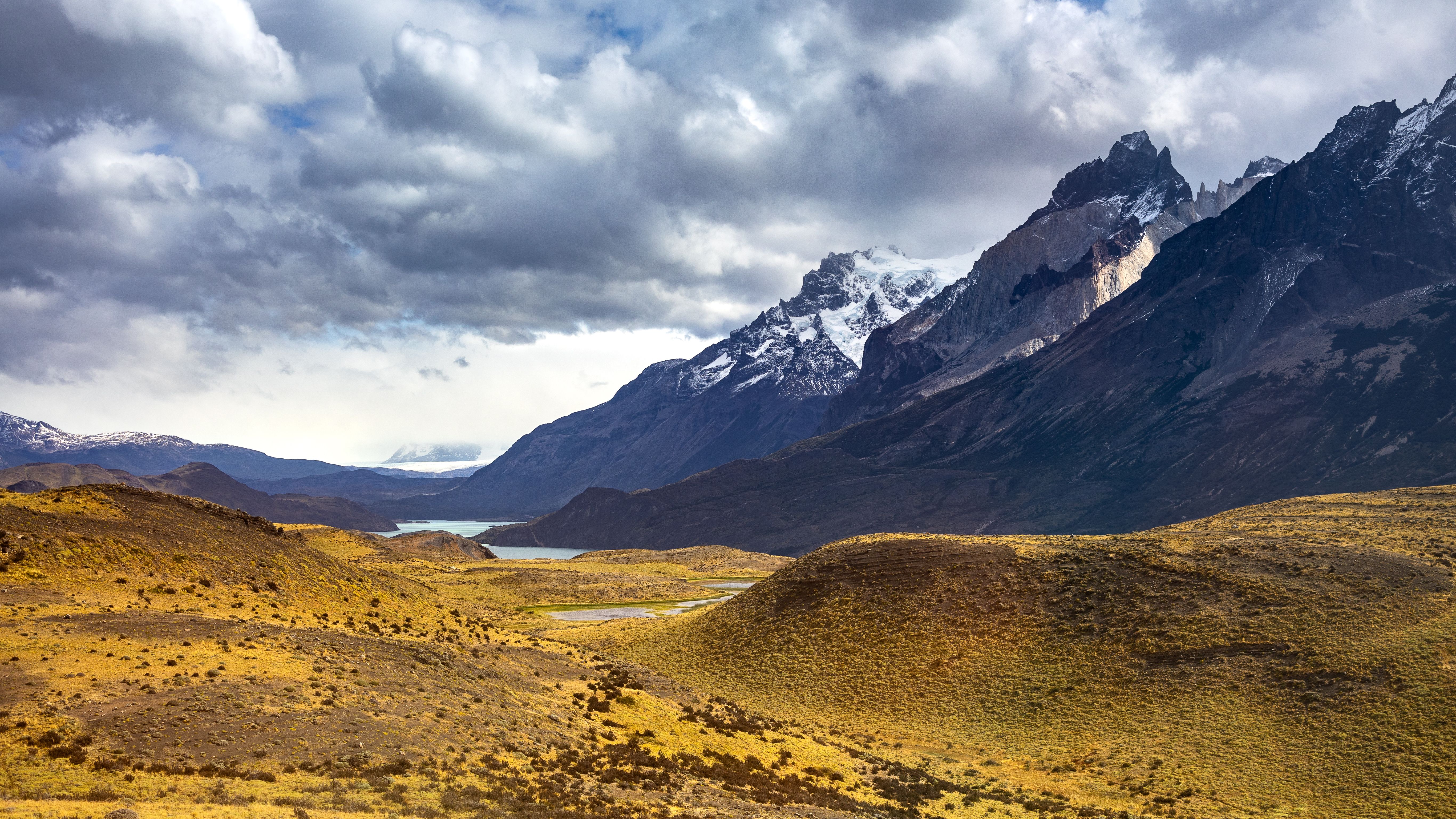
Patagonia — Torres del Paine towers above Lago Sarmiento

Chile & Argentina, South America · End of the World

Patagonia

The granite towers of Torres del Paine emerging from cloud. Perito Moreno's 74-metre ice wall calving into Lago Argentino. Awasi's private guide at dawn in a guanaco-filled park at the end of the Americas. The scale that resets perspective.

No need to read on

Skip ahead — plan your Patagonia escape now.

Tell us your dates and your pace. Personalised suggestions, never confirmed reservations.

Plan My Escape — £19.99

The Case for Going

The last great wilderness at the end of the Americas. Granite towers. Advancing glaciers. 120 km/h wind that demands respect. The scale that changes things.

Patagonia — the shared southern extremity of Chile and Argentina, encompassing everything south of approximately 40°S — is the world's largest remaining temperate wilderness: 1 million square kilometres of steppe grassland, ancient beech forest, glacial fjords, granite peaks, and continental ice field. The southern Patagonian Ice Field (the third largest body of ice outside the polar caps) feeds the glaciers that define the landscape's character: the Perito Moreno (the world's only advancing glacier), the Grey Glacier (accessible by ice trek from Torres del Paine), and the dozens of unnamed glacier tongues visible from the park roads.

Torres del Paine National Park — the Chilean side, a UNESCO Biosphere Reserve of 242,000 hectares — is the most dramatic national park in the Americas: the Paine Massif (a 3,000-metre granite intrusion that rose through the surrounding sedimentary layers 12 million years ago) produces the most geometrically precise mountain forms in the world. The three Torres (towers) — the park's defining image — rise vertically from the valley floor to 2,500 metres in a formation that no erosion has yet softened into the rounded profiles of more weathered mountains.

The luxury lodge infrastructure in Patagonia — pioneered by Explora in 1993 and now expanded to include Awasi, Tierra, and EcoCamp — is the most expedition- integrated in the world: rooms are positioned for the landscape view, guides are integrated into the stay rather than an optional extra, and the food programmes reference the local ecology (lamb, trout, Patagonian king crab) in ways that few wilderness lodges in Africa or Asia have replicated.

The Destination at a Glance

South America's shared southern wilderness: Torres del Paine (Chile), Perito Moreno Glacier and El Calafate (Argentina), separated by 350 km and one border crossing.

Access to Torres del Paine is via Punta Arenas (PUQ) or Puerto Natales — the airport at Punta Arenas receives domestic flights from Santiago (3.5 hours, LATAM and Sky Airlines, several daily departures); from Punta Arenas, the national park is 3 hours by road or 1 hour by chartered light aircraft. The Argentine side is accessed from El Calafate Airport (FTE), which receives domestic flights from Buenos Aires (3 hours, LATAM and Aerolíneas Argentinas).

The Patagonian wind — the defining meteorological characteristic — is the prevailing westerly that sweeps unimpeded from the Pacific across the flat steppe. Wind speeds above 80 km/h are normal; speeds above 120 km/h close park trails and challenge outdoor activity. The experienced Patagonia lodges have developed a wind-management culture that includes wind socks and real-time trail condition updates to guide programming. The landscape's drama is in part a function of the wind: the Lago Sarmiento whitecaps, the Torres emerging from the clouds that the westerly continuously forms and disperses, and the patagona trees sculpted by decades of prevailing wind are all wind-made.

Best Time to Visit

When to go.

Nov – Dec

Spring

The austral spring: wildflowers in the park, guanaco births, and lower visitor numbers than high summer. November has the most unpredictable weather but the most wildlife drama. Lower rates.

Jan – Feb

High Summer

The longest days and warmest temperatures (8–18°C). January sees the highest puma activity as the pumas follow guanaco births. Peak wind in February. Busiest visitor period — book Awasi and Tierra 6–9 months in advance.

Our Pick

March

The finest Patagonian month: the lenga beech forest turning crimson and gold, dropping temperatures, stabilising wind, and diminishing crowds. The March autumn colour in the Valle del Francés is the most remarkable colour event in the Americas.

Where to Stay

Five worth knowing.

01

Awasi Patagonia

Torres del Paine National Park, Chile

The finest lodge in Patagonia — fourteen private villas on the shore of Lago Sarmiento, each with a wood-burning stove, a private guide assigned to every villa for the duration of the stay, and a direct view of the Torres del Paine towers across the lake. Awasi's defining characteristic is the private guide model: your assigned guide designs each day's programme around your interests and fitness level, carries local ecological knowledge of exceptional depth, and is available from dawn to after dinner. The food programme (locally sourced lamb and trout, the Patagonian wine list curated from the Casablanca Valley's finest producers) is the most accomplished in the national park.

Best for

Couples who want the most personalised Patagonia experience — the private guide model at Awasi means that no two days follow the same programme, and the depth of access to the park's wildlife and landscape is beyond any shared-guide programme.

02

Tierra Patagonia

Torres del Paine, Lago Sarmiento

Forty rooms in a building of extraordinary architectural ambition: a curving timber structure on Lago Sarmiento's shore, designed by Cazú Zegers, that references the horizontal lines of the Patagonian landscape — the building appears to emerge from the hillside rather than sit on it. Every room faces the Paine Massif across the lake, with the towers visible on clear days and the play of light and cloud across the range continuously changing. The spa (the only infinity pool in the Torres del Paine area, heated, with the mountain view) and the food programme (Patagonian lamb in multiple preparations, the most considered in the park) make Tierra the most complete luxury lodge for couples who want the landscape view without the private guide intensity of Awasi.

Best for

Couples who want the most architecturally extraordinary lodge in Patagonia — Zegers's building and the Lago Sarmiento infinity pool are the most photographed images in Chilean luxury travel.

03

EcoCamp Patagonia

Torres del Paine, W Trek route

The original sustainable dome camp in Patagonia — thirty geodesic domes on a hillside inside Torres del Paine National Park, positioned at the base of the W Trek's most dramatic section (the Valle del Francés approach to the Paine Massif). EcoCamp is not a luxury hotel in the Awasi or Tierra sense: the suite domes have private bathrooms, wood-burning stoves, and the finest views in the park, but the experience is expedition-oriented — communal dining, group treks, and the sense of being inside a wilderness programme rather than outside it looking in. For couples who want to do the W Trek with a base rather than camp in tents, EcoCamp is the correct answer.

Best for

Couples who want the W Trek experience from a comfortable fixed base — EcoCamp's dome location inside the park and the organised trekking programme are the most accessible entry point to the park's full wilderness circuit.

04

Los Notros

Perito Moreno Glacier, Argentina

The only hotel that directly overlooks the Perito Moreno Glacier — 32 rooms in a lodge perched above Brazo Rico of Lago Argentino, with the glacier's 74-metre ice face visible across the lake from every room window and the restaurant terrace. The Perito Moreno is the world's only advancing glacier in an era of glacial retreat; the spectacle of the ice periodically breaching the Magallanes Peninsula (causing the lake level to equalise in a ruptura — an event that happens every few years and involves the glacier arch collapsing in a sequence of explosions and ice falls) is the most dramatic natural event in Patagonia. Los Notros provides close-range boat and trekking access to the ice.

Best for

Couples who want the closest possible accommodation to the Perito Moreno Glacier — Los Notros's direct lake view of the ice wall is unmatched anywhere in Patagonia; the boat trek onto the glacier is an exclusive Los Notros programme.

05

Explora Patagonia

Torres del Paine, Lago Pehoé

The pioneer of luxury Patagonian tourism — Explora's lodge on the shore of Lago Pehoé (inside Torres del Paine National Park, on the lake that reflects the towers most spectacularly) opened in 1993 and established the model of all-inclusive exploration with expert guides that Awasi and Tierra subsequently refined. Fifty rooms, twelve dedicated guides, and a programme of 40+ excursions that covers every accessible area of the park from the milodon caves to the Grey Glacier ice trek. The food programme (the pioneering Patagonian restaurant that first made lamb and kingfish the gastronomic identity of the region) has been continually refined over thirty years.

Best for

Couples who want the widest excursion programme in the Torres del Paine area — Explora's 40+ guided options and thirty years of institutional knowledge of the park are the most comprehensive in Patagonia.

Towers, Glaciers & Pumas

What to do.

Mirador Base Las Torres hike

The hike to the Mirador Base Las Torres — the viewpoint directly at the base of the three granite towers, at the shore of a glacial tarn of extraordinary turquoise opacity — is the defining Torres del Paine experience. The trail (7–8 hours return, 1,000 metres of ascent on the final section via moraine boulders) is the most popular day hike in South America but remains legitimately demanding; the final ascent on the moraine above Refugio Las Torres requires both hands in places. The arrival at the tarn (2,700 metres) with the towers rising vertically above is one of the most powerful landscape moments in the Americas. Start by 06:00 to reach the viewpoint before the midday cloud typically builds.

Perito Moreno ice trek

The Perito Moreno Glacier (30 kilometres long, 5 kilometres wide, advancing at 2 metres per day into Lago Argentino) is the world's only advancing glacier in an era when every other comparable glacier is retreating. The glacier's face (74 metres above the lake surface, with a submerged portion extending 170 metres below) calves ice into the lake at unpredictable intervals — the calvings range from basketball-sized fragments that pop into the water to house-sized ice towers that crash with a sound like artillery. The ice trek (conducted from the Los Notros side, crampons provided, 1.5–3 hours on the ice surface with a guide) is the most physically intimate glacier experience in Patagonia.

Puma tracking

Torres del Paine has one of the highest puma densities in the world — approximately 50 resident pumas in 242,000 hectares, concentrated in the grassland corridors where the guanaco (their principal prey) graze. The Awasi and Explora guide teams, drawing on years of individual puma identification and behavioural study, locate pumas on morning outings with high reliability in the December–February period when the pumas are most active in the open areas. A puma sighting — the animal in the open grassland, hunting or simply resting — is comparable to a leopard sighting in the African savanna: one of the world's great predator encounters.

Lago Grey boat to the glacier

The Grey Glacier — the northern outlet of the Southern Patagonian Ice Field, accessible from the western section of the W Trek — is reached by boat from the Lago Grey wharf (2 hours from Puerto Natales by the park road). The one-hour boat crossing of Lago Grey (dodging the floating icebergs that calve continuously from the glacier face) arrives at the base of the Grey Glacier's ice wall. The Explora programme includes an ice trek on the Grey Glacier; the boat trip alone provides the most dramatic ice encounter outside the Perito Moreno area. The floating ice (stranded bergs of various sizes) turns the lake the same pale jade as the Torres del Paine tarn.

What to Eat and Drink

Patagonian lamb, centolla king crab, and the Casablanca Valley's best Pinot Noir.

Patagonian food culture is based on the region's two great proteins: the sheep (Patagonian lamb, slow-roasted on a cruz (an iron cross over an open fire) as an asado that takes six hours, is the most celebrated preparation in southern South America) and the centolla (the Patagonian king crab of the Magellan Strait, with leg spans of 40 centimetres and a sweetness of flesh that is the finest crustacean in the Americas). The Awasi and Tierra kitchens both use lamb from the surrounding estancias (the large sheep farms whose fencing patterns the park roads), preparing it in multiple registers from the asado to the ceviche of lamb and sea cucumber that the region's new generation of chefs has made its signature.

Chilean wine from the Casablanca Valley (the most southerly and coolest of Chile's wine regions, producing Patagonia-appropriate Pinot Noir and Riesling in preference to the warmer Central Valley's Cabernet) is the correct table wine in Patagonia; Awasi's wine list focuses on small-production Chilean natural wines that the Casablanca's new generation of winemakers has made increasingly compelling.

The Bespoke Horizons View

The journey that changes your relationship with scale.

Patagonia is not a destination that delivers comfort in the way that a Maldives beach or a Marrakech riad delivers it. It delivers something different: the experience of landscape at a scale that the human body cannot easily comprehend, combined with the realisation that the world still contains places where the weather is genuinely more powerful than any human convenience.

For our clients, the ten-night circuit — Perito Moreno (three nights Los Notros, the glacier daily), Torres del Paine (five nights Awasi, the private guide programme, the puma morning, the Mirador hike) — is the definitive South America trip. Combine with Buenos Aires (three nights at Faena Hotel for the contrast) if the itinerary extends to fourteen nights.

The towers emerging from cloud above the tarn at dawn. Thirty seconds of clarity, then the wind brings the cloud back. You've been waiting four hours for those thirty seconds. They're enough.

Essential Information

The practical detail.

Currency
Chilean Peso (CLP) and Argentine Peso (ARS); USD widely accepted at lodges in both countries; lodge bills typically in USD
Language
Spanish; English spoken at all luxury lodges; guides are typically bilingual
Flights from UK
13–15 hours to Santiago (SCL) or Buenos Aires (EZE) via São Paulo, Madrid, or Miami; then 3-hour domestic flight to Punta Arenas (PUQ) or El Calafate (FTE); total journey 18–22 hours
Time zone
Chile: GMT -3 (summer DST); Argentina: GMT -3 (no DST)
Visa
No visa required for UK citizens in Chile or Argentina; valid passport sufficient for 90-day stays
Weather
Patagonian weather is notoriously unpredictable — wind, rain, sun, and snow can occur on the same day year-round; layering is essential; the Torres are more often in cloud than clear; plan three nights minimum for any chance of the towers fully clear
Fitness
The W Trek and multi-day treks require reasonable fitness (5–8 hours walking per day); Awasi and Tierra Patagonia offer shorter excursions suitable for all fitness levels
Budget range
Awasi Patagonia from £800 per room per night; Explora from £500; EcoCamp suite domes from £400; Patagonia is among the most expensive non-urban destinations in South America

Frequently Asked

Questions, considered.

Plan Your Patagonia Escape

Your personalised Patagonia itinerary, in your inbox within minutes.

Awasi Patagonia with a private guide, Los Notros above Perito Moreno, and the March autumn colour in the Valle del Francés — the Patagonia circuit that justifies twenty hours of travel.

Bespoke Horizons provides personalised travel planning and itinerary suggestions. We are not a booking agent and all recommendations are non-binding.

Ready to plan your Patagonia escape?

Plan My Escape — £19.99