Namibia — Sossusvlei dunes at sunrise, the oldest desert on earth

Southern Africa · Desert & Wilderness

Namibia

The world's oldest desert, dunes at 380 metres, the Skeleton Coast's fog-bound Atlantic wilderness, and a dark sky reserve where the Milky Way casts a shadow. Africa's most extraordinary empty landscape.

No need to read on

Skip ahead — plan your Namibia escape now.

Tell us your dates and your pace. Personalised suggestions, never confirmed reservations.

Plan My Escape — £19.99

The Case for Going

55 million years old and almost entirely empty. The Namib is the oldest desert on earth and the most visually astonishing landscape in Africa.

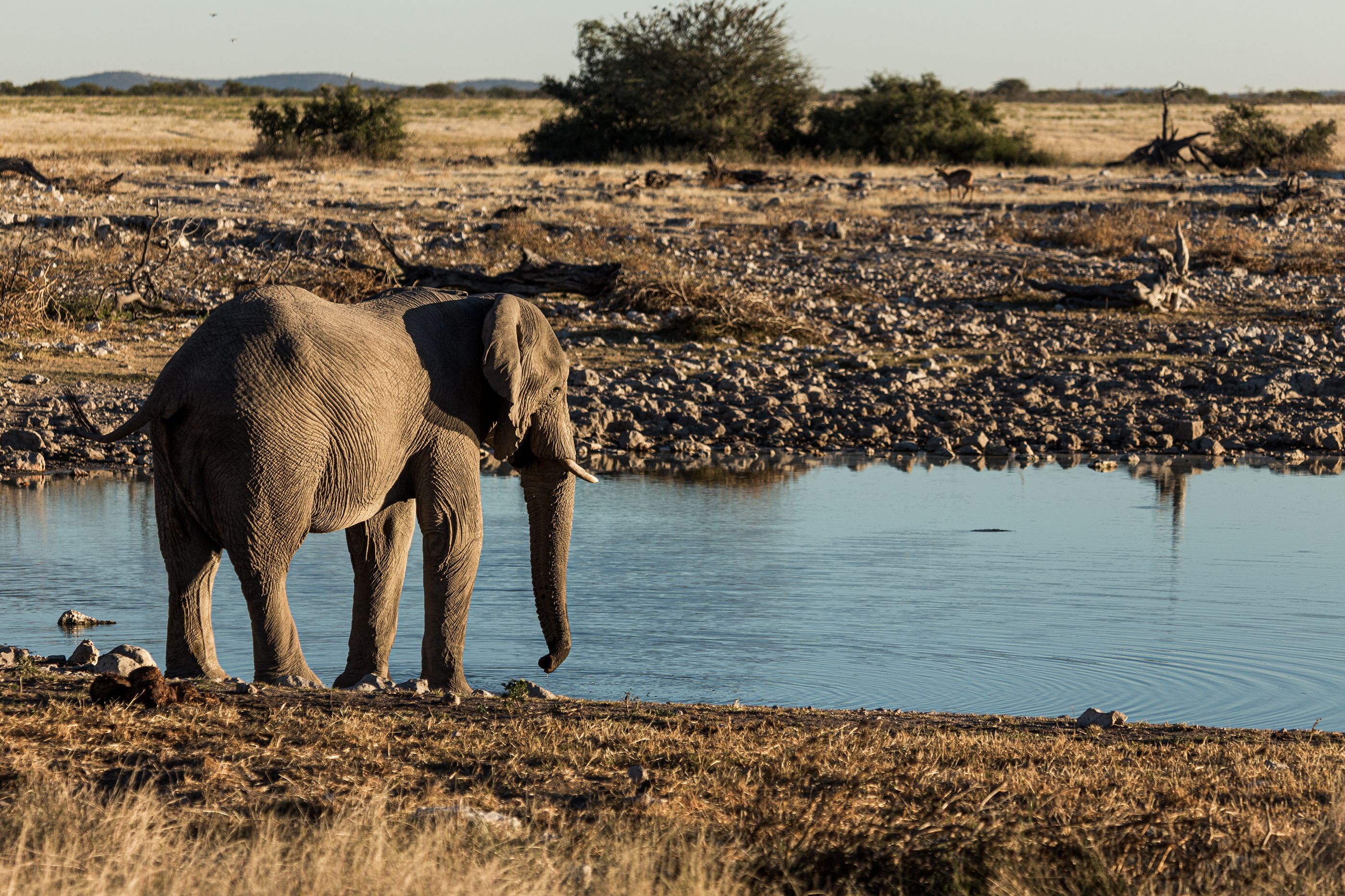
Namibia is the least densely populated country in sub-Saharan Africa (3.3 people per square kilometre) — a fact that is evident in the landscape. The Namib Desert (800,000 square kilometres, extending from the Orange River on the South African border to the Cunene River on the Angolan border, and east to the Great Escarpment) is the oldest desert on earth: the coastal desert has been arid for 55–80 million years, an antiquity that has produced life-forms found nowhere else — the Welwitschia mirabilis (a plant that lives for 2,000 years, photosynthesising from coastal fog), the desert-adapted elephant and lion of the Hoarusib and Hoanib river systems, and the black-faced impala and Hartmann's mountain zebra of the Damaraland highlands.

The Sossusvlei dunes — the most famous landscape in Namibia and among the most photographed in Africa — are the highest sand dunes in the world outside the Arabian Peninsula: the star dunes of the Namib-Naukluft National Park reach 380 metres and have been accumulating for millions of years, their iron-oxide colouring ranging from pale apricot (the youngest sand, not yet oxidised) to deep terracotta (the oldest, fully oxidised). The Deadvlei clay pan within the dune system — ancient camel thorn trees dead for 700 years, standing white against the red sand and blue sky — is the most consistently photographed image in southern Africa.

The luxury lodge infrastructure in Namibia — concentrated in the NamibRand Reserve (Sossusvlei), the Damaraland Conservancy, and the Etosha perimeter — is the most design-conscious in Africa. Properties like Sossusvlei Desert Lodge, Hoanib, and Little Kulala have won international architecture awards while maintaining the remoteness that is Namibia's fundamental attraction.

The Destination at a Glance

Southern Africa's largest country by area per capita: the Namib coast, the interior desert, the Etosha salt pan, and the Caprivi Strip's subtropical north.

Windhoek (Hosea Kutako International Airport, WDH) is the arrival gateway — typically reached via Johannesburg (4-hour connection), Cape Town (3 hours), Frankfurt (10 hours direct, Lufthansa), or London via a combination. The principal tourism zones are accessible from Windhoek by road or by the Wilderness Air light aircraft network: Sossusvlei (4.5 hours south-west by road, or 1 hour by light aircraft to the Kulala airstrip); Damaraland (5 hours north via the B1 and C35 gravel, or 1.5 hours by air); Etosha (5 hours north via the B1 sealed highway, or 1.5 hours by air to Mokuti airstrip).

The Namibian road network is the best in sub-Saharan Africa: the B-road network of sealed highways is well-maintained and clearly signed; the gravel C and D road network (requiring a high-clearance vehicle) covers most of the interior. Self-drive Namibia is one of the most rewarding overland experiences in Africa — the distances are long but the roads are reliable, the landscapes are continuously extraordinary, and the solitude (it is normal to drive 200 kilometres without seeing another vehicle) is the defining experience.

Best Time to Visit

When to go.

May – Oct

Dry Season

The principal Namibia season: the Etosha water holes at their most concentrated, cool mornings for dune walking, and the clearest dark skies of the year. The most reliable period for wildlife sightings.

Feb – Mar

Green Season

The Namibian summer: hot (35–40°C), and the north receives rain that makes the Etosha landscape briefly green. The dunes are at their most vivid orange after rain. Dramatically reduced lodge rates. Cheetah and predator activity very high.

Our Pick

August

The absolute peak of Namibia's safari season: the Etosha water holes at maximum concentration, the dune temperatures manageable at dawn, and the NamibRand dark skies at their most extraordinary. The complete Namibia experience.

Where to Stay

Five worth knowing.

01

Sossusvlei Desert Lodge

NamibRand Nature Reserve, adjacent to Sossusvlei

Ten free-standing suites in the NamibRand Nature Reserve — the 200,000-hectare private nature reserve adjacent to the Namib-Naukluft National Park, with direct access to the Sossusvlei dunes without passing through the National Park entry point. The lodge's dark-sky status (the NamibRand is Africa's first and only International Dark Sky Reserve, Gold tier) makes stargazing here the most accomplished in the southern hemisphere; the resident astronomer and the high-powered telescopes are available to guests every clear night. The suite design (floor-to-ceiling glass on the desert-facing elevation) frames the dune landscape as a continuous painting.

Best for

Couples who want the best Sossusvlei dune access combined with the finest stargazing on the continent — the NamibRand dark sky reserve is unmatched in Africa for astronomical observation.

02

Little Kulala

Kulala Wilderness Reserve, Sossusvlei

Eleven kulalas (private tented chalets) in the Kulala Wilderness Reserve — the private concession adjacent to the Namib-Naukluft Park that provides the earliest possible dune access for sunrise photography. Little Kulala's kulala design (a rooftop sleeping platform on each chalet, allowing guests to sleep under the Namibian sky at the concession's darkest point) is the most distinctive accommodation experience in the Namibian desert; the balloon flight over the Sossusvlei dunes that Little Kulala coordinates at sunrise is the most photographic experience in southern Africa.

Best for

Couples who want the rooftop star sleeping experience and the earliest possible access to the Sossusvlei dunes for sunrise — the Little Kulala balloon flight is the defining aerial photography moment in Namibia.

03

Hoanib Skeleton Coast Camp

Hoanib River Valley, Skeleton Coast

Six tented suites in the Hoanib River Valley — the desert-adapted elephant territory of north-western Namibia, between the Palmwag Conservancy and the Skeleton Coast National Park. Access to Hoanib is by light aircraft only (the nearest road approach is a four-hour drive); the camp is one of the most remote in Africa, surrounded by a landscape of black basalt mountains and white salt plains that is among the most visually dramatic on the continent. The desert-adapted elephants (a genetically distinct subpopulation that has adapted over centuries to survival in the Namib) and the desert lion (the rarest lion subspecies) are the wildlife priorities.

Best for

Couples who want the most remote and most geologically extraordinary camp in Namibia — Hoanib's Skeleton Coast position and the desert-adapted elephant territory are unrepeatable anywhere in Africa.

04

Wilderness Damaraland Camp

Damaraland, north-western Namibia

Ten tents in the Huab River Valley of Damaraland — the communally owned nature conservancy of the Torra Community that was the pioneer model for community conservation in Namibia. The Damaraland Camp community model (the camp is owned by the Torra Community and managed by Wilderness Safaris under a long-term lease) has been studied by conservation economists as the most successful example of community-based natural resource management in Africa. The desert-adapted black rhino (the last wild population of this species) ranges through the Damaraland camp area; rhino tracking on foot is the defining activity.

Best for

Couples who want the desert black rhino tracking experience combined with the most celebrated community conservation model in Namibia — the Damaraland Camp's Torra Community story adds a dimension beyond the wildlife encounter.

05

Onguma The Fort

Etosha East, Etosha National Park

A Moroccan-inspired fort of extraordinary visual contrast with the Etosha landscape — white-washed walls, arched windows, and interior courtyards that reference North African architecture in a southern African desert context. Onguma The Fort overlooks the Fisher's Pan (a small seasonal pan on the Etosha East boundary) and provides one of the two best lion and elephant observation positions in the Etosha system. Etosha's network of water holes (the pan itself — a 4,760-square-kilometre salt pan — acts as a magnet for wildlife in the dry season, when up to 114 mammal species congregate at the water hole edges) makes Namibia's primary Big Five destination.

Best for

Couples who want the Etosha Pan wildlife spectacle in the most architecturally distinctive lodge in the national park — The Fort's design is the most discussed hotel aesthetic in Namibia.

Dunes, Stars & Desert Life

What to do.

Sunrise on Deadvlei

The walk from the Sossusvlei car park across the clay pan to Deadvlei (45 minutes on foot, or via the lodge's 4WD shuttle to the 2WD car park and then on foot) arrives at the most photographed landscape in Africa in the early morning light that transforms the dead camel thorn trees from black silhouettes to detailed white sculptures against the deep ochre of Big Daddy dune. The light is best in the first 45 minutes after sunrise; by 08:00 the overhead light flattens the dune's texture and the shadows disappear. The walk itself — across the white clay pan, the footsteps leaving temporary impressions in the calcium carbonate crust — is a sensory experience unlike any other; the silence is total.

Stargazing in the NamibRand

The NamibRand Nature Reserve's Gold Tier International Dark Sky Reserve designation (the first in Africa, recognised 2012) is the result of the reserve's remoteness (the nearest significant town, Maltahöhe, is 45 kilometres away with a population of under 2,000) and the Namib's characteristic cloudless winter nights. The Sossusvlei Desert Lodge operates the most sophisticated guest stargazing programme in Africa: a resident astronomer, three permanently mounted telescopes (up to 12-inch Dobsonian reflectors), and a guided programme that connects the southern hemisphere's unfamiliar constellations (the Southern Cross, Centaurus, Scorpius overhead in winter) to the mythology and navigation history of the Khoikhoi and San peoples who have read these skies for 30,000 years.

Etosha water hole vigils

Etosha's game viewing model is unique in African safari: rather than the drive-and-find approach, visitors position vehicles at fixed water holes (there are 40+ permanent and seasonal water holes in the park, the most productive including Okaukuejo, Halali, and Namutoni) and wait for the wildlife to come to them. In the dry season (May–October), the concentrations that build around the water holes — groups of 30 elephants, mixed herds of giraffe and zebra and oryx, cheetah stalking the perimeter, lion arriving at the tree line at dusk — are the most watchable wildlife spectacle in Africa. The floodlit Okaukuejo water hole (viewable from the NamibRand camp's terrace) operates 24 hours; the midnight arrival of the black rhino is among the most reliable wildlife sightings in Africa.

Damaraland desert rhino tracking

The Damaraland desert-adapted black rhino — the only free-ranging population of this species in the world — is tracked on foot with a Save the Rhino Trust tracker and a Wilderness guide from the Damaraland Camp. The tracking involves reading fresh spoor (footprints, dung, urine markings) in the Palmwag Conservancy's boulder landscape, often over 2–4 hours of walking, until the rhino is located. The encounter — a black rhino at 30 metres in the desert riverbed — is the most intimate large mammal encounter in southern Africa. The Save the Rhino Trust's relationship with these specific rhino individuals (each one named, their ranges mapped, their family histories known) adds a depth to the encounter that a standard game drive sighting cannot approach.

What to Eat and Drink

Oryx steak, springbok carpaccio, and a Namibian Tafel lager at 2,000 metres under the southern sky.

Namibian food culture is a Germanic-Khoikhoi hybrid that produces some of Africa's most distinctive meat cookery: the Namibian barbecue (braai in Afrikaans, braaivleis in full) centres on game meat — oryx (gemsbok), springbok, and kudu — that is farmed sustainably in the desert environment and is among the leanest and most nutritionally dense red meat in the world. The oryx steak (grilled over hardwood charcoal, served rare) at the Sossusvlei Desert Lodge uses free-range NamibRand Reserve oryx; the springbok carpaccio at Little Kulala is the most refined version of Namibia's finest game preparation.

Namibia Breweries' Tafel Lager and Windhoek Lager (the two national lagers, brewed according to the Reinheitsgebot — the German purity law — since the German colonial period) are the most widely available and most appropriate accompaniments to the braai culture. At altitude in the NamibRand, the temperature drops to 5–8°C after dark in winter; the desert lodges serve hot drinks and blankets at sundowner, and the transition from the day's heat to the night's cold is the most dramatic temperature experience of any African safari.

The Bespoke Horizons View

The most photographic destination in Africa, and the quietest.

Namibia rewards the traveller who wants landscape over wildlife abundance. The Masai Mara or Kruger will always produce more game sightings in a given day; Namibia produces something different — the experience of scale, silence, and geological time that no other African destination offers. The 55-million-year-old dunes are context that no game drive can provide.

Our recommended itinerary: ten nights — three at Little Kulala or Sossusvlei Desert Lodge (the dunes), two at Wilderness Damaraland Camp (the rhino), two at Hoanib Skeleton Coast Camp (the most remote, by light aircraft), and three at Onguma The Fort on Etosha (the Big Five water holes). This circuit covers every essential Namibian landscape register in a logical routing that avoids backtracking.

The Deadvlei trees at dawn, dead for 700 years, white as chalk against the world's oldest red dune. Silence in every direction. Africa before any history you know.

Essential Information

The practical detail.

Currency
Namibian Dollar (NAD); pegged to South African Rand; ZAR also accepted at parity throughout Namibia
Language
English (official); German widely spoken in Windhoek and the south; Oshiwambo most common indigenous language
Flights from UK
11–12 hours to Windhoek (Hosea Kutako International, WDH) via Johannesburg (South African Airways, British Airways) or via Frankfurt (Lufthansa, Air Namibia); no direct UK service
Time zone
GMT +2 (WAST; daylight saving October–April, GMT +1 in winter)
Visa
No visa required for UK citizens; valid passport sufficient for stays up to 90 days
Self-drive
Namibia has the highest quality road network in sub-Saharan Africa; self-drive on sealed roads is viable and popular; gravel roads require high-clearance vehicle; 4WD recommended for Damaraland and Skeleton Coast
Malaria
Most of Namibia (Sossusvlei, Etosha, Damaraland) is malaria-free or very low risk; northern Namibia (Caprivi Strip, Kavango) requires prophylaxis; confirm with travel clinic
Budget range
Sossusvlei Desert Lodge from £500 per person per night; Hoanib Skeleton Coast (fly-in) from £800; self-drive Namibia camping from £50 per person per night

Frequently Asked

Questions, considered.

Plan Your Namibia Escape

Your personalised Namibia itinerary, in your inbox within minutes.

Sossusvlei at dawn, the dark sky reserve at night, the Skeleton Coast fly-in, and the Etosha water holes — the Namibia circuit that earns every kilometre of desert.

Bespoke Horizons provides personalised travel planning and itinerary suggestions. We are not a booking agent and all recommendations are non-binding.

Ready to plan your Namibia escape?

Plan My Escape — £19.99