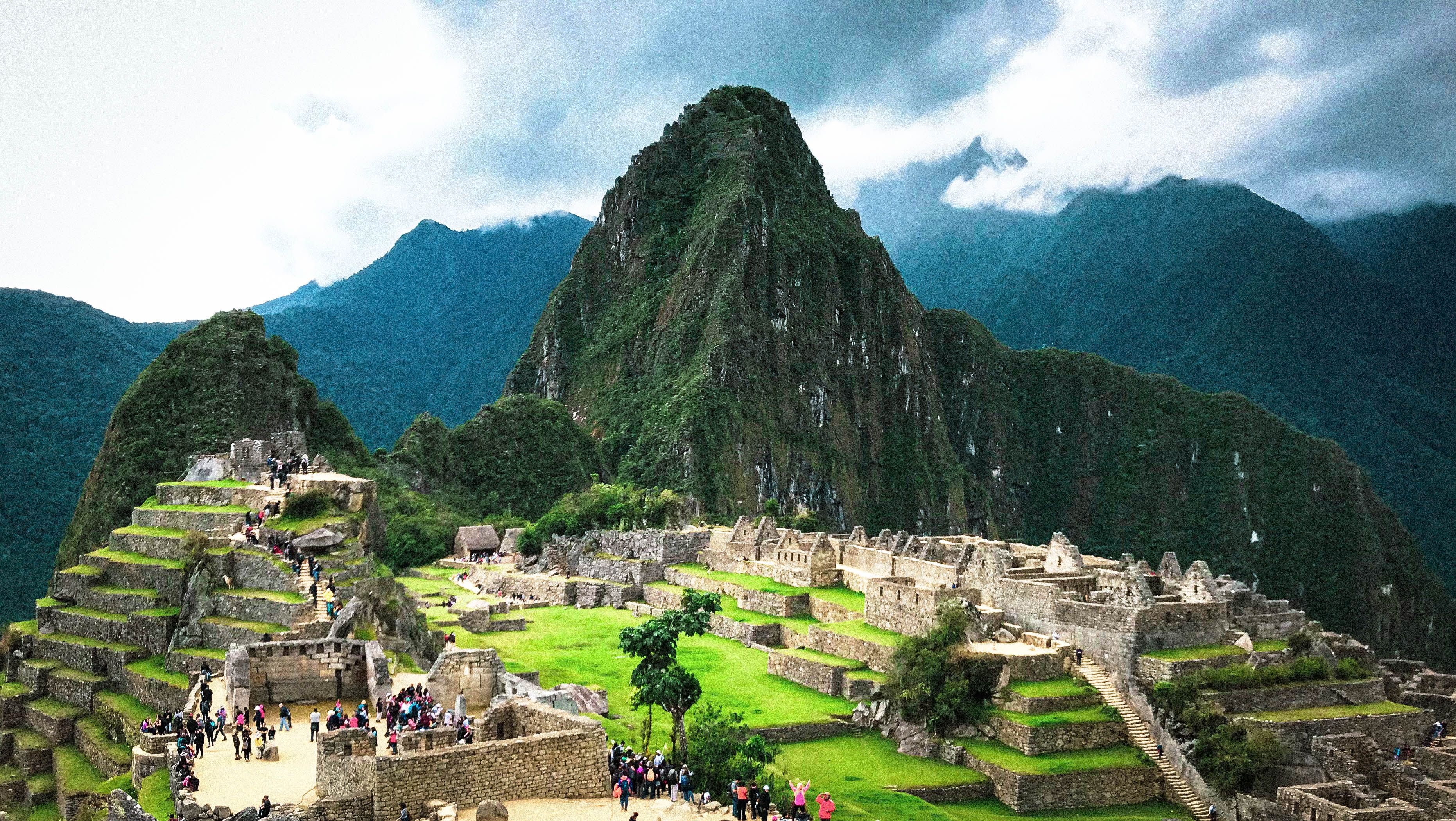
Machu Picchu — the Inca citadel above the Urubamba River in the morning cloud

Peru, South America · The Lost City of the Incas

Machu Picchu

The Belmond Sanctuary Lodge's gate position for the 06:00 entry. The Sacred Valley's altitude-adjusted acclimatisation. The Sun Gate above the citadel in morning cloud. The Incas built this in the sky and the Spanish never found it. You're first in today.

No need to read on

Skip ahead — plan your Machu Picchu escape now.

Tell us your dates and your pace. Personalised suggestions, never confirmed reservations.

Plan My Escape — £19.99

The Case for Going

The greatest surviving Inca city, hidden at 2,430 metres in the Andean cloud forest and unknown to the outside world until 1911. Still the most affecting ruin on earth.

Machu Picchu (Old Mountain in Quechua) was built by the Inca emperor Pachacuti between 1438 and 1472 CE as a royal estate — a retreat for the Sapa Inca and his court, positioned at 2,430 metres above the Urubamba River gorge on a mountain saddle of extraordinary defensive and astronomical precision. The Spanish conquest of 1532 never reached Machu Picchu (the estate was apparently abandoned to the jungle before the conquistadors could locate it), and the city remained unknown to the outside world until Hiram Bingham's Yale expedition was guided there by a local farmer in 1911.

The citadel's impact — photographed so many times that every visitor arrives with a pre-formed image of the terraces, the central plaza, and the Huayna Picchu peak behind — is not diminished by familiarity. The stonework (the Inca dry-stone construction technique, fitting irregular granite blocks without mortar in joints so precise that a credit card cannot be inserted between them) is more remarkable in person than in photography; the scale of the agricultural terraces (covering 400 metres of mountain slope, still functional 600 years after construction) is only comprehensible from inside the citadel.

The practical challenge — the altitude, the advance ticket requirement, the train logistics — is manageable with good preparation. The Belmond Sanctuary Lodge removes almost all of it: arriving at the gate at 06:00 from a hotel that is the gate, with tickets arranged and guides briefed, in the first group of the day before the mountain mist burns off, is the most controlled experience of the world's most popular heritage site.

The Destination at a Glance

A Peru itinerary of three zones: Lima (2 nights), Cusco and the Sacred Valley (3–4 nights, altitude acclimatisation), and Machu Picchu (2 nights at the Sanctuary Lodge).

The Peru luxury circuit begins and ends in Lima — the Peruvian capital and the gastronomic capital of South America (five of the Latin America's 50 Best Restaurants are in Lima, including Central, ranked No.1 in the world in 2023). From Lima, the 1.5-hour flight to Cusco (Alejandro Velasco Astete International Airport, 3,400 metres) begins the altitude management process; most operators recommend arriving in the Sacred Valley (2,800 metres) before Cusco, allowing the body to adjust gradually before the higher elevation.

The Sacred Valley of the Incas (the Urubamba River valley between Pisac and Ollantaytambo, the heartland of the Inca empire's agricultural system) contains the most remarkable concentration of Inca ruins outside Machu Picchu itself: Pisac (a market town with the most complete Inca terracing in the valley, visible from the town market), Ollantaytambo (the only Inca town still inhabited on its original street plan, the best-preserved Inca urban site in existence), and the Moray agricultural research terraces (concentric circular depressions in the plateau, now understood to have been used by the Incas to create different microclimates for testing crop varieties at different altitudes).

Best Time to Visit

When to go.

May – Oct

Dry Season

The Peruvian dry season: most reliable weather, clearest days, the classic Machu Picchu view most likely. Peak demand in June–August — book tickets 4–6 months in advance. The Inca Trail's most popular period.

Sep – Oct

Shoulder

The transition between dry and wet season: reduced crowds compared to July–August, good weather, and the wildflower season beginning in the Inca Trail corridor. October's orchids in the cloud forest below the citadel are at their best.

Our Pick

September

Peak summer crowds ending, the dry season's weather still reliable, and the Sanctuary Lodge's best availability of the year. September's light (lower sun angle, longer golden hour at altitude) is the finest for photography at Machu Picchu.

Where to Stay

Five worth knowing.

01

Belmond Sanctuary Lodge

Machu Picchu, directly at the citadel gate

The only hotel in the world within walking distance of Machu Picchu — 31 rooms directly at the citadel entrance, operated by Belmond as part of a long-standing concession with the Peruvian Ministry of Culture. The Sanctuary Lodge is the most strategically located hotel on earth for a single attraction: guests wake at 05:00, walk through the hotel garden gate to the citadel entrance at 05:30, and enter the site as the first visitors of the day, in the mist, before the bus passengers from Aguas Calientes arrive at 07:30. The breakfast (on the terrace overlooking the Sacred Valley below) and the dinner (the most accomplished cooking at any altitude-specific hotel in Peru) are available to day visitors by reservation but are appropriately reserved for staying guests as a priority.

Best for

Couples who want the most strategically located hotel in Peru — the Belmond Sanctuary Lodge's gate position makes a dawn entry to Machu Picchu, before the crowds, the most achievable luxury experience in South American tourism.

02

Inkaterra Machu Picchu Pueblo Hotel

Aguas Calientes, below Machu Picchu

Eighty-three bungalows in a cloud forest garden in Aguas Calientes — the town at the base of the Machu Picchu mountain from which the shuttle buses ascend to the citadel. The Inkaterra's 12-hectare cloud forest grounds (home to 212 species of orchid, the largest orchid collection in the world at any hotel, and to 18 species of hummingbird visible at the garden feeders) and the resident naturalist programme (guided orchid walks, birdwatching at dawn, and the on-site Andean bear sanctuary) make it the most ecologically engaging hotel in the Machu Picchu area. The distance from the citadel (a shuttle bus or 90-minute walk) is the trade-off for the cloud forest setting.

Best for

Couples who want the most ecologically distinctive hotel at Machu Picchu — the Inkaterra's orchid garden, hummingbird feeders, and the Andean bear sanctuary are the most complete ecological experience adjacent to the citadel.

03

Explora Valle Sagrado

Sacred Valley of the Incas

Forty rooms in the Chilean Explora's Sacred Valley property — the company's Peru entry, applying its Patagonian exploration model to the Inca heartland. Positioned in the Sacred Valley between Ollantaytambo and Urubamba, the lodge provides guided access to the valley's archaeological sites (Pisac, Moray, Maras salt mines) and mountain terrain from a base that allows altitude acclimatisation before the Machu Picchu visit. The Explora programme (40+ guided activities, specialist guide team, altitude-specific food programme) is the most comprehensive Sacred Valley offering; the lodge's architectural integration into the terraced valley landscape is distinctive.

Best for

Couples who want the most comprehensive Sacred Valley exploration programme combined with altitude acclimatisation before Machu Picchu — the Explora guide programme and the valley archaeological access are the most structured available.

04

Tambo del Inka, a Luxury Collection Resort

Urubamba, Sacred Valley

128 rooms in a Marriott Luxury Collection property on the banks of the Urubamba River in the Sacred Valley — the most polished international hotel standard available in the Inca heartland, with a private Vistadome train station within the resort grounds (the only hotel in Peru with its own railway station). The Sacred Valley position (2,800 metres, lower than Cusco's 3,400m) provides altitude acclimatisation; the train station platform allows direct boarding of the Aguas Calientes-bound Vistadome from the hotel grounds, eliminating the Cusco-to-Poroy transfer that most Sacred Valley itineraries require.

Best for

Couples who want the most logistically efficient Sacred Valley base — the private railway station within the hotel grounds provides the only direct Machu Picchu train boarding from a luxury hotel in Peru.

05

Belmond Hotel Monasterio, Cusco

Cusco, historic centre

122 rooms in the former San Antonio Abad Seminary in the UNESCO-listed historic centre of Cusco — a 16th-century Jesuit building around a central courtyard occupied by a 300-year-old cedar tree. The Monasterio is the most celebrated hotel in Cusco (it is consistently rated the finest hotel in Peru) and the logical base for the Machu Picchu circuit: the seminary's chapel, the colonial paintings collection, and the central courtyard's atmospheric character make it the most historically resonant hotel in the country. Several rooms are enriched with supplemental oxygen (a Belmond programme to ease altitude acclimatisation at Cusco's 3,400 metres) — the only hotel in South America to offer this service.

Best for

Couples who want the finest and most historically resonant hotel in Cusco — the Belmond Monasterio's 16th-century seminary setting and the supplemental oxygen rooms are the most distinctive combination in Peruvian luxury travel.

Citadel, Valley & High Pass

What to do.

Machu Picchu at dawn

The first entry to the citadel (06:00, the opening time) provides the emptiest, most atmospheric version of Machu Picchu available: the mist from the Urubamba River below fills the valley, the llamas that roam the agricultural terraces are grazing in the early light, and the Sanctuary Lodge guests who have walked from the hotel garden gate are the only visitors in the first 60–90 minutes before the shuttle buses from Aguas Calientes arrive. The guided tour of the citadel (2.5–3 hours with a licensed Machu Picchu guide — non-negotiable, guides assigned by the ticket system) covers the principal buildings in a sequence that builds from the agricultural terraces to the Temple of the Sun to the Royal Palace to the Intihuatana Stone. A second unguided visit in the afternoon, after the crowds have peaked and begun to thin, allows the contemplative engagement with specific spaces that the morning tour's pacing precludes.

Sacred Valley circuit

The Sacred Valley's archaeological circuit (Pisac, Chinchero, Moray, and Ollantaytambo) covers two full days from a Sacred Valley lodge base and provides the Inca context that makes Machu Picchu more comprehensible. Ollantaytambo — the best-preserved Inca town in existence, with its original street grid (still in use), its Inca water channel running alongside the main street, and the massive Temple Hill terraces above the town — is the most educational Sacred Valley site and the most visually dramatic. The Moray agricultural terraces (concentric circular depressions up to 30 metres deep, creating twelve distinct temperature zones — the Inca's equivalent of a research station for altitude-specific crop development) are the most conceptually interesting and least understood site in the valley.

Huayna Picchu mountain

The distinctive small peak that appears in every photograph of Machu Picchu — rising sharply behind the citadel to 2,693 metres above sea level (260 metres above the citadel itself) — is the Huayna Picchu mountain, accessible by permit to 400 visitors per day (split into two time slots: 07:00 and 09:00, tickets booked separately from the citadel entry ticket). The ascent (45–75 minutes, steep and in places requiring hands and feet on fixed cables) reaches the Inca temple complex at the summit, from which the citadel is visible in the valley below in the view that appears in photography from the 1940s–1960s aerial surveys. The descent, equally steep, completes in 45 minutes. Moderate fitness required; heights discomfort should be assessed before booking.

Lima food circuit

Lima is the culinary capital of South America — a city where the indigenous Andean, Spanish colonial, Japanese, Chinese, and Afro-Peruvian food traditions have fused into a cuisine of extraordinary complexity. Central (chef Virgilio Martínez, ranked World's Best Restaurant in 2023) serves a seventeen-course tasting menu structured around Peru's altitude zones — each course representing a different elevation from the Pacific Ocean to the Andean highlands to the Amazonian lowlands. Astrid y Gastón (the original Peruvian fine dining restaurant, Gastón Acurio's flagship) and Maido (Peruvian-Japanese Nikkei cooking) complete the obligatory Lima restaurant list. La Mar (Miraflores, the original Lima cevichería) serves the definitive version of ceviche mixto — the Peruvian fish ceviche with leche de tigre, ají amarillo, and choclo corn — for lunch.

What to Eat and Drink

Ceviche in Lima, roast guinea pig in Cusco, and the altitude-grown coffee of the Sacred Valley.

Peruvian cuisine is the most celebrated in Latin America — the Lima restaurant scene's international recognition (five restaurants in Latin America's 50 Best, including the world's best) reflects a culinary depth grounded in the indigenous Andean kitchen (the 4,000 varieties of Peruvian potato, the quinoa and kiwicha ancient grains, the chicha morada purple corn drink) and the accumulated influence of colonial Spanish, Cantonese, and Japanese immigration. The leche de tigre (the lime-and-ají amarillo marinade from ceviche preparation, drunk as a shot or mixed with seafood) is the most distinctive Peruvian flavour experience; the cuy (guinea pig, a traditional Andean protein roasted whole or prepared as confited legs) is the most culturally specific and most debated culinary encounter in Cusco.

In the Sacred Valley, the local restaurant programme at the luxury lodges uses altitude-grown vegetables from the valley's terraced market gardens (the same agricultural tradition that fed the Inca empire) and freshwater trout from the Urubamba River (the most common Sacred Valley protein, prepared in the Andean style — fried in garlic and served with rice and huancaína sauce, a cheese and ají amarillo emulsion). Inca Kola (the bright yellow Peruvian national soda, a bubble-gum-flavoured original that out-sells Coca-Cola in Peru) is the correct cultural curiosity to try at least once.

The Bespoke Horizons View

The world's most visited ruin, and still the most deserving of the attention it receives.

Every major heritage site becomes a management problem at sufficient visitor scale; Machu Picchu manages this problem better than most but the crowds of July and August are a genuine diminishment. The solution is either September–October (the optimal shoulder season) or the Belmond Sanctuary Lodge's first-entry protocol, which approximates private access within the constraints of the national site management framework.

Our recommendation: two nights in Lima (Central restaurant reservation essential, book three months in advance), two nights in the Sacred Valley (Explora or Tambo del Inka for the valley circuit), two nights at the Belmond Monasterio in Cusco (the supplemental oxygen rooms are not a gimmick), two nights at the Belmond Sanctuary Lodge (the reason the whole trip makes sense). Ten nights total; the most tightly planned itinerary we recommend anywhere.

The llamas were here before the citadel and will be here after it. They walk the agricultural terraces at their own pace in the morning mist, indifferent to the fact that they are standing on the most visited monument in the Americas.

Essential Information

The practical detail.

Currency
Peruvian Sol (PEN); USD accepted at hotels; carry local currency for markets and transport
Language
Spanish (official); Quechua widely spoken in the Sacred Valley and Andean communities; English spoken at all luxury hotels
Flights from UK
12–14 hours to Lima (LIM) via Miami or Madrid; then 1.5-hour flight to Cusco (CUZ); total journey 16–18 hours
Time zone
GMT -5 (PET; no daylight saving)
Visa
No visa required for UK citizens; tourist card on arrival; 183-day maximum stay
Altitude
Cusco sits at 3,400 metres; the Sacred Valley at 2,800m; altitude sickness (soroche) is common — arrive at the Sacred Valley first, allow 2 days before Cusco, and carry acetazolamide (Diamox) on prescription
Machu Picchu tickets
Entry tickets must be booked in advance online (tickets.machupicchu.gob.pe); capacity is limited to 4,500 per day; tickets sell out months in advance for July–August and December–January
Budget range
Belmond Sanctuary Lodge from £800 per room per night; Inkaterra from £250; Belmond Hotel Monasterio from £300

Frequently Asked

Questions, considered.

Plan Your Machu Picchu Escape

Your personalised Machu Picchu itinerary, in your inbox within minutes.

Lima's Central restaurant, the Belmond Monasterio in Cusco, the Sacred Valley circuit, and two nights at the Sanctuary Lodge for the 06:00 first entry — the Peru itinerary that plans around the altitude, not after it.

Bespoke Horizons provides personalised travel planning and itinerary suggestions. We are not a booking agent and all recommendations are non-binding.

Ready to plan your Machu Picchu escape?

Plan My Escape — £19.99