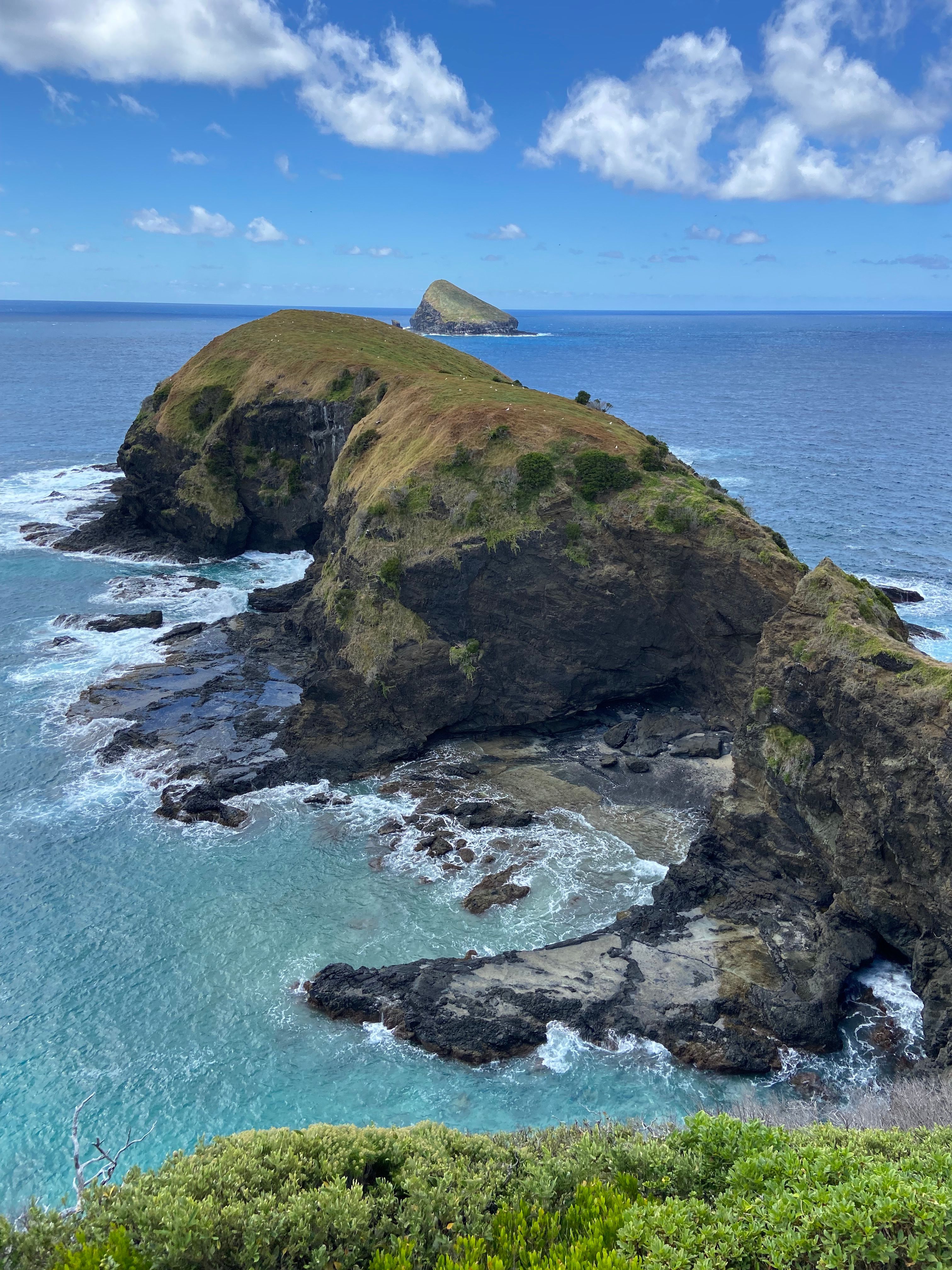
Lord Howe Island — Mounts Lidgbird and Gower above the lagoon

New South Wales, Australia · 400 Visitors Maximum

Lord Howe Island

400 visitors at any time. No mobile signal. The world's southernmost coral reef. Capella Lodge's nine suites under the volcanic peaks. The Lord Howe woodhen restored from the edge of extinction. Ball's Pyramid in the southern distance. No other island like it anywhere.

No need to read on

Skip ahead — plan your Lord Howe Island escape now.

Tell us your dates and your pace. Personalised suggestions, never confirmed reservations.

Plan My Escape — £19.99

The Case for Going

The world's most restricted luxury island destination — 400 visitors maximum, no mobile coverage, and the most ecologically intact subtropical island accessible from a major city.

Lord Howe Island is 600 kilometres northeast of Sydney and accessible by a two-hour prop-plane flight from the QantasLink service — the only aircraft type that can use the island's small grass runway. The UNESCO World Heritage inscription of 1982 requires a permanent visitor cap of 400, a number that has been maintained by the Lord Howe Island Board through a strict accommodation licensing system (total accommodation on the island is limited to exactly 400 beds) for four decades. The result is the most genuinely uncrowded World Heritage site in the world — the island's trails, reef, and beaches are shared among 400 visitors and 350 residents, a density that makes solitude available on demand at any attraction.

The island's endemic biodiversity (47 plant species, 14 bird species, the Lord Howe woodhen, the Lord Howe phasmid insect — a stick insect thought extinct for 80 years, rediscovered breeding on Ball's Pyramid in 2001, now subject to an active recovery programme) is the most significant ecological story of any island in Australian territory. The marine park (the lagoon's 6-kilometre enclosed coral reef, the world's most southerly permanently warm coral formation, at latitude 31.5°S where tropical and temperate species co-exist in a biological configuration found nowhere else on earth) is the reason the island is in the World Heritage system.

The Capella Lodge resolved the question of whether a world-class luxury lodge could operate within a World Heritage ecosystem without diminishing it: nine suites, no development footprint beyond the existing cleared area, total reliance on renewable energy, and a guest experience premised on engaging with the island's ecology rather than insulating guests from it. It is one of the finest small luxury lodges in the world.

The Destination at a Glance

An 11-kilometre island with a lagoon, two 800-metre volcanic peaks, a 400-visitor cap, a single general store, and the world's tallest sea stack on the horizon.

The island is divided into three zones by its topography: the northern flat (the settlement area, the airport runway, the general store, the bakery, and most of the accommodation, all connected by a network of roads navigated by bicycle — the primary vehicle on the island, with motor vehicles limited to residents and a small number of island taxis); the central lagoon (the western lagoon enclosed by the barrier reef, the snorkel and dive sites, the beach walk); and the southern peaks (Mounts Lidgbird and Gower, accessible only by guided ascent, the most dramatic topography in the island territory).

Lord Howe has no nightlife (the Pinetrees bar and the Capella Lodge dining room are the evening destinations for most visitors), no tourism infrastructure beyond the basic lodge and activity operator system, and no mobile signal beyond the settlement's limited Telstra coverage. Visitors who come looking for a resort holiday leave disappointed; visitors who come for the reef, the walks, and the endemic wildlife leave describing it as the finest week of their travelling life.

Best Time to Visit

When to go.

May – Oct

Best Conditions

Calmer seas, clearest reef visibility, and the island's most consistent walking weather. The migratory seabird season peaks in August–September. Demand is highest — flights and lodges book out months in advance.

Nov – Apr

Summer

Warmer water (24°C, the best for snorkelling comfort), the endemic bird breeding season visible in the settlement's banyan trees, and significantly better availability at Capella and Pinetrees. Occasional Tasman Sea swells restrict the Ball's Pyramid boat excursion.

Our Pick

October

The southern hemisphere spring: the migratory seabirds still present, the seas calming after winter swells, and the Capella Lodge's garden at its most mature. The last month before the summer demand spike and the best compromise of conditions and availability.

Where to Stay

Five worth knowing.

01

Capella Lodge

South Beach, Lord Howe Island

Nine suites on the southern headland of Lord Howe Island, above the beach and directly below the Mounts Lidgbird and Gower — the most architecturally significant small luxury lodge in Australia, consistently rated among the finest small hotels in the world by Condé Nast Traveler, Travel + Leisure, and National Geographic. The Capella Lodge's nine suites (each with a private deck facing the Tasman Sea and the volcanic peaks, the most dramatic room view in Australia) are designed by SJB Architects in a style that integrates the island's natural materials with a contemporary Australian minimalism — raw timber, linen, basalt stone, and the absence of any visual noise. The restaurant (the Lodge Dining Room, a small-group chef's menu using Lord Howe's freshwater lobster and seabird eggs in season, available only to lodge guests) and the wine list (one of the most carefully curated in Australia, strong on Tasmanian Pinot Noir and Clare Valley Riesling) define the evening atmosphere. The lodge operates a strict no-television, no-newspaper, no-mobile-signal commitment to disconnection.

Best for

Couples who want the most architecturally distinguished and the most completely disconnected luxury lodge in Australia — the Capella's nine-suite maximum, the Mounts Lidgbird and Gower deck view, and the total absence of digital infrastructure make it the finest remote luxury property in the southern hemisphere.

02

Pinetrees Lodge

North Bay, Lord Howe Island

30 rooms in the island's original and most established lodge — the Pinetrees has been in operation since 1884, when the Thomson family began accommodating the island's rare visitors in their farmhouse. The current operation (the Thomson family's fifth generation still runs the lodge) provides the most deeply rooted and most historically connected luxury experience on the island: the organic kitchen garden (supplying the lodge's restaurant with vegetables, herbs, and salad greens from a plot worked continuously since the 1880s), the reef fishing programme (the Pinetrees maintains the largest private fishing boat on the island for guest use, the mullet and kingfish catches served at dinner), and the island ecology tour programme (a guide team with a combined knowledge of Lord Howe's natural history that represents the most comprehensive available anywhere on the island) make it the most holistically immersive Lord Howe experience.

Best for

Couples who want the most historically rooted and most locally embedded Lord Howe experience — the Pinetrees' 140-year family operation, the fifth-generation Thomson hosts, and the most comprehensive island ecology programme make it the most connected single property on the island.

03

Arajilla Retreat

Old Settlement Beach, Lord Howe Island

Eight suites in a garden setting on the island's western coast — a smaller and more intimate alternative to Capella and Pinetrees, positioned between the lagoon and the banyan forest at the island's centre. The Arajilla's spa programme (the most extensive on Lord Howe, using local sea salts and kentia palm oil in treatments specific to the island's natural product inventory) and the private beach access (Old Settlement Beach, the quietest and most secluded beach on the western lagoon shore) distinguish it from its competitors. The kentia palm (Howea forsteriana, the tropical plant found wild only on Lord Howe Island and the most widely cultivated houseplant in Victorian England, still exported from the island today) provides the shade canopy over the Arajilla's garden — the most aromatic outdoor environment at any Lord Howe property.

Best for

Couples who want the most spa-focused and the most garden-immersed Lord Howe experience — the Arajilla's kentia palm garden, the Old Settlement Beach exclusivity, and the island-derived spa treatments make it the most sensory and most botanically engaged property on the island.

04

Blair House

Middle Beach, Lord Howe Island

The island's premier self-contained private rental — a four-bedroom historic homestead on the island's east coast, available for exclusive rental by two to four couples. Blair House provides the most genuinely private accommodation experience on Lord Howe (an entire house, not a suite in a lodge) with direct access to Middle Beach (the finest snorkelling beach on the island, the clearest water on the eastern lagoon, and the most reliable site for Lord Howe's endemic fish species — the kentia butterflyfish, the moorish idol, and the garibaldi in their southern distribution limit). The house operates without kitchen staff — self-catering from the island's single general store, the most locally sustainable accommodation model on Lord Howe.

Best for

Couples (or two couples) who want the most private and most self-directed accommodation on Lord Howe — the exclusive homestead model, the Middle Beach access, and the absence of lodge infrastructure make Blair House the most independently experienced property on the island.

05

Beachcomber Lodge

Lagoon Beach, Lord Howe Island

Twelve rooms in a mid-scale lodge on the western lagoon — the most accessible and most value-oriented accommodation on Lord Howe Island, providing the essential island experience (the lagoon, the walks, the reef) at a price point significantly below Capella and Pinetrees. The Beachcomber's lagoon position (directly on the beach, with the lagoon snorkelling accessible from the front door) and the included breakfast (the most complete meal of the day at any Lord Howe lodge, using eggs from the island's free-range chickens and bread from the island's single bakery) make it the most convenient base for the beach and reef activities that constitute the Lord Howe core programme.

Best for

Couples who want the Lord Howe Island experience at the most accessible price point — the Beachcomber's lagoon beach position, the directly accessible reef snorkelling, and the more affordable nightly rate make it the best entry-level Lord Howe luxury option.

Reef, Peaks & Endemic Wildlife

What to do.

Ned's Beach endemic fish feeding

The Ned's Beach fish feeding (the island's residents feed the endemic reef fish at 15:00 daily from the beach, the fish schooling around the feeder's legs in the shallows, visible through the clear water) is the most accessible wildlife encounter on Lord Howe and the most immediate demonstration of what the 400-visitor cap has achieved for the island's wildlife: fish populations that are tame enough to feed from human hands, undamaged by spearfishing or net fishing within the marine park, and diverse enough to include species found nowhere else in the world. The kentia butterflyfish, the garibaldi (the most brilliantly orange fish in the Tasman ecosystem, at the southern limit of its Pacific range on Lord Howe), and the enormous bullseye kingfish visible in the deeper water behind the feeding school are the three most Lord Howe-specific encounters at Ned's Beach.

Mount Gower guided ascent

The Mount Gower guided walk (a compulsory-guide day-trek to the 875-metre summit, 14 kilometres return, the most physically demanding and the most rewarding day walk in New South Wales) begins at the island's southern settlement at 07:30 and ascends through the banyan forest, the lower palm-fern zone, and the spectacular cliff-face section (fixed ropes on the exposed southern face of the peak, no technical climbing required but a commitment to height necessary) to the summit cloud forest — a mossy, fog-dripping forest of ancient mosses and endemic ferns that covers the summit plateau and is so botanically distinctive that it was described in the original UNESCO inscription as 'the most remote and most perfectly preserved temperate forest on a Pacific island.' The view from the summit (Ball's Pyramid, the lagoon below, the Tasman Sea to the horizon in three directions) is the finest in the Tasman Sea.

Lagoon snorkel, southern coral

The Lord Howe lagoon's southern coral garden (accessible by kayak from the settlement beach, 20 minutes of easy paddling across the lagoon to the reef's southern edge) is the world's most southerly coral reef in permanent operation — a coral community that has survived at latitude 31.5°S for millennia, maintained by the warm eddy of the East Australian Current that makes Lord Howe's water tropical despite its south-of-subtropical latitude. The tropical reef fish community (moorish idols, surgeonfish, triggerfish) coexists here with southern Australian species (the eastern blue groper, the Lord Howe Island butterflyfish) in a biological mixing zone unique on earth. The lagoon's visibility (25–40 metres in calm conditions) and the absence of boat-traffic turbulence (only paddle-craft are permitted in the lagoon) make it the most pristine reef experience available at any World Heritage island.

Bicycle circuit

Lord Howe Island is 11 kilometres long and navigable in its entirety by the bicycle that is the primary mode of transport for visitors. The full island circuit (starting from the settlement, north to the airport and the North Bay wetlands, south to the Capella Lodge headland and Boat Harbour — the island's boat launch point — then return via the lagoon beach road) takes 3–4 hours at a relaxed pace, with stops at the endemic bird observation points (the flesh-footed shearwater burrow colony on the northern headland, visible at dusk when the birds return from the open ocean), the kentia palm nursery (the island's most significant commercial enterprise, exporting the endemic kentia palm seedlings to international horticulture), and the Old Settlement area (the island's original habitation point, now the site of the island's historical museum in a 19th-century weatherboard building). The bicycle circuit is the most complete single-day Lord Howe experience available.

What to Eat and Drink

Lord Howe Island lobster at the Capella Lodge, kingfish from the Pinetrees fishing boat, and eggs from the island's own chickens.

Lord Howe Island's food culture is entirely determined by its isolation: all supplies arrive by the weekly cargo flight from Sydney (QantasLink freighter, the only supply chain for a non-perishable island grocery) or by the island's own production (the kitchen gardens, the fishing catch, the free-range chicken and egg production, and the endemic seafood). The result — particularly at the Capella Lodge's restaurant and the Pinetrees dining room — is the most locally sourced luxury restaurant menu in Australia: the ingredients are from a 11-kilometre island, 100% local, and harvested that morning.

The Lord Howe Island spiny lobster (an endemic species, smaller and more intensely flavoured than the Australian rock lobster, caught from pots within the marine park under strict sustainability limits) is the most coveted seafood product on the island and the one ingredient that cannot be replicated elsewhere. The Capella Lodge's lobster service (grilled whole with a court bouillon of the island's own herbs, served with a Clare Valley Riesling from the lodge's cellar) is the meal that most completely encapsulates Lord Howe's culinary identity.

The Bespoke Horizons View

The world's most ecologically intact luxury island — two hours from Sydney, 400 visitors at any time, and no mobile signal. The rarest combination in luxury travel.

Lord Howe Island is the most frequently recommended destination by Bespoke Horizons to clients who tell us they want to disconnect. The 'no mobile signal' is not a marketing claim — it is a fact of the island's geography (too small and too remote for a cell tower to be commercially viable) that the island's residents and the island's tourist board have chosen not to remedy. The Capella Lodge's no-television policy is a deliberate design choice. The 400-visitor cap is enforced by the accommodation licensing system, not by marketing preference.

Our recommendation: seven nights minimum (the Mount Gower ascent requires a full day, the Ball's Pyramid boat excursion a full day, the lagoon snorkel circuit two to three sessions to properly explore, and two full days of doing nothing at all on the Capella Lodge's terrace are non-negotiable). Book simultaneously: the flight, the lodge, and the Mount Gower guide — all three sell out independently and the combination is only available when all three align.

No mobile signal. Ball's Pyramid on the southern horizon. The kentia palm above the Capella terrace. Lord Howe is what happens when conservation works completely. The island is better than it was before people arrived.

Essential Information

The practical detail.

Currency
Australian Dollar (AUD)
Language
English
Getting there
Lord Howe Island has a strict 400-visitor cap at any time (the UNESCO World Heritage inscription requires this limit). Flights: QantasLink operates twice-daily prop-plane services from Sydney (2 hours) and twice-weekly from Brisbane (2.5 hours) — these are the only flights to Lord Howe (IATA: LDH). Book flights and accommodation together; flight seats and lodge vacancies are equally limited and should be booked simultaneously, 3–6 months in advance for the May–October peak.
Time zone
GMT +10:30 (LHST) / GMT +11 (LHDT in summer); Lord Howe Island observes its own time zone, 30 minutes ahead of Eastern Australia
No mobile coverage
Lord Howe Island has no mobile coverage (the single Telstra base station provides very limited coverage in the settlement area only). Satellite phone service available at the lodges for emergencies. This is a feature, not a problem — plan accordingly.
Climate
Subtropical: warm year-round (18–25°C). Best weather: May–October (the southern hemisphere dry season, calmer seas, better snorkelling visibility). November–April: warmer, more humid, occasional storms from the Tasman Sea.
The 400-visitor cap
Lord Howe's UNESCO World Heritage status requires a maximum of 400 visitors on the island at any time. This means the island is always quiet, the trails are never crowded, and the reef is never damaged by snorkeller impact. Book well in advance — availability is genuinely limited.
Budget range
Capella Lodge from £650 per suite per night; Pinetrees from £350 per person per night all-inclusive; Arajilla from £300; Beachcomber from £180 per room

Frequently Asked

Questions, considered.

Plan Your Lord Howe Island Escape

Your personalised Lord Howe Island itinerary, in your inbox within minutes.

The Capella Lodge availability, the Mount Gower guide booking, the QantasLink flight coordination, and the Ball's Pyramid charter timing — the Lord Howe itinerary that manages the 400-visitor cap so you can simply arrive and disconnect.

Bespoke Horizons provides personalised travel planning and itinerary suggestions. We are not a booking agent and all recommendations are non-binding.

Ready to plan your Lord Howe Island escape?

Plan My Escape — £19.99