Kyoto — imperial temples, bamboo groves, and ryokan gardens

Kansai, Japan · Imperial Culture & Ryokan

Kyoto

Japan's imperial capital for eleven centuries: 1,600 temples, the Aman in a moss garden, and kaiseki served in the tatami room at dusk.

No need to read on

Skip ahead — plan your Kyoto escape now.

Tell us your dates and your pace. Personalised suggestions, never confirmed reservations.

Plan My Escape — £19.99

The Case for Going

Eleven centuries of culture, disciplined into ten perfect days.

Kyoto was Japan's imperial capital from 794 to 1869 — 1,075 years of accumulated culture concentrated into a city of 1.5 million people that retains more of that accumulation than any other in Japan. The seventeen UNESCO World Heritage sites within the city limits are the most visible expression; the deeper reality is that Kyoto is also where the kaiseki cuisine, the tea ceremony, the art of the Japanese garden, Noh theatre, and ikebana flower arrangement developed into the forms that the world now recognises as Japanese culture.

For the luxury traveller, the specific Kyoto proposition is this: the ryokan tradition produces the most sophisticated single-hotel experience in the world. The Tawaraya Ryokan — in continuous operation since 1708, host to presidents and imperial family alike — provides not simply accommodation but a daily programme of aesthetic experience: the precise arrangement of seasonal flowers in the tokonoma alcove, the kaiseki dinner of seven courses composed entirely around the ingredients available that week, the garden viewed from the dining room as darkness falls and the stone lanterns illuminate.

The Aman Kyoto adds to this a garden experience of extraordinary design — a landscape of moss and maple on the edge of the imperial villa district that makes the case for the hotel as a destination in itself. Together, these two properties make Kyoto the most rewarding single city for the luxury couple who wants cultural depth alongside physical beauty.
The Destination at a Glance

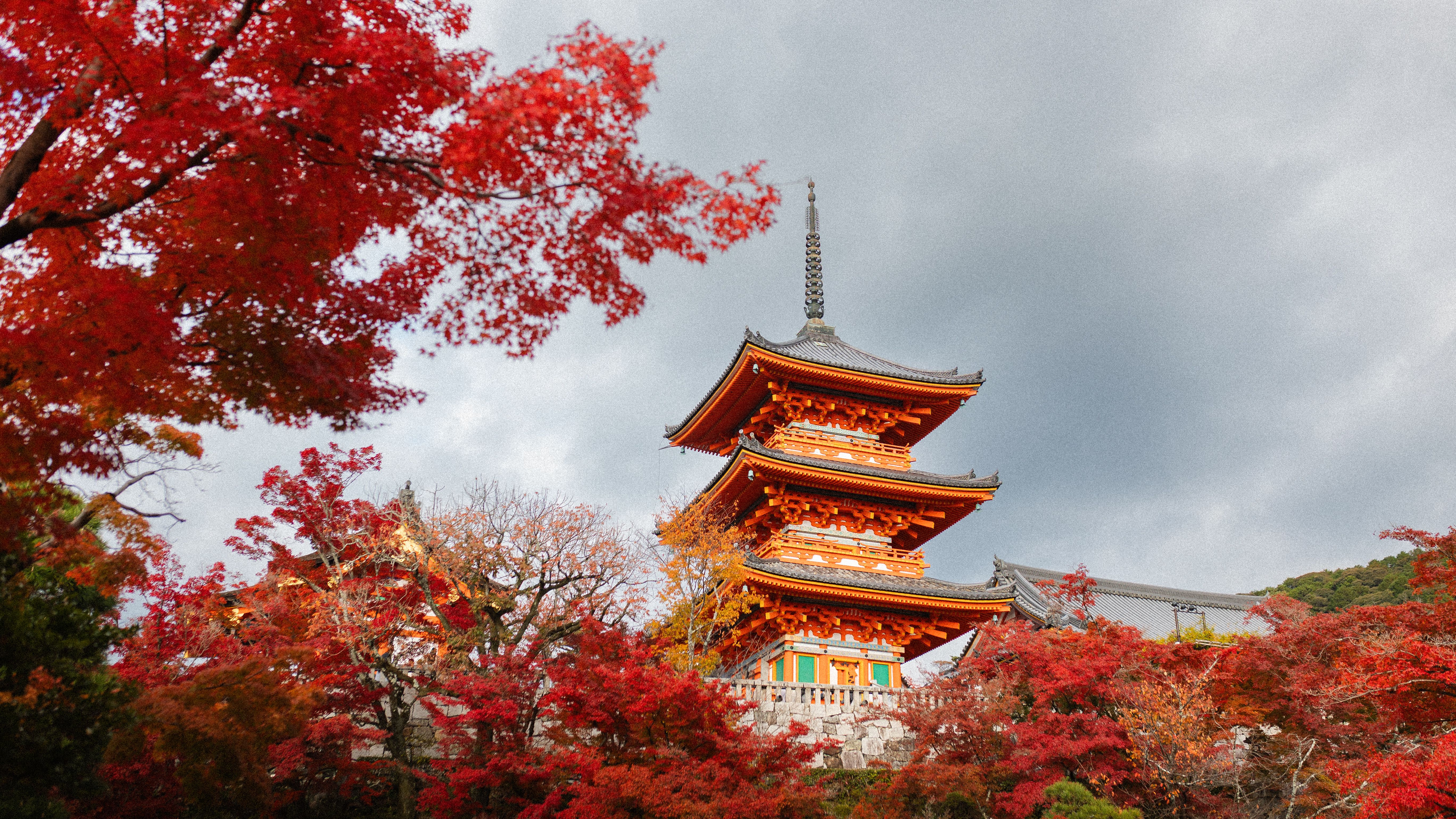
Japan's cultural capital: 1,600 temples, 400 shrines, 17 UNESCO World Heritage sites.

Kyoto sits in a basin in the Kansai region of Honshu, surrounded on three sides by forested mountains. The city is divided into neighbourhoods with distinct characters: Higashiyama (east) for the shrine and temple street of Ninenzaka and Sannenzaka; Arashiyama (west) for the bamboo grove and the Oi river; Gion for the geisha district and the Kabuki theatre; Fushimi (south) for the Inari shrine complex and its 10,000 vermilion torii gates.

The main transport hubs are Osaka Kansai International Airport (KIX), 75 minutes from central Kyoto by Haruka Express, and Osaka Itami (ITM), 60 minutes. Direct flights from London Heathrow to Osaka Kansai are operated by JAL and ANA (approximately 12 hours). The Shinkansen from Tokyo to Kyoto takes 2 hours 15 minutes (Nozomi service). Within Kyoto, the bus network is comprehensive; taxis are clean, metered, and reliable. Walking between Higashiyama sites is standard.

Best Time to Visit

When to go.

Mar – May

Cherry Blossom

The peak cherry blossom window is late March to mid-April. The most beautiful and most crowded Kyoto of the year. Book twelve months ahead for the best hotels. Go early each morning to reach the major sites before the crowds arrive.

Oct – Nov

Autumn Foliage

Koyo (autumn leaves) peak in late October to mid-November. Tofukuji temple is the finest single foliage viewpoint in Japan. Slightly less crowded than spring. The most composed and photogenic version of Kyoto.

Our Pick

Early November

The foliage at its peak before the main weekend crowds. The Aman garden in autumn colours. Tofukuji and Eikan-do at dawn before the tour groups. The ryokan kaiseki at its most seasonal.

Where to Stay

Five worth knowing.

01

Aman Kyoto

Okioi-cho, north Kyoto

The most anticipated hotel opening in Japan in a generation: Aman's interpretation of Kyoto luxury in a private garden estate of moss, stone lanterns, and maple trees on the slope of Mount Kita-yama. The pavilion-style architecture echoes the imperial villas of the surrounding hills; the ryokan-inspired rooms have private baths fed by mineral water drawn from the estate's own spring. The garden, designed to be traversed in contemplative silence, is the finest designed outdoor space at any Aman property.

Best for

Couples for whom the Aman name is the deciding factor — and those who want the most comprehensive integration of Kyoto garden aesthetics into a luxury hotel experience.

02

The Ritz-Carlton, Kyoto

Kamogawa riverside, central Kyoto

The Ritz-Carlton group's Japan flagship: 134 rooms and suites above the Kamogawa river, with views to the eastern mountains that include the illuminated silhouettes of Higashiyama's temple district at night. The Ritz-Carlton's Mizuki restaurant — a multi-course kaiseki programme whose chef sources from the Nishiki market downstairs — delivers the most approachable luxury Japanese dining on the Kyoto hotel circuit.

Best for

Couples who want the international Ritz-Carlton standard with a Kyoto riverside position — the Kamogawa views from the upper floors are among the best in the city.

03

HOSHINOYA Kyoto

Arashiyama, western Kyoto

The most dramatically located hotel in Kyoto: accessible only by private boat along the Oi River through Arashiyama's bamboo-lined gorge, a ten-minute ride that functions as the arrival experience. The 25 rooms are built into the hillside above the river at a point where the forest closes over the water; the effect — total immersion in the natural world within twenty minutes of Kyoto station — is one of Japan's most distinctive hotel experiences.

Best for

Couples who want the arrival by boat through the Arashiyama gorge and the sensation of a riverside ryokan completely surrounded by the forest.

04

Tawaraya Ryokan

Nakagyo-ku, central Kyoto

Japan's finest traditional ryokan, in continuous operation since 1708 and the address by which Japanese luxury hospitality is measured. Eighteen rooms only; booking (via introduction or long advance) takes months. Breakfast of extraordinary precision, kaiseki dinner served in the room by kimono-wearing attendants, and a garden created in the Edo period that the ryokan maintains without modification. The Tawaraya is not a hotel; it is the closest direct encounter with imperial Kyoto culture that a visitor can access.

Best for

Couples for whom the authentic ryokan experience — tatami floors, futon bedding, seasonal kaiseki, and the Edo garden — is the purpose of the Kyoto visit, not a component of it.

05

Four Seasons Hotel Kyoto

Higashiyama, east Kyoto

The Four Seasons group's Kyoto property adjacent to Sanjusangendo — the temple hall of 1,001 gilded Kannon statues — with a garden of 800-year-old heritage that the hotel has incorporated into its design. The rooms in the Brasswater building, facing the pond garden lit by stone lanterns at night, deliver the Four Seasons standard inside a garden environment that the central Kyoto hotel competitors cannot match.

Best for

Couples who want the Four Seasons guarantee within walking distance of Higashiyama's shrine and temple district — the proximity to Sanjusangendo is unique among luxury hotels.

Temples, Gardens & Torii

What to do.

Fushimi Inari at dawn

The 10,000 vermilion torii gates of Fushimi Inari Taisha shrine ascend Mount Inari for four kilometres above the southern edge of Kyoto. In daylight hours, the path is among Kyoto's most photographed sites; before six in the morning, it is nearly deserted. The light through the vermilion gates in the forest before dawn, the fox shrines and sub-shrines at intervals up the mountain, and the view from the summit across Kyoto to the eastern mountains — these are experiences that the photographs available online do not convey. Go before 5:30am.

Gion evening

The Gion district — Kyoto's historic geisha quarter — is at its most atmospheric between dusk and nine in the evening, when maiko (apprentice geisha) and geiko (full geisha) travel between the ochaya (teahouses) of Hanamikoji Street. Respectful observation from the pavement is accepted; following or attempting to photograph geisha at close range is not, and both hotels and the Kyoto authorities are increasingly firm about this. The Gion Matsuri festival in July transforms the district with an extraordinary procession of decorated floats.

Arashiyama bamboo grove and temples

The bamboo grove at Arashiyama — a stand of bamboo 200 metres long behind Tenryu-ji temple — is most composed and least crowded before eight in the morning. The surrounding complex of Tenryu-ji (the garden, designed by Muso Soseki in 1339, is one of Japan's finest), Jojakko-ji (a hillside temple of extraordinary autumn maple), and the Oi river front makes Arashiyama the most varied and beautiful single half-day destination in Kyoto. Consider arriving by rented bicycle from central Kyoto.

Nishiki Market and kaiseki lunch

Nishiki Market — a covered market of 126 stalls on a street 400 metres long in central Kyoto — is the larder from which the kaiseki restaurants of the city draw their ingredients. A morning walk through Nishiki, eating as you go (pickled vegetables, fresh tofu, grilled fish skewers, matcha confections), develops the lexicon of flavours that the kaiseki dinner at the ryokan that evening deploys in composed form. Kikunoi Honten in Higashiyama and Mizai in Muromachi represent the kaiseki tradition at its most formal.

What to Eat and Drink

Kaiseki, the tea ceremony, and Nishiki tofu.

Kaiseki is Japan's formal multi-course cuisine, developed in Kyoto's imperial court and refined over six centuries into an art form of exceptional precision. A kaiseki meal at the finest Kyoto restaurants (Kikunoi Honten, Nakamura, Nakamura Tokichi) progresses through eight to twelve courses, each composed around a single seasonal ingredient: the first young yuzu of spring, the matsutake mushroom of October, the snow crab of February. The sequence is calibrated to express the season in flavour and texture, ending in a rice course that functions as a reset.

Tofu deserves separate attention: Kyoto's water and centuries of Buddhist vegetarian cooking tradition have produced a tofu of a quality that the ingredient elsewhere barely approaches. Okutan in Nanzen-ji — a restaurant in a 350-year-old building serving yudofu (hot tofu in kombu broth) — is the definitive address. The coffee culture is equally serious: % Arabica, founded in Kyoto and now global, began as a coffee cart on the Philosopher's Path and has the finest single espresso in the city.

The Bespoke Horizons View

The world's most considered city, received slowly.

Kyoto rewards the couple who comes prepared to be surprised. The city does not announce itself: the greatest experiences are found before the crowds arrive, in the early morning at Fushimi Inari or in the late-evening of Gion, or in the particular composition of a tatami room facing the garden at the moment the lanterns illuminate. These are not experiences that a full programme of temple-visiting delivers.

The itinerary we build here always includes two nights at Tawaraya or HOSHINOYA Kyoto, a dawn visit to Fushimi Inari, the Nishiki market morning, the Aman garden, and an evening in Gion. The tea ceremony and the kaiseki dinner are not optional extras; they are the curriculum.

Kaiseki at dusk, the stone lanterns coming on in the garden, the fog in the mountains behind the city. This is what Japan means to keep to itself.

Essential Information

The practical detail.

Currency
Japanese Yen (JPY); cash widely used — carry Yen; cards not universally accepted
Language
Japanese; English at major hotels and tourist sites; helpful to have translation app
Flights from UK
12–13 hours to Osaka Kansai (KIX), then 75 minutes by train to Kyoto
Time zone
GMT +9
Visa
No visa required for UK citizens: 90 days on arrival, no fee
Transportation
IC card (Suica/ICOCA) for trains and buses; Kyoto is very walkable in the centre
Tipping
Tipping is not practised in Japan and considered impolite — do not tip
Budget range
£300–£2,000+ per person per night at Kyoto's finest ryokan and luxury hotels

Frequently Asked

Questions, considered.

Plan Your Kyoto Escape

Your personalised Kyoto itinerary, in your inbox within minutes.

Tawaraya or Aman for the right accommodation register, Fushimi Inari at dawn, the Nishiki market walk and kaiseki dinner — the Kyoto week that earns the distance from London.

Bespoke Horizons provides personalised travel planning and itinerary suggestions. We are not a booking agent and all recommendations are non-binding.

Ready to plan your Kyoto escape?

Plan My Escape — £19.99