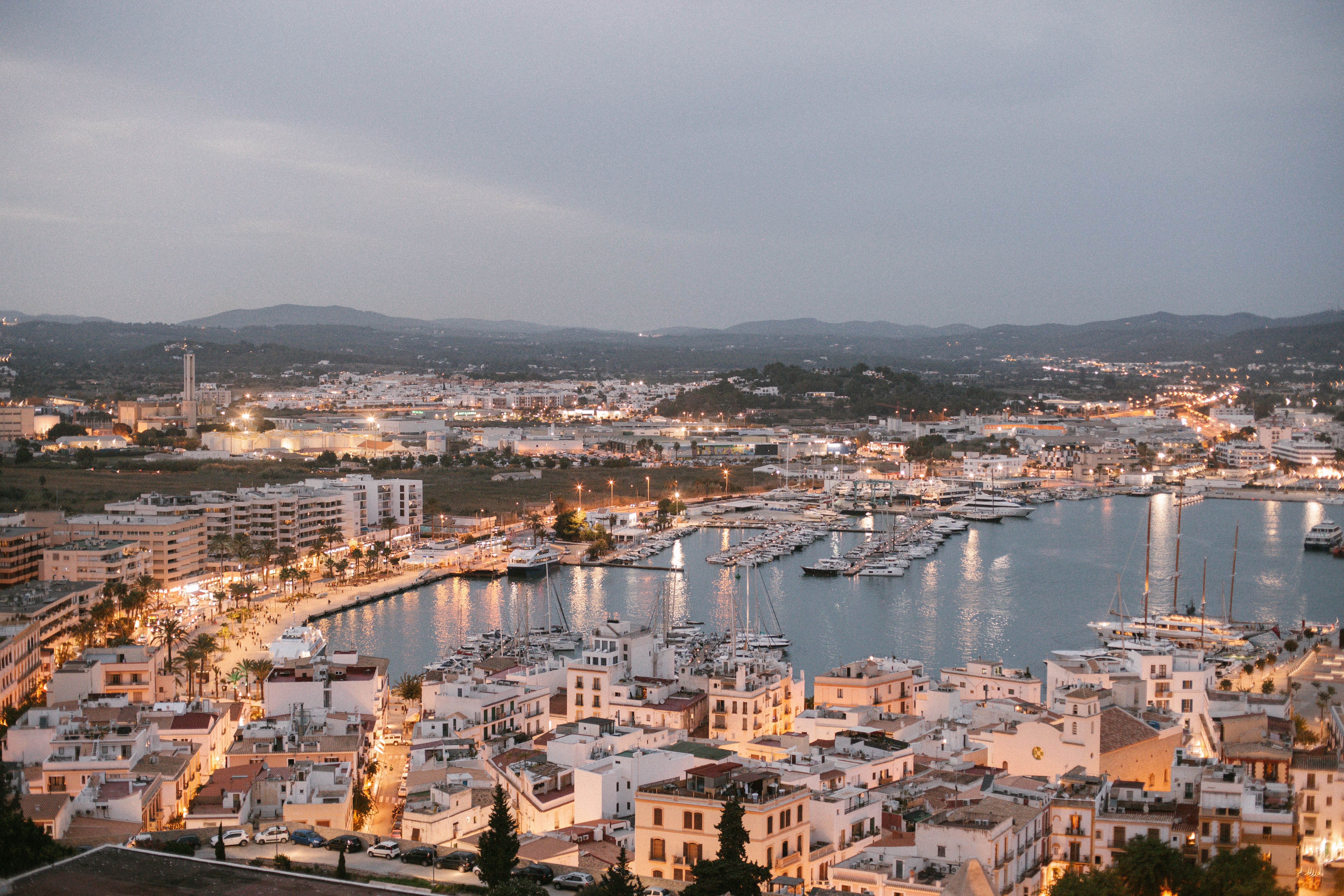
There are two Ibizas. The one that fills the headlines — the clubs, the DJs, the white foam parties, the summer season that arrives in June like a weather system and departs in October leaving the island to its rightful inhabitants — is real. It is also, for our purposes, largely irrelevant. The other Ibiza has been here considerably longer: the white farmhouses hidden in pine forest, the north coast villages with their Thursday morning markets, the UNESCO-listed medieval citadel above the harbour, and the sunsets that were famous before the first nightclub opened.
The island covers 572 square kilometres — enough to contain both versions comfortably, without them meeting. The north, around Sant Joan de Labritja and the road to Portinatx, is agricultural and forested. The artisan producers, the finca hotels, and the restaurants with vegetable gardens are all here. The west coast, around Sant Antoni, has the sunsets. The old town of Dalt Vila is a separate world entirely — cobbled streets and whitewashed walls that have been here since the Phoenicians.
For a couple who understands which part of the island to inhabit — and which month to come — Ibiza offers a week of extraordinary sensory richness: sea of unusual clarity, food of increasing ambition, and a light in the evenings that arrives at a specific shade of amber and stays there, impossibly, for forty minutes.