Galápagos Islands — marine iguanas and blue-footed boobies on the volcanic shore

Ecuador, Pacific Ocean · Living Laboratory

Galápagos Islands

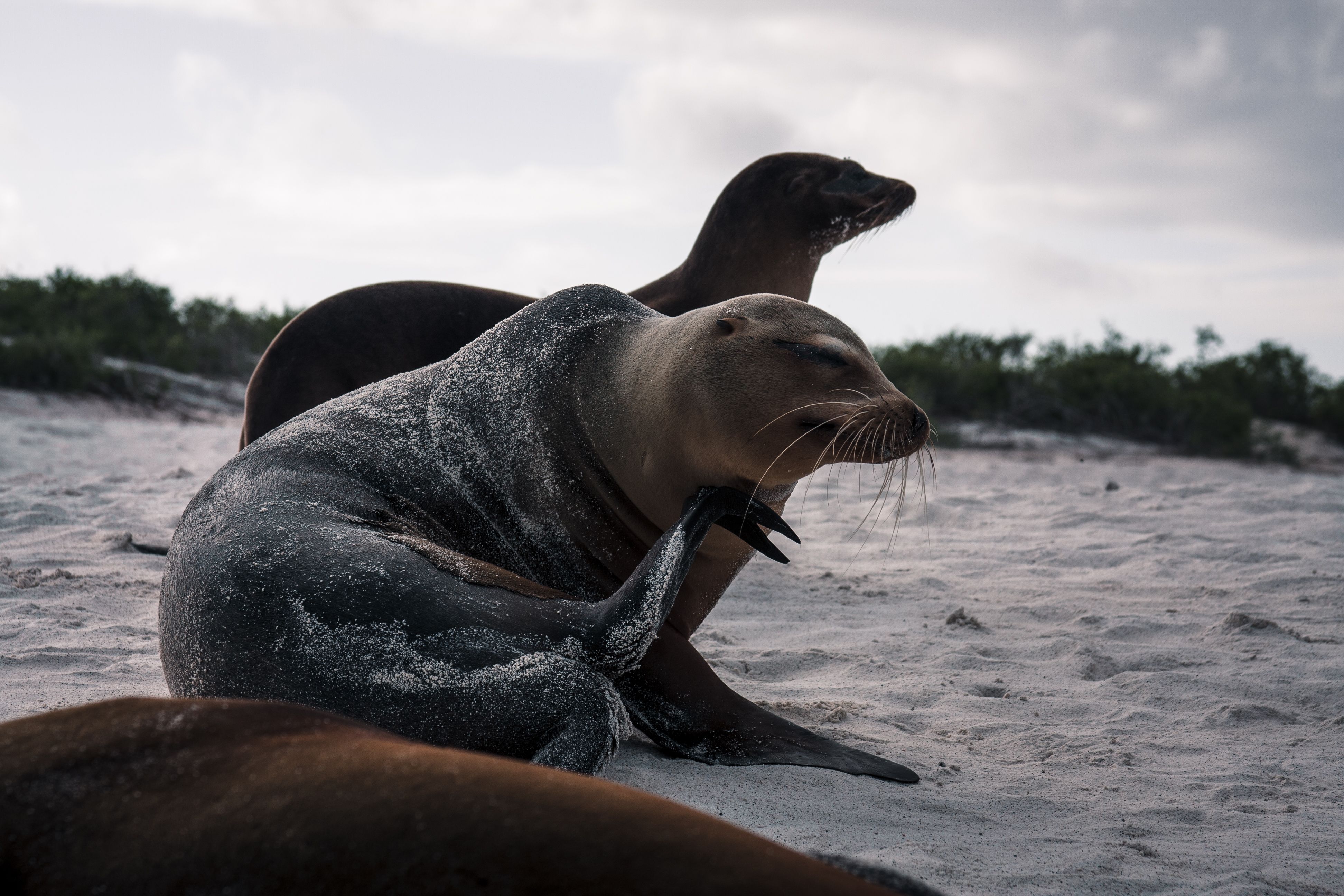
Sea lions that approach to play-fight in three metres of water. Blue-footed boobies performing courtship at arm's reach. Giant tortoises that predate Darwin's visit by a thousand years. The world's most fearless wildlife.

No need to read on

Skip ahead — plan your Galápagos escape now.

Tell us your dates and your pace. Personalised suggestions, never confirmed reservations.

Plan My Escape — £19.99

The Case for Going

A volcanic archipelago where evolution proceeded in isolation for 5 million years. The wildlife has no instilled fear of humans. The encounters are unlike anywhere else on earth.

The Galápagos Islands emerged from the Pacific by volcanic eruption approximately 5 million years ago — young enough in geological terms that the species which colonised them (by wind, current, and island-hopping) have had insufficient time to diversify into the bewildering complexity of older ecosystems like the Amazon. What they have had time to do is adapt: the 13 species of Darwin's finch (the birds whose beak variation famously catalysed Darwin's natural selection theory), the marine iguana (the world's only seafaring lizard, diving to 30 metres to graze algae and shrinking its body when food is scarce), the flightless cormorant (which lost its flight capacity when there were no land predators to flee), and the Galápagos penguin (which lives on the equator because the Humboldt Current brings cold water north) are all local evolutionary experiments with no precedents elsewhere.

The characteristic that distinguishes the Galápagos from every other wildlife destination on earth is tameness. Animals that evolved without terrestrial mammalian predators have no instilled fear of large mammals (including humans); the result is encounters at distances that wildlife photographers in the Serengeti or the Amazon can only dream of. A sea lion pup will swim up to a snorkeller within the first ten minutes; a blue-footed booby will perform its entire courtship dance three metres from an observer; a giant tortoise will walk through a hiking group without changing its pace or direction.

The Galápagos National Park (97% of the archipelago's land mass, plus 133,000 sq km of surrounding marine reserve) is managed under the strictest nature tourism regulations in the world: certified naturalist guides required at all visitor sites, maximum group sizes of 16 on most islands, rotational site access to prevent visitor impact, and entry fees that fund both conservation and the Ecuadorian communities living on the four inhabited islands.

The Destination at a Glance

A Ecuadorian Pacific archipelago of 19 major islands: four inhabited (Santa Cruz, San Cristóbal, Isabela, Floreana), accessible by liveaboard cruise or day trips from land-based lodges.

The Galápagos Islands are located 1,000 kilometres west of mainland Ecuador, straddling the equator. Access is by the twice-daily flights from Quito (José Joaquín de Olmedo) or Guayaquil to Baltra Airport (GPS, serving Santa Cruz) or San Cristóbal Airport (SCY), operating on LATAM and Avianca — journey times of approximately 2 hours from Quito. Total UK-to-islands journey: typically 14–18 hours depending on connection efficiency.

The archipelago consists of 19 major islands (13 larger islands, 6 smaller) and dozens of rocky outcroppings, spread over 50,000 square kilometres of Pacific Ocean. The four inhabited islands — Santa Cruz (the most populated, with Puerto Ayora and the Charles Darwin Research Station), San Cristóbal (the administrative capital), Isabela (the largest island, with six volcanoes), and Floreana (the smallest inhabited, with the post barrel at Post Office Bay used by whalers since 1793) — are the four land-based hubs; the uninhabited outer islands (Española, Fernandina, Genovesa, Marchena) are accessible only by liveaboard cruise.

Best Time to Visit

When to go.

Dec – May

Warm Season

Warm water (24–28°C), calm seas, good snorkelling near the surface. Marine iguana hatching (December–March). Giant tortoise nesting. The calmest sea conditions for non-sailors.

Jun – Nov

Garúa Season

Cold Humboldt Current (18–22°C) brings exceptional marine wildlife — the nutrient upwelling feeds sharks, sea lions, and penguins. The peak of the waved albatross colony at Española (June–October). Cooler and occasionally misty.

Our Pick

June–July

The transition between seasons: the water cooling but not yet at minimum, the albatross colony at full activity on Española, and the whale sharks arriving at Darwin and Wolf atolls. The most diverse single-month wildlife window in the Galápagos calendar.

Where to Stay & Sail

Five worth knowing.

01

Ecoventura Origin

Liveaboard, all islands

A 20-passenger luxury catamaran operating the Galápagos's most refined small-ship liveaboard programme — the Origin, the Theory, and the Evolve (Ecoventura's three identical sister vessels) carry 20 passengers maximum with a crew-to-guest ratio of approximately 1:1. The fleet visits all major Galápagos island sites over seven and ten-night itineraries, with a resident naturalist guide at every landing. Cabins are the largest on any Galápagos liveaboard; the food programme (fresh fish prepared by the onboard chef, Galápagos specialities including the sea cucumber dishes of the artisanal fishing cooperatives) and the naturalist lecture series make Ecoventura's programme the most intellectually substantial in the islands.

Best for

Couples who want the most refined liveaboard programme in the Galápagos — the 20-passenger maximum, the crew-to-guest ratio, and the naturalist lecture programme are the most accomplished combination in the archipelago.

02

Silversea Silver Origin

Liveaboard, all islands

Silversea's purpose-built Galápagos vessel — 100 passengers, the largest luxury liveaboard in the islands, designed specifically for the Galápagos National Park by naval architects working with the Ecuadorian environment ministry. The Silver Origin operates a 'Direct to Sea' programme (all suites have direct ocean access from their private veranda via a fold-down platform) and carries eight certified Galápagos National Park naturalist guides for 100 guests — a guide-to-guest ratio of 1:12, lower than Ecoventura's but still well above the industry standard on larger vessels. For couples who want the liveaboard experience with Silversea's known hospitality standard.

Best for

Couples who want the Silversea all-inclusive luxury hospitality standard in the Galápagos — the larger vessel carries more amenity (multiple restaurants, a spa, the Silversea butler service) at the cost of the intimate group character of the smaller yachts.

03

Scalesia Lodge

Santa Cruz Island

The most design-conscious land-based lodge in the Galápagos — six suites in a sustainable timber structure in the Scalesia forest of Santa Cruz's highlands, the most biodiverse ecosystem in the archipelago. The Scalesia forest (named for the Scalesia, the endemic daisy tree that grows to 6 metres and dominates Santa Cruz's cloud forest zone) surrounds the lodge; giant Galápagos tortoises graze freely in the lodge garden, and Darwin's finches visit the breakfast table. Day programmes from Scalesia cover Santa Cruz's principal sites (the Charles Darwin Research Station, Tortuga Bay, the lava tubes at El Manzanillo) and day trips to adjacent islands.

Best for

Couples who prefer a land-based Galápagos experience over a liveaboard — the Scalesia Lodge's highland forest position, the free-roaming tortoises, and the personalised day programme are the finest land-based option in the archipelago.

04

Finch Bay Eco Hotel

Puerto Ayora, Santa Cruz Island

The most established land-based hotel in the Galápagos — 27 rooms in a tropical garden on Academy Bay in Puerto Ayora, operated by Metropolitan Touring since 1995 and repeatedly recognised as the best eco-hotel in the island chain. The Finch Bay's programme (a mix of the hotel's own snorkelling and day tour programme and partnerships with the Charles Darwin Foundation) is the most comprehensive day-by-day itinerary available from a fixed address in the Galápagos; the swimming pool garden (with free-ranging marine iguanas occupying the pool deck chairs) and the Beaufort restaurant (the best food available on a Galápagos island) make it the correct Santa Cruz base for land-based visitors.

Best for

Couples who want the most established and most programme-comprehensive land-based hotel in the Galápagos — the Finch Bay's thirty-year presence and the Metropolitan Touring naturalist programme provide the widest range of guided activities from a fixed base.

05

Pikaia Lodge

Santa Cruz Island highlands

Twelve suites in a contemporary design lodge in the Santa Cruz highlands — the most luxurious fixed accommodation in the Galápagos, combining Ecuadorian art (a curated collection of 20th-century Quito school painting) with a naturalist programme that includes the lodge's own research vessel. The Pikaia's position in the highlands (1,200 metres, cooler and cloud-shrouded) provides the most different microclimate from the coastal lodges; giant tortoises are permanent residents of the lodge grounds. The rooftop observation terrace and the pool with views down to Academy Bay are the most dramatic hotel views on Santa Cruz.

Best for

Couples who want the most luxurious and the highest-altitude land-based experience in the Galápagos — the Pikaia's design quality, art collection, and highland position are the most distinctive combination in the archipelago.

Snorkelling, Tortoises & Darwin's Finches

What to do.

Sea lion snorkelling

Snorkelling with Galápagos sea lions — the Zalophus wollebaeki, a subspecies of the California sea lion adapted to the archipelago's waters — is the most accessible and most consistently joyful wildlife encounter in the islands. The sea lions occur at almost every snorkelling site; the juvenile animals (six months to two years old) approach snorkellers within the first minutes of entering the water, performing spiralling dives, mock charges, and the jaw-clacking greeting behaviour that they use with adult sea lions. The encounters feel like play, because they are: for a young sea lion in the absence of predators, a snorkelling human is the most interesting thing in the water. Sites: Gardner Bay on Española (the most prolific), Darwin's Arch (the outer island site where hammerhead sharks and whale sharks also occur), and Rabida Island's red-sand beach.

Giant tortoise highlands

The Galápagos giant tortoise (Geochelone elephantopus, with ten surviving subspecies across the archipelago) is the world's largest tortoise: adults reach 1.5 metres in shell length and live for 150+ years, meaning that the largest individuals alive today were hatching when Darwin visited in 1835. The Santa Cruz highlands (the El Chato tortoise reserve, accessible from Puerto Ayora in 45 minutes by taxi-truck) hosts a free-roaming population of the Santa Cruz tortoise subspecies in the volcanic caldera grasslands; the tortoises are visible at close range throughout the reserve. The tortoise's pace and scale — moving at approximately 0.3 km/h, passing through the vegetation with a deliberateness that conveys enormous geological time — is the most meditative wildlife encounter in the Galápagos.

Blue-footed booby courtship

The blue-footed booby (Sula nebouxii) — the most distinctively recognisable bird in the Galápagos, with electric blue feet whose colour indicates fitness and attracts mates — performs its sky-pointing courtship display year-round on North Seymour Island (accessible as a day trip from Santa Cruz) and at multiple outer island sites. The display sequence (the male sky-points, presents nesting material, performs a ritual walk showing the female the blue feet, and whistles while the female responds with a deeper honk) occurs at arm's length from an observer sitting on the path, completely unbothered by the human audience. Photography distance: zero. The blue-footed booby is not rare (they are abundant in the archipelago) but is nowhere else on earth viewable at this proximity.

Marine iguana snorkelling

The marine iguana (Amblyrhynchus cristatus) — the world's only seafaring lizard, which Darwin called 'the most disgusting, clumsy Lizards' — is the most alien animal in the Galápagos: on land it appears inert (the stacked masses on Fernandina's lava flows look like prehistoric rubble); in water it becomes a different animal entirely. Diving to 30 metres to graze algae from the undersea rock faces, the marine iguana swims with a sinusoidal body movement (like a small crocodile), completely at ease in the surge. Snorkelling alongside a feeding iguana (possible at Fernandina, Isabela's Elizabeth Bay, and various outer island sites) is the most alien underwater encounter available in the eastern Pacific.

What to Eat and Drink

Ceviche at the fish market, liveaboard cooking, and the loggerhead turtle's favourite algae smoothie.

The Galápagos food experience is most compelling at two extremes: the Puerto Ayora fish market (the daily catch unloaded on the Puerto Ayora pier, with sea lions and pelicans competing for scraps at the cleaning tables while restaurants on the adjacent street serve the morning's tuna, wahoo, and mahimahi as ceviche within thirty minutes of landing) and the liveaboard kitchen (Ecoventura's chef uses fresh fish bought at port stops and the Pacific's equivalent of a farm-to-table philosophy, guided by what the local artisanal fishing cooperatives have caught that morning).

The Galápagos ceviche (raw fish marinated in lime juice with red onion, coriander, and ají amarillo chilli — the Ecuadorian preparation, different from the Peruvian original in its more restrained acidity) served at the Puerto Ayora market restaurants (La Garrapata, La Tasca, and the market stalls directly at the waterfront) is the most authentic fish experience in the islands. No alcohol is produced in the Galápagos; the Ecuadorian craft beer (Cerveza Galápagos, brewed in Guayaquil) is the standard lodge and restaurant option.

The Bespoke Horizons View

The wildlife destination that redefines what a wildlife encounter can be.

Every wildlife destination makes proximity claims; the Galápagos delivers on them in ways that no other destination does. The sea lion that presses its nose against your snorkel mask is not habituated to tourist feeding — it is simply doing what a sea lion does when there is nothing to be afraid of, which is approach everything curious with maximum curiosity. The encounter is not mediated by distance, telephoto, or viewing-hide glass.

Our recommendation: the Ecoventura seven-night liveaboard, combined with two nights in Quito and one night at Mashpi Lodge for the cloud forest contrast. The Galápagos alone is extraordinary; paired with the Ecuadorian Andes, it becomes one of the four or five definitive global natural history itineraries.

A sea lion pup in three metres of water, considering you from six inches. Then it barrel-rolls and disappears. Nothing in wildlife photography prepared you for the absence of distance.

Essential Information

The practical detail.

Currency
US Dollar (official currency of Ecuador); credit cards accepted at all hotels and in Puerto Ayora; carry cash for smaller operators
Language
Spanish; English widely spoken by naturalist guides and hotel staff
Flights from UK
12–14 hours to Quito (UIO) or Guayaquil (GYE) via Miami, Houston, or Bogotá; then 2-hour flight to Galápagos (Baltra, GPS, or San Cristóbal, SCY)
Time zone
GMT -6 (Galápagos Islands; one hour behind mainland Ecuador at GMT -5)
Visa
No visa required for UK citizens; valid passport and return ticket required; Galápagos transit card (TCT) required, purchased at departure airports
Park fees
Galápagos National Park entrance fee: USD 200 per adult (increased from USD 100 in 2024); paid at Baltra or San Cristóbal airport on arrival
Conservation rules
No feeding or touching wildlife; minimum 2 metres from all animals; certified naturalist guide required at all visitor sites; no rock or plant collection; stay on marked trails
Budget range
Ecoventura liveaboard from £650 per person per night (all-inclusive); Scalesia Lodge from £350 per room per night; Pikaia from £500

Frequently Asked

Questions, considered.

Plan Your Galápagos Escape

Your personalised Galápagos itinerary, in your inbox within minutes.

Ecoventura liveaboard for the outer island wildlife, Scalesia Lodge for the highland tortoises, and the Mashpi cloud forest for the Ecuador contrast — the Galápagos itinerary that does justice to the world's most fearless wildlife.

Bespoke Horizons provides personalised travel planning and itinerary suggestions. We are not a booking agent and all recommendations are non-binding.

Ready to plan your Galápagos escape?

Plan My Escape — £19.99