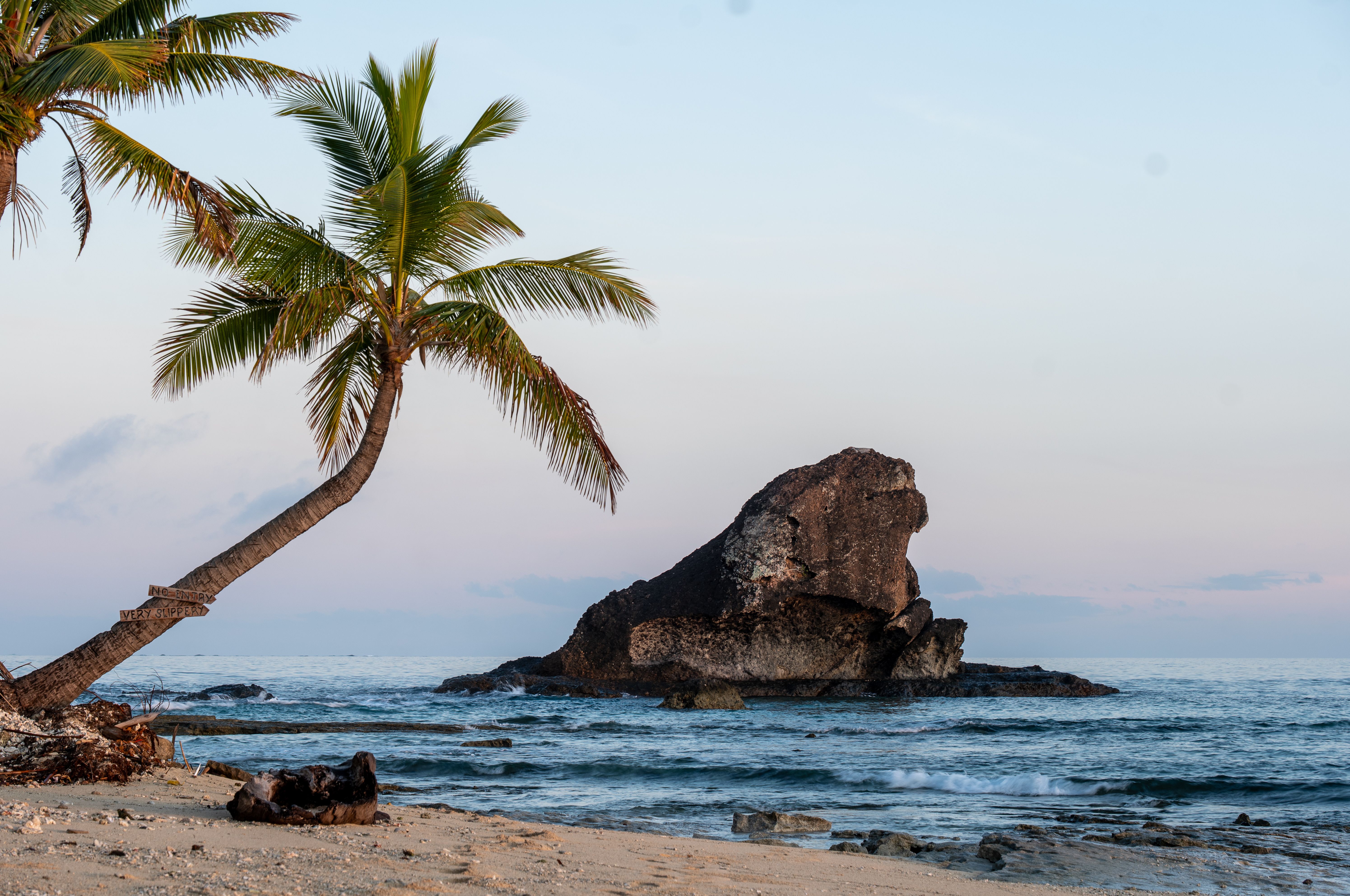
Fiji — turquoise lagoon and private island bure above the Pacific reef

Pacific Islands · 330 Islands, One Archipelago

Fiji

Laucala Island's 25 villas, 3,500 acres, and one submarine. Turtle Island's Blue Lagoon beach, 14 bures, and the adults-only policy that started an industry. The kava ceremony at the village. Bula. The word means everything worth saying.

No need to read on

Skip ahead — plan your Fiji escape now.

Tell us your dates and your pace. Personalised suggestions, never confirmed reservations.

Plan My Escape — £19.99

The Case for Going

The Pacific archipelago that invented the private island resort concept, with the warmest hospitality culture in the world and the Great Sea Reef below it.

Fiji's pre-eminence among Pacific island destinations for the luxury traveller is built on three foundations: the private island resort model (developed in Fiji before it existed at scale anywhere in the Pacific), the Fijian people's hospitality culture (the most authentic and most consistently celebrated in the world's luxury travel market), and the reef system (the Fijian reef, including the Great Astrolabe Reef, the Great Sea Reef, and the Mamanuca and Yasawa fringing reefs, rated by marine biologists as among the Pacific's most biologically diverse).

The private island sector — Laucala, Turtle Island, Kokomo, Nukubati — represents the most comprehensively developed private island luxury market in the world outside the Maldives. The difference from the Maldives model is cultural: Fijian resorts are staffed by local Fijians rather than imported service staff, and the connection between the resort community and the surrounding island community is more direct and more genuinely reciprocal. The kava ceremony performed by Laucala's village community for arriving guests is an authentic cultural practice; the meke welcome dance at Turtle Island involves the island's Fijian employees performing a ceremony that they also perform at family events and village celebrations.

The 22-hour flight from London is the primary deterrent. The experience on the other end — specifically the seaplane landing approach to a Yasawa or Kadavu private island at dusk, the lagoon turning from blue to gold below the floats — makes the journey feel proportionate.

The Destination at a Glance

An archipelago of 330 islands (100 inhabited) in the southwest Pacific, divided into the main islands (Viti Levu and Vanua Levu) and the outer island clusters.

Viti Levu (the main island, 60% of Fiji's population, home to Suva the capital and Nadi the tourist gateway) and Vanua Levu (the second island, the most ecologically diverse, home to the Nukubati resort and the Great Sea Reef) are the two main islands. The outer island clusters — the Mamanucas (the most accessible resort islands, 90 minutes from Nadi by catamaran), the Yasawas (the most dramatic chain, accessible by seaplane or the Yasawa Flyer catamaran from Port Denarau), the Kadavu Group (the most remote luxury island cluster, accessible by 40-minute domestic flight to Kadavu airport), and the Lomaiviti and Lau groups (the least visited and most authentically Fijian) — each offer a distinct character.

The cultural divide between indigenous Fijians (iTaukei) and Fiji Indians (the descendants of indentured labourers brought by the British colonial administration from 1879 to 1916 to work the sugar plantations) shapes Fijian social and political life in ways that the tourist circuit rarely engages with but that explain much of the country's contemporary character. The best place to understand both communities: the Lautoka sugar market (the most Indian city in Fiji, the sugar mill town on Viti Levu's western coast), visited on the Nadi transfer day.

Best Time to Visit

When to go.

May – Oct

Dry Season

Fiji's optimal window: cooler temperatures (23–28°C), lower humidity, and the clearest diving conditions of the year. July–August is peak demand and peak seaplane availability. Book all resorts 4+ months in advance.

Nov – Apr

Wet Season

Higher humidity and the cyclone season (risk peaks January–March). The western Mamanuca and Yasawa islands are significantly drier than the Viti Levu eastern coast. Lower rates and better availability, but cyclone risk management required.

Our Pick

August

The dry season's peak: the best diving visibility, the trade winds keeping the Mamanuca and Yasawa resorts breezy and comfortable, and the full programme of Laucala and Kokomo water sports at their most consistent. Demand is highest — book a year in advance for Turtle Island.

Where to Stay

Five worth knowing.

01

Laucala Island

Laucala Island, Cakaudrove, Fiji

25 private residences on a 3,500-acre private island in the Cakaudrove province of Fiji — owned by Red Bull founder Dietrich Mateschitz until his death in 2022, Laucala is the most expensive and most comprehensively equipped private island resort in the world. The 25 villas (each with a private infinity pool, some over the water, some on hilltops, some in the rainforest — the most varied villa positioning of any Fiji resort) are served by a resort infrastructure that includes an 18-hole golf course designed by David McLay Kidd, a full spa, a football pitch, horse stables, a submarine for reef exploration, and 14 restaurants and bars on the island. The organic farm (producing 70% of the island's food, the most self-sufficient resort food programme in the Pacific) and the Fijian village on the island (the indigenous Laucala village community, whose cultural connection to the land predates the resort by centuries, who are employed by the resort and whose customs and ceremonies are available to guests) make Laucala the most complete private island experience in the Pacific.

Best for

Couples who want the most comprehensively equipped and most luxuriously scaled private island in the Pacific — the Laucala's 25-villa maximum, the 18-hole golf course, the submarine reef exploration, and the organic farm-to-table food programme make it the ultimate private island experience in Fiji.

02

Turtle Island

Turtle Island, Yasawa Islands, Fiji

14 bures (traditional Fijian thatched cottages) on the island made famous by the 1980 film The Blue Lagoon — a 500-acre private island in the northern Yasawa Group accessible only by seaplane from Nadi, the most deliberately romantic and most cinematically associated of Fiji's private island resorts. Turtle Island's 14-bure maximum occupancy (the most restricted of any significant Fiji resort), the adults-only policy (strictly enforced, the model for several subsequent Fiji resorts), and the 'Blue Lagoon' beach (the beach filmed in the 1980 production, still the most photogenic curve of white sand in the Yasawa archipelago) make it the most consistently honeymoon-focused property in the Pacific. The all-inclusive model (including seaplane transfers, all meals, all activities, and all excursions — the most genuinely all-inclusive resort in Fiji) eliminates the supplementary billing that the more resort-hotel-style properties use.

Best for

Couples who want the most romantic and most all-inclusive private island experience in Fiji — the Turtle Island's 14-bure maximum occupancy, the adults-only policy, and the all-inclusive model (including seaplane transfers) make it the most honeymoon-focused single property in the Pacific.

03

Kokomo Private Island Fiji

Yaukuve Levu Island, Kadavu Group, Fiji

21 villas and residences on a private island in the Kadavu Group, adjacent to the Great Astrolabe Reef — the fourth largest barrier reef in the world, and the least disturbed of Fiji's major reef systems. Kokomo is the newest of Fiji's tier-one private island resorts (opened 2017) and the most diving-focused: the Great Astrolabe Reef's wall dives (some of the Pacific's most spectacular, with visibility regularly exceeding 40 metres and marine species diversity that rivals Komodo and the Coral Triangle) are accessible from the resort's private PADI dive centre by a 10-minute boat transfer. The hilltop villas (the most dramatic accommodation positions in Fiji, 60 metres above the lagoon with 360-degree views over the Kadavu group's islands) and the beachfront villas provide the widest positional contrast of any Fiji resort.

Best for

Couples who want the most diving-focused private island resort in Fiji — the Kokomo's Great Astrolabe Reef access, the PADI dive centre, and the hilltop villa position make it the best combination of world-class reef diving and luxury accommodation in the Fijian archipelago.

04

Nukubati Private Island

Nukubati Island, Great Sea Reef, Fiji

Nine bures on a private island in the Great Sea Reef — the third longest barrier reef in the world, located in the relatively undeveloped Macuata province of Fiji's northern coast, the least visited of the country's major reef systems. Nukubati's combination of the Great Sea Reef access (some of the Pacific's most pristine reef diving, with regular encounters with grey reef sharks, hammerheads on the outer wall, and the manta ray cleaning stations of the northern reef) and the island's small-scale intimacy (nine bures, maximum 18 guests, two staff per guest) make it the most conservation-focused and the most personally scaled of Fiji's private island options. The fishing programme (the Great Sea Reef's sportfishing — yellowfin tuna, wahoo, and giant trevally in the waters outside the reef — is the most diverse available from any Fiji island resort) is the most developed in the country.

Best for

Couples who want the most conservation-focused and the most intimately scaled private island experience in Fiji — the Nukubati's nine-bure maximum, the Great Sea Reef's pristine diving, and the most personalised staff-to-guest ratio of any Fiji resort.

05

Tokoriki Island Resort

Tokoriki Island, Mamanuca Islands, Fiji

35 pool villas and bures on the most northerly and least developed of the Mamanuca Islands — an adults-only resort that provides the most accessible private island experience in Fiji without the domestic flight or seaplane connection that the outer island resorts require. Tokoriki is accessible by fast catamaran from Port Denarau (90 minutes from Nadi airport) and positions itself as the most complete adults-only resort in the Mamanuca group: the adults-only pool, the spa, and the outdoor yoga and meditation programme distinguish it from the family-oriented Mamanuca resorts. The reef snorkelling from the beach (the Tokoriki reef flat is one of the most accessible from a Mamanuca resort, visible at low tide from the waterline) and the sunset views from the western beach (the Mamanuca chain's most consistent sunset view, with the Yasawa Islands silhouetted against the western sky) are the property's natural strengths.

Best for

Couples who want the most accessible adults-only resort experience in Fiji without a seaplane connection — the Tokoriki's Mamanuca position (90 minutes from Nadi by catamaran) and the adults-only pool and beach programme make it the most logistically convenient private island atmosphere in Fiji.

Reef, Village & Seaplane

What to do.

Seaplane transfer

The seaplane transfer from Nadi International Airport (Pacific Island Air or Northern Air, a small floatplane carrying 4–10 passengers) to the outer island resorts is not merely a transport arrangement but the defining opening experience of a Fiji private island stay — the approach over the reef at 500 feet, the lagoon spreading below in gradients from pale turquoise to deep blue as the depth changes, the island growing from a green silhouette to a beach-fringed reality as the plane descends, and the landing on the lagoon's surface (the floats touching the water, the deceleration, and the silence as the engine cuts) arriving you at the resort dock in a manner that the helicopter transfer does not replicate. Request the left-side seat for the approach to Laucala (the island's profile is most dramatically visible from that side); request the right for Turtle Island.

Village kava ceremony

The kava ceremony at a Fijian village (arranged through the resort and conducted in partnership with the nearest indigenous Fijian community) is the most culturally meaningful single experience available in Fiji — not the most spectacular, but the most humanly significant. The protocol (presented with the sevusevu ceremony offering — a bundle of kava root — to the village chief, acceptance and the commencement of the communal bowl drinking, the meke ceremony if the village is performing) provides a framework for an engagement with Fijian community life that is otherwise inaccessible from the resort bubble. The villages that partner with Laucala, Turtle Island, and Kokomo for guest cultural visits are the indigenous communities whose land and resources the resorts manage in partnership — the relationship is more genuine and more historically grounded than the village visit programmes of most other tropical resort destinations.

Great Astrolabe Reef diving

The Great Astrolabe Reef (accessible by 10-minute boat transfer from Kokomo Private Island in the Kadavu Group, 40 minutes by domestic flight from Nadi) is the fourth longest barrier reef in the world and, in the assessment of most visiting marine biologists, the least disturbed of Fiji's significant reef systems. The outer wall dives (dropping from the reef crest at 5 metres to 40+ metres on the wall face, with visibility regularly exceeding 40 metres and soft coral diversity — the flame-coloured gorgonian fans, the carnation corals, the massive table corals at depth — that rivals the Coral Triangle) and the drift dives through the passes (the tidal flow through the reef openings concentrating the fish populations in a controlled current, ideal for close observation of large pelagics without having to search for them) are the most consistently impressive dives available at any single Fiji resort.

Sunset sailing, Mamanucas

The sunset sailing circuit from the Mamanuca resorts (a catamaran or traditional wooden drua outrigger canoe departing from the resort dock at 17:00, circling the island's western beach as the sun drops toward the Yasawa silhouette) is the most reliably atmospheric end-of-day experience in the accessible Fiji circuit. The Mamanuca chain's western orientation (the islands open directly to the western Pacific, with the Yasawa chain as the sole horizon interruption) produces the most unobstructed Pacific sunset available from any easily accessible Fiji resort. The traditional sevusevu of kava shared on the catamaran during the sunset, the trade winds dropping to a light breeze as the sun hits the waterline, and the phosphorescence in the wake as the catamaran returns to the resort dock are the three sequential sensory experiences that define the Fiji evening.

What to Eat and Drink

Kokoda (Fijian ceviche), the Laucala organic farm table, and the kava bowl at the village at sunset.

Fijian cuisine is an underrated Pacific kitchen — the indigenous iTaukei cooking tradition (lovo earth oven, kokoda ceviche, duruka river reed vegetable), the Fiji Indian cooking tradition (the curry houses of Suva and Nadi, producing the most authentic Gujarati and South Indian food outside India itself, the result of the indentured labourers' culinary heritage), and the resort food programmes that have increasingly attempted to synthesise both traditions with the Pacific's exceptional raw ingredients.

Kokoda (fresh white fish — typically wahoo or mahi-mahi from the resort's daily catch — marinated in lime juice and coconut cream, served in half a coconut shell, the Fijian equivalent of the Tahitian poisson cru) is the definitive Fijian food experience. The Laucala Island organic farm (producing 70% of the resort's food from the island's own soil) serves the most complete farm-to-table food programme in the Pacific: the menu changes with the harvest, and the farm tour (available to guests on request) is the most educational food experience available at any Fiji resort. The Fiji Bitter beer (the national lager, cold and uncomplicated, appropriate only on the beach at noon) is the correct casual drink. Kava is the correct ceremonial drink.

The Bespoke Horizons View

The Pacific destination that gets everything right that the Maldives makes clinical: the people, the culture, the reef, and the private island concept all coexisting.

The comparison with the Maldives is inevitable and instructive. The Maldives is more architecturally sophisticated (the overwater villa design has been developed to its most refined point there) and more geographically dramatic (the coral atoll geography is more visually distinctive than the volcanic island topography of Fiji). Fiji is warmer in every sense: the Fijian people's hospitality is more genuinely warm than the Maldivian resort model's polished service; the cultural programme is more substantive; and the reef diving is better. If we were advising a couple choosing between the two, we would ask what they prioritise: architectural perfection (Maldives) or human warmth and cultural depth (Fiji).

Our recommendation: Laucala if budget is open and the widest range of activities is the priority; Turtle Island if romance and seclusion and the genuinely all-inclusive model are the priority; Kokomo if serious reef diving combined with luxury is the brief. Seven nights minimum to justify the flight.

The kava bowl passed around the village circle at dusk. The seaplane's floats touching the Yasawa lagoon. The meke dancers on the beach at the welcome ceremony. Bula is not a greeting. It is a philosophy.

Essential Information

The practical detail.

Currency
Fijian Dollar (FJD); USD and AUD accepted at some resorts; exchange at Nadi International Airport
Language
English (official), Fijian, and Fiji Hindi; English spoken everywhere in the tourist circuit
Flights from UK
Nadi International Airport (NAN) served from London via Singapore (Singapore Airlines, 22–24 hours total) or via Los Angeles (Fiji Airways, 23–25 hours total); Fiji Airways operates direct Nadi–Los Angeles route
Time zone
GMT +12 (FJT); Fiji observes daylight saving (October–January), making it GMT +13 in southern summer
Visa
No visa required for UK citizens for stays up to 4 months; entry stamp on arrival
Climate
Tropical: warm year-round (25–32°C). Dry season: May–October (cooler, lower humidity, clearest diving conditions). Wet season: November–April (cyclone risk June–November technically, but predominantly November–April; the tropical rain is typically short and intense). The western (leeward) islands (Mamanucas, southern Yasawas) are drier than the eastern Viti Levu coast year-round.
Getting to the islands
Seaplane (Pacific Island Air, Northern Air): the fastest and most dramatic transfer to outer islands (10–50 minutes depending on destination, landing on the sea adjacent to the resort). Fast catamaran (South Sea Cruises): 90–210 minutes to Mamanuca and southern Yasawa islands from Port Denarau Marina, Nadi.
Budget range
Laucala Island from £4,000 per villa per night; Turtle Island from £1,500 per couple per night all-inclusive; Kokomo from £800 per villa per night; Tokoriki from £350 per villa per night

Frequently Asked

Questions, considered.

Plan Your Fiji Escape

Your personalised Fiji itinerary, in your inbox within minutes.

Laucala's private villa or Turtle Island's all-inclusive Blue Lagoon, the seaplane transfer timing, the Great Astrolabe Reef dive briefing, and the village kava ceremony arrangement — the Fiji itinerary that accounts for 22 hours of flying and makes every night count.

Bespoke Horizons provides personalised travel planning and itinerary suggestions. We are not a booking agent and all recommendations are non-binding.

Ready to plan your Fiji escape?

Plan My Escape — £19.99