Dubrovnik — medieval walled city above the Adriatic

Dalmatian Coast, Croatia · Adriatic

Dubrovnik

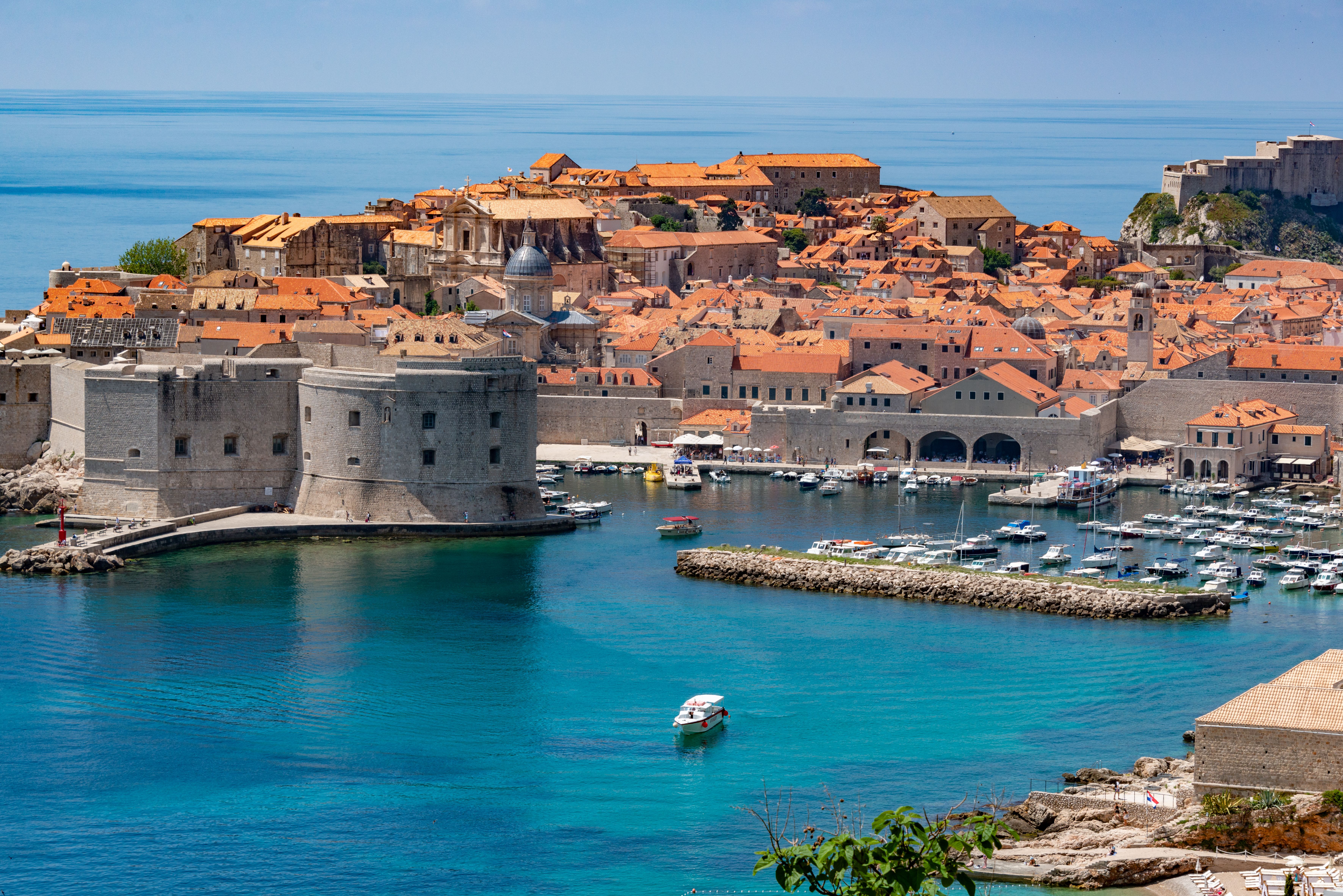
Medieval walls above the most vivid sea in Europe. A city that earns its superlatives — if you know when to visit.

No need to read on

Skip ahead — plan your Dubrovnik escape now.

Tell us your dates and your pace. Personalised suggestions, never confirmed reservations.

Plan My Escape — £19.99

The Case for Going

The pearl of the Adriatic.

George Bernard Shaw wrote, in 1929, that "those who seek paradise on earth should come to Dubrovnik." The city has been receiving the compliment — and the subsequent visitors — ever since. The medieval walls are among the most intact in Europe; the old town inside them is limestone and terracotta, baroque churches and Renaissance fountains, all of it contained within a boundary that has barely changed in six hundred years. The Adriatic below is a shade of blue that exists, properly, nowhere else.

The challenge is the crowd. Dubrovnik received over a million visitors in the month of August 2023 — an extraordinary number for a walled city of forty thousand permanent residents. The cruise ships account for a significant proportion: four or five vessels can disembark simultaneously, filling the Stradun from wall to wall by ten in the morning. This is the version of Dubrovnik that its critics describe, accurately.

The version we send couples to operates on different hours. A clifftop hotel with a private boat to the old town. Arrival in the city at seven in the morning or nine in the evening. Days spent on a private vessel among the Elaphiti Islands, returning to the city after the cruise passengers have departed. This Dubrovnik is a different experience — and it is still, as Shaw suggested, something close to paradise.

The Destination at a Glance

A medieval city state on the southern Dalmatian coast, two kilometres of wall, and the clearest sea in Europe.

Dubrovnik sits at the southern end of Croatia's Dalmatian coast, just 30 kilometres from the border with Bosnia-Herzegovina and Montenegro. The old town — a UNESCO World Heritage Site since 1979 — is contained within 13th and 14th-century walls that stretch for two kilometres above the Adriatic. Outside the walls: modern Dubrovnik, the port, the cable car station, the clifftop hotels.

The surrounding sea belongs to the South Dalmatian archipelago: the Elaphiti Islands (Koločep, Lopud, Šipan) to the north-west; Mljet, Croatia's greenest island and a national park, an hour south. A private boat from Dubrovnik port opens all of these; the fastest water taxis cover the Elaphiti chain in under two hours.

The climate is warm and dry from May through October, with July and August averaging 28°C. The sea temperature peaks in August at around 26°C — warm enough to swim comfortably from May through October. Croatia adopted the Euro in January 2023, removing the former currency complication.

Best Time to Visit

When to go.

Jun

Ideal Window

Before the full cruise ship season. The city functional and beautiful, the sea warm, the restaurants at full capacity without the full August pressure. The best combination of weather and access the city offers.

Sep

The Right Answer

Cruise traffic drops sharply after the first week. The sea is at its warmest. The Stradun is walkable at midday. The Dubrovnik Summer Festival concludes but the cultural programme continues. Hotel rates begin their seasonal descent.

Jul – Aug

Peak Season

The Dubrovnik Summer Festival is genuine and worth attending. But plan around the cruise ship schedule (available online), arrive early, and use a private boat to escape to the islands on the busiest days.

Where to Stay

Five worth knowing.

Position relative to the old town and the sea matters as much as room quality in Dubrovnik. Each of these has been selected for both.

01

Villa Dubrovnik

Sveti Jakov, above the Adriatic

The finest hotel in Croatia by some margin. Forty rooms built into a cliff above the sea, connected to the old town by a private wooden boat that runs on demand. The cliff-edge pool, the restaurant terrace at dusk, and the silence — total silence, despite being eight minutes by boat from the Stradun — make this feel like a different city entirely.

Best for

Couples who want to be close to Dubrovnik without being inside it, and are prepared to pay for that distinction.

02

Hotel Excelsior

Ploče, five minutes from the Pile Gate

The grande dame of Dubrovnik hotels, positioned on the waterfront five minutes' walk from the Old Town walls. The city-view rooms are among Croatia's finest hotel rooms — wide terraces above the Adriatic, with the old town's terracotta roofscape to the west. A spa, two restaurants, and a private beach below. Churchill stayed here in 1944.

Best for

Couples who want Dubrovnik's most iconic view from their terrace and the old town close enough to walk in the evening.

03

Hotel Bellevue

Miramare, western bay

Sixty-four rooms built into the cliff of Miramare Bay on Dubrovnik's western coast, each with a terrace directly above the Adriatic. The private beach below — reached by elevator through the cliff — is one of the city's finest, clear and calm in a sheltered cove. The restaurant, suspended above the water, serves the area's best seafood.

Best for

Couples who want direct sea access and a private-feeling beach within reach of the old town but removed from its crowds.

04

Sun Gardens Dubrovnik

Orašac, 12km north of the city

A full-scale resort complex outside the city — marina, multiple pools, private beach, and a range of room categories up to ultra-luxury villas. The distance from the old town is a trade-off for the scale of facilities and the absence of the city's summer crowds. Private water taxi to the old town takes 25 minutes.

Best for

Couples who want resort-style facilities and a private marina alongside Dubrovnik access — particularly those arriving by private yacht.

05

Pucić Palace

Inside the Old Town walls

The only luxury hotel within the Old Town walls — a 17th-century baroque palazzo on the Gunduličeva Poljana, the old town's most beautiful square. Seventeen rooms, an intimate scale that makes the operation feel like a private house, and the extraordinary experience of stepping out of a five-star bedroom directly into the stone streets of a 13th-century city.

Best for

Couples who want to wake up inside the walls of one of Europe's finest preserved medieval cities, with no distance between them and it.

Beyond the Stradun

What to do.

The old town walls at dawn

The two-kilometre wall circuit — one of the finest walks in Europe — should be done at seven in the morning before the cruise ship passengers arrive and before the heat of the day builds on the exposed limestone. The view from the Minceta Tower over the roofscape and out to the Adriatic defines what Dubrovnik is. At this hour, with almost no one else on the walls, it is a private experience. At noon in August, it is a queue.

Private boat to the Elaphiti Islands

A crewed boat from the old port opens the three-island chain of the Elaphitis in half a day: Koločep for the pine woods and the first swim, Lopud for the sandy beach (Šunj Bay — the Adriatic's finest easily accessible sand beach) and lunch at Bova Restaurant, Šipan for the complete absence of commercial development and the best fish of the day. Return to Dubrovnik for nine and the evening.

Cable car to Mount Srđ

The cable car from the suburb of Ploče ascends 412 metres to the summit of Mount Srđ in three minutes, revealing the full context of the city — the peninsula, the islands, the open Adriatic, Bosnia-Herzegovina on the horizon. The restaurant at the top is for the view; dinner is better had below. Go at sunset, stay for the afterglow, and return in the dark with the city's floodlit walls below.

Mljet National Park

An hour south by fast boat, Mljet is Croatia's most beautiful island: seventy per cent forested, with two saltwater lakes in the middle of a national park and an 11th-century Benedictine monastery on an island in the larger lake. Hire bicycles at the park entrance. Swim in the lake, which is calmer and warmer than the sea. Have lunch at Melita Restaurant overlooking the monastery. Return by four.

What to Eat and Drink

Dalmatian cooking is better than you have been told.

Croatian coastal cooking — particularly in the south — is built on extraordinarily good raw material: fish caught the same morning, Dalmatian olive oil (among the world's finest, significantly underappreciated), and a wine tradition rooted in indigenous grape varieties that have no equivalents elsewhere. The black risotto made with cuttlefish ink, the grilled or peka-cooked fish of the day, the pašticada (beef slow-cooked in wine with prunes) — these are dishes with genuine depth and centuries of kitchen refinement behind them.

In Dubrovnik itself: Proto Restaurant, just off the Stradun at Ulica Široka 1, is the correct answer for fine-dining fish — the John Dory grilled over charcoal and the Pelješac oysters are non-negotiable. Nautika, on the cliff beside the Pile Gate, has the old town's finest terrace. For something less formal, the konoba (taverna) in the village of Šipan town — no name, no sign, the third door on the left from the harbour — serves the local fisherman's catch simply prepared and the local wine from unlabelled bottles, which is exactly right.

The wines of the Pelješac Peninsula — twenty minutes north by boat — are the correct accompaniment to all of this: Dingač and Postup from the Plavac Mali grape, dense and generous, produced from vines that grow on vertical cliff faces above the sea. The winery at Matuško in Potomje is the standard reference for serious visitors.
The Bespoke Horizons View

A city of uncommon beauty that requires uncommonly careful planning.

Dubrovnik is not a destination that rewards the casual approach. Arriving without a plan in August and expecting to wander the old town at leisure is to misunderstand the current reality of one of Europe's most visited cities. The experience it offers to the prepared visitor — clifftop hotel, private boat, early mornings — is genuinely exceptional; the experience it offers the unprepared is considerably less so.

The combination that works best is three nights in Dubrovnik proper — for the walls, the old town at dawn, and the Pelješac wines — combined with two nights on one of the Elaphiti Islands, where the pace drops to something closer to the Croatian coast of thirty years ago. Šipan is the right island: the fish restaurant by the harbour, the old stone villas, the complete absence of anything designed for tourists.

Shaw was right in 1929, and the city has been right ever since — you simply need to know which hours to arrive at it.

Essential Information

The practical detail.

Currency
Euro (€); cards widely accepted. Croatia adopted the Euro in 2023
Language
Croatian; English widely spoken in tourist areas
Flights from UK
2.5–3 hours direct (British Airways, easyJet, Jet2 seasonal)
Time zone
GMT +1 (summer: GMT +2)
Visa
No visa required for UK/EU citizens
Getting around
Old town is pedestrianised; private boat essential for island trips
Tipping
Service not typically included; 10% in restaurants is standard
Budget range
£300–£1,500+ per person per night at luxury cliff and waterfront hotels

Frequently Asked

Questions, considered.

Plan Your Dubrovnik Escape

Your personalised Dubrovnik itinerary, in your inbox within minutes.

The right hotel above the sea, a private boat to the Elaphiti Islands, the wall walk timed to the correct hour, and a table at Proto the evening you arrive — the planning that turns an overcrowded city into an extraordinary week.

Bespoke Horizons provides personalised travel planning and itinerary suggestions. We are not a booking agent and all recommendations are non-binding. Hotel availability, pricing, and policies are subject to change — verify current details directly with properties before booking.

Ready to plan your Dubrovnik escape?

Plan My Escape — £19.99