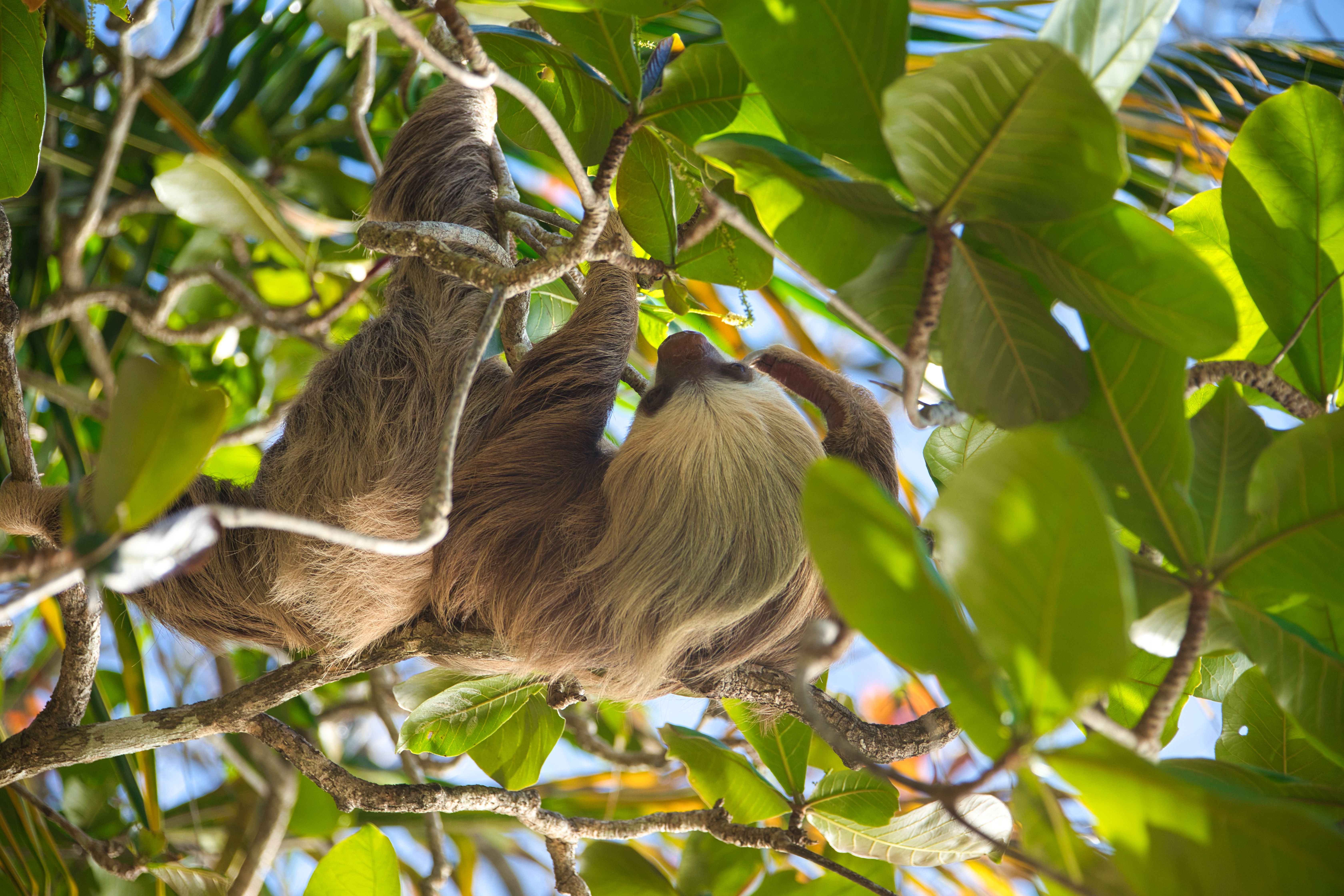
Costa Rica — primary rainforest and Arenal Volcano in the cloud

Central America · Biodiversity Capital

Costa Rica

The resplendent quetzal's 60-centimetre tail feathers in the Monteverde cloud forest. The Arenal Volcano above your plunge pool at dawn. The Pacuare River raft arrival through Class IV rapids. 6% of earth's species, in a country the size of Denmark.

No need to read on

Skip ahead — plan your Costa Rica escape now.

Tell us your dates and your pace. Personalised suggestions, never confirmed reservations.

Plan My Escape — £19.99

The Case for Going

The most biodiverse country per square kilometre on earth, with luxury lodges built in the primary forest, not beside it.

Costa Rica has made conservation a national project in a way that no other country in the tropical Americas has matched: 26% of the country's land area is under formal national park or protected reserve status (the highest percentage of any country in the world), and the 1994 constitutional amendment prohibiting the use of wild animals for commercial purposes established the legal basis for a wildlife tourism model that funds conservation rather than depleting it. The result: a country where the quetzal, the scarlet macaw, and the jaguar are thriving rather than retreating.

The luxury lodge infrastructure in Costa Rica — concentrated at Arenal, Monteverde, the Osa Peninsula, and the Caribbean slope — is the most ecologically integrated in the Americas: lodges like Pacuare and Lapa Rios are positioned within primary forest reserves that exist because the lodge revenue funds their protection. The physical experience (arriving at Pacuare by raft, waking at Lapa Rios to the scarlet macaw flyover, watching the Arenal Volcano's cloud cap from the Nayara plunge pool) is the most immersive rainforest experience available in a luxury context.

Costa Rica also offers one of the most accessible adventure activity menus in the world: white-water rafting on the Pacuare and Sarapiquí rivers, zip-lining through the Monteverde cloud forest canopy (the pioneering canopy tour operation of the 1980s, now replicated around the world), surfing at Nosara and Tamarindo, and sea kayaking in the Golfo Dulce are all within reach of the primary lodge circuit. The Pura Vida philosophy ('pure life' — Costa Rica's national slogan, expressing a contentment with the present moment) is most authentically expressed in the lodge culture.

The Destination at a Glance

A Central American republic of 51,000 sq km: twelve distinct life zones from Caribbean lowland to Andean cloud forest, 26% protected land area, and the most developed eco-tourism infrastructure in the Americas.

San José International Airport (SJO) is the primary international gateway, receiving direct flights from London (British Airways via Miami, American Airlines via Miami and Dallas). Liberia Airport (LIR) in the north-west Guanacaste region receives seasonal charter and direct flights from the UK, and is the correct arrival airport for the dry Pacific coast lodges (Papagayo Peninsula, Tamarindo). Internal flights (SANSA, Green Airlines) connect San José to Puerto Jiménez (Osa Peninsula, 45 minutes) and to La Fortuna (Arenal, 30 minutes) — both destinations require multi-hour drives without internal flights.

The country's geography produces its life zone diversity: the Continental Divide (the Cordillera Central, peaking at Barva Volcano at 2,906 metres) separates the Caribbean slope (wetter, more species-dense, accessed via the Caribbean Lowlands) from the Pacific slope (drier north, wetter south, the Osa Peninsula at the far south being the wettest and most biodiverse). The two coasts have different characters: the Caribbean coast (Tortuguero, Puerto Viejo) is African- Caribbean in culture and more humid; the Pacific coast (Guanacaste, Manuel Antonio, Osa) is Spanish-colonial in culture and more resort-developed.

Best Time to Visit

When to go.

Dec – Apr

Dry Season

The Pacific coast's dry season: Guanacaste sunny and beach-ready, the Arenal zone drier than usual. Wildlife is concentrated around water sources in the dry period. February–April is the quetzal nesting season at Monteverde.

May – Nov

Green Season

The rainforest at its most vivid: waterfalls at full power, vegetation at maximum density, and the insect, frog, and bird activity that the dry season suppresses. The best time for the Pacuare River raft arrival (highest water levels, most dramatic rapids). Lower lodge rates.

Our Pick

March

The quetzal nesting season at Monteverde (March–May, the avocado fruiting window); the dry season's most settled weather; and the Pacific coast beach conditions at their most reliable. The most complete single month in Costa Rica.

Where to Stay

Five worth knowing.

01

Nayara Tented Camp

Arenal Volcano, northern Costa Rica

Twenty-three luxury tents on a hillside above Arenal Lake with the Arenal Volcano as the direct view — the most accomplished tented camp in Central America and the winner of the World's Leading Luxury Tented Camp at the World Travel Awards. Each tent (90 square metres, wood decking, private infinity plunge pool, outdoor bathroom open to the jungle) faces the volcano, which is visible in clear weather from the plunge pool. The Nayara Resort's spa and thermal hot springs (fed by the volcanic geothermal activity that makes the Arenal zone the most thermally active in Central America) are shared with the tented camp guests.

Best for

Couples who want the most luxurious tented accommodation in Central America with the Arenal Volcano as the uninterrupted view — the private plunge pools with the volcanic backdrop are the most dramatic hotel private pool in Latin America.

02

Pacuare Lodge

Pacuare River gorge, Caribbean slope

Thirty suites and three treehouse villas in a rainforest lodge accessible only by white-water raft on the Pacuare River — the most remote luxury lodge in Costa Rica and arguably in Central America. The Pacuare Lodge sits in a 530-hectare private reserve on the Caribbean slope, where the primary rainforest has never been cleared; the species diversity (550 bird species, 120 mammal species, the resplendent quetzal, the Baird's tapir, and the jaguar all recorded in the reserve) is the highest of any lodge in Costa Rica. The river approach (a two-hour raft through Class III and IV rapids, with a professional raft guide) provides an arrival experience that no other hotel delivers.

Best for

Couples who want the most remote and most biodiverse lodge in Costa Rica — the raft arrival, the primary forest reserve, and the quetzal and tapir encounters make Pacuare the most adventure-oriented luxury lodge in Central America.

03

Lapa Rios Lodge

Osa Peninsula, southern Pacific

Sixteen bungalows on a 400-hectare private rainforest reserve on the Osa Peninsula — the most biodiverse area in the Western Hemisphere, where the combined species count of insects, plants, mammals, reptiles, and birds exceeds any equivalent area on earth. The Osa Peninsula (the rainforest in the south-western corner of Costa Rica that extends to the Pacific coast) contains 2.5% of the world's biodiversity in 0.001% of the world's land area. Lapa Rios's 16 bungalows are widely separated in the forest canopy; the scarlet macaw flocks that roost in the adjacent mangroves (the largest macaw population in Costa Rica) fly over the lodge at dawn and dusk in pairs and groups.

Best for

Couples who want the most biodiverse setting of any lodge in Costa Rica — the Osa Peninsula's 400-hectare reserve around Lapa Rios is the most species-dense environment accessible to the luxury traveller in the Americas.

04

Andaz Costa Rica Resort at Peninsula Papagayo

Guanacaste, Pacific north coast

153 rooms in a luxury design resort on the Papagayo Peninsula — the dry Pacific north coast zone, where the Guanacaste Province's 300 days of sunshine and protected bay beaches produce the most resort-orientated environment in Costa Rica. The Andaz is the primary luxury option for the Papagayo Peninsula: a private bay with calm Pacific water, a PADI dive centre, and the most design-forward architecture on Costa Rica's Pacific coast. The primary distinction from the jungle lodges: this is a resort hotel with a beach, rather than a biodiversity-focused wilderness lodge; for couples who want the rainforest for two or three nights and a beach finale, the Papagayo Peninsula is the correct sequence.

Best for

Couples who want to combine a jungle lodge with a luxury Pacific beach hotel — the Andaz's Papagayo Peninsula position and the calm Guanacaste bay complete the Costa Rica circuit with a beach that the Pacific centre and south cannot offer.

05

Monteverde Lodge & Gardens

Monteverde Cloud Forest Reserve

Fifty-seven rooms in the gateway town to the Monteverde Cloud Forest Reserve — the most celebrated cloud forest ecosystem in Central America, where the permanent mist sustains a biodiversity of extraordinary density. The resplendent quetzal (the most beautiful bird in the Americas, the male with tail feathers of 60 centimetres) is most reliably encountered in the Monteverde cloud forest during the March–May avocado-ripening season; the hummingbird diversity (sixteen species, viewable at the lodge's own feeders) and the three-wattled bellbird (whose call can be heard 1.5 kilometres away) make Monteverde the most ornithologically compelling destination in Costa Rica.

Best for

Couples who want the Monteverde Cloud Forest quetzal encounter — the March–May window at the Monteverde Lodge provides the most reliable resplendent quetzal sightings in Costa Rica.

Quetzals, Volcanoes & White Water

What to do.

Quetzal watching, Monteverde

The resplendent quetzal (Pharomachrus mocinno) — the most beautiful bird in the Americas, the male with an iridescent emerald-green body, crimson breast, and tail feathers of up to 60 centimetres that trail behind him in flight — is the most sought-after wildlife sighting in Central America. In Costa Rica, the quetzal is most reliably encountered at Monteverde (March–May, when the wild avocado trees they feed on are fruiting in the cloud forest zone) and in the Talamanca highlands south of San José. The Monteverde Cloud Forest Reserve's dawn bird walk (departing 05:30 with a specialist bird guide) provides the highest probability of a quetzal encounter; the guides have tree-specific knowledge of which avocado trees are producing fruit on any given morning.

Pacuare River rafting

The Río Pacuare — the most celebrated white-water river in Central America, running from the Talamanca Mountains to the Caribbean lowlands through a narrow gorge of primary rainforest — carries Class III and IV rapids for approximately 30 kilometres between Tres Equis and Siquirres. The two-day descent (overnight at Pacuare Lodge) is the most complete Pacuare experience; the single-day raft from Tres Equis to the Pacuare Lodge landing (arrival by raft, two-night stay, departure by four-wheel-drive on the forest trail) is the most dramatic lodge arrival in Central America. The river gorge (accessible only by raft or on foot) shelters primary rainforest that has never been logged; the spectacled caiman, the river otter, and the tapir are all resident.

Arenal hot springs

Arenal Volcano (1,633 metres, the most perfectly conical active volcano in the world, silent since its last eruption period ended in 2010 but geothermally still highly active) heats the spring water that feeds the Arenal zone's numerous natural thermal pools. The Tabacón Grand Spa Thermal Resort (the most commercial option, with a water park scale and 20+ pool complex) and the Baldi Hot Springs (similar scale) are the most accessible; the Nayara Resort's private thermal pools, accessible only to hotel guests, are the most refined. The combination of the volcanic profile (shrouded in cloud at dusk, occasionally revealing itself for 15 minutes at a time) and the 36°C thermal water in a jungle garden is the most atmospherically charged relaxation experience in Central America.

Corcovado National Park

Corcovado National Park on the Osa Peninsula — 41,788 hectares of pristine primary rainforest on the Pacific Ocean, the most species-dense protected area in the Western Hemisphere — is accessible by boat from Sierpe or from Drake Bay for day or multi-day visits. The park's four ranger stations (Los Patos, San Pedrillo, La Leona, Sirena) connect by jungle trails; the Sirena station, in the centre of the park, provides the most prolific wildlife sightings (tapir, jaguar, peccary, all four monkey species, and the largest congregation of scarlet macaws in Costa Rica). A day trip from Lapa Rios or Drake Bay covers the coastal section; a two-night permitted camping stay at Sirena accesses the interior that no day visitor reaches.

What to Eat and Drink

Gallo pinto, fresh ceviche, and a coffee grown on the volcano slope.

Costa Rican food culture is the most understated in Central America — the Tico kitchen (Tico being the colloquial term for Costa Ricans) is based on a handful of preparations executed consistently well rather than the baroque complexity of Oaxacan or Peruvian cooking. Gallo pinto (rice and black beans cooked together, the national dish eaten at breakfast, lunch, and dinner, the proportions varying by family and region) and casado (the standard lunch of rice, beans, salad, protein, and plantain on a single plate) are the democratic staples. The fresh fish ceviche (marinated in lime with red onion and cilantro, the Pacific preparation closer to the Peruvian original than the Mexican Yucatán version) is the most accomplished preparation in the Tico kitchen.

Costa Rican coffee is among the highest-quality Arabica in the Americas: the Central Valley, Tarrazú, and Naranjo producing regions grow at altitude under consistent cloud cover in conditions that concentrate the flavour compounds that make high-altitude washed Arabica the specialty coffee industry's most prized source. The Café Britt and Doka Estate (both accessible as farm tours from San José) are the most visitor-oriented producers; the Tarrazú Valley tour (three hours from San José) reaches the origin of Costa Rica's most celebrated export at the farm level. At the lodges, the house coffee is invariably Tarrazú or Central Valley local-grown; order it black.

The Bespoke Horizons View

The world's most successful conservation-tourism model, and a luxury lodge culture that earns its setting.

Costa Rica has solved the problem that most eco-tourism destinations haven't: the lodges fund the conservation that creates the wildlife experience. Lapa Rios exists because its 400-hectare forest reserve (the surrounding land that would otherwise be deforested for cattle ranching) is only economically viable as a conservation zone because the lodge revenue pays for its protection. The guests at Pacuare are the reason the Pacuare watershed has never been dammed.

Our Costa Rica recommendation: ten nights, the cloud forest (Monteverde, three nights, the quetzal), the volcano (Nayara Tented Camp, three nights, the hot springs), and the Osa Peninsula (Lapa Rios, three nights, the macaw flyover at dawn and the Corcovado day trip), with a final night in San José before departing. The quetzal encounter is the emotional peak; the Corcovado is the intellectual one. Pura Vida.

A scarlet macaw pair clearing the breakfast terrace at Lapa Rios with their particular urgency, their red a completely different red than any red in Europe. The Osa Peninsula's morning.

Essential Information

The practical detail.

Currency
Costa Rican Colón (CRC); USD accepted at virtually all hotels and tourist businesses; carry local currency for taxis and smaller restaurants
Language
Spanish; English widely spoken in the tourism sector and at all luxury lodges
Flights from UK
10–12 hours to San José (SJO) or Liberia (LIR) via Miami, Houston, or Madrid; BA and American Airlines serve San José; direct charters to Liberia available seasonally
Time zone
GMT -6 (CST; no daylight saving)
Visa
No visa required for UK citizens; tourist card on arrival; 90-day maximum stay
Pura Vida
Costa Rica's national philosophy ('pure life') translates to a relaxed, non-urgent pace — departure times at lodges in remote areas are suggestions; the 'Tico time' cultural context should be understood before arrival
Road conditions
Many lodge access roads are unpaved and require 4WD in the rainy season; Pacuare is accessible only by raft; confirm transport requirements with your lodge when booking
Budget range
Nayara Tented Camp from £450 per night; Pacuare Lodge from £350 per person per night (all-inclusive); Lapa Rios from £250

Frequently Asked

Questions, considered.

Plan Your Costa Rica Escape

Your personalised Costa Rica itinerary, in your inbox within minutes.

Monteverde for the quetzal in March, Nayara Tented Camp for the Arenal hot springs, and Lapa Rios on the Osa Peninsula for the macaws and Corcovado — the ten-night Costa Rica circuit that does justice to 6% of the world's species.

Bespoke Horizons provides personalised travel planning and itinerary suggestions. We are not a booking agent and all recommendations are non-binding.

Ready to plan your Costa Rica escape?

Plan My Escape — £19.99