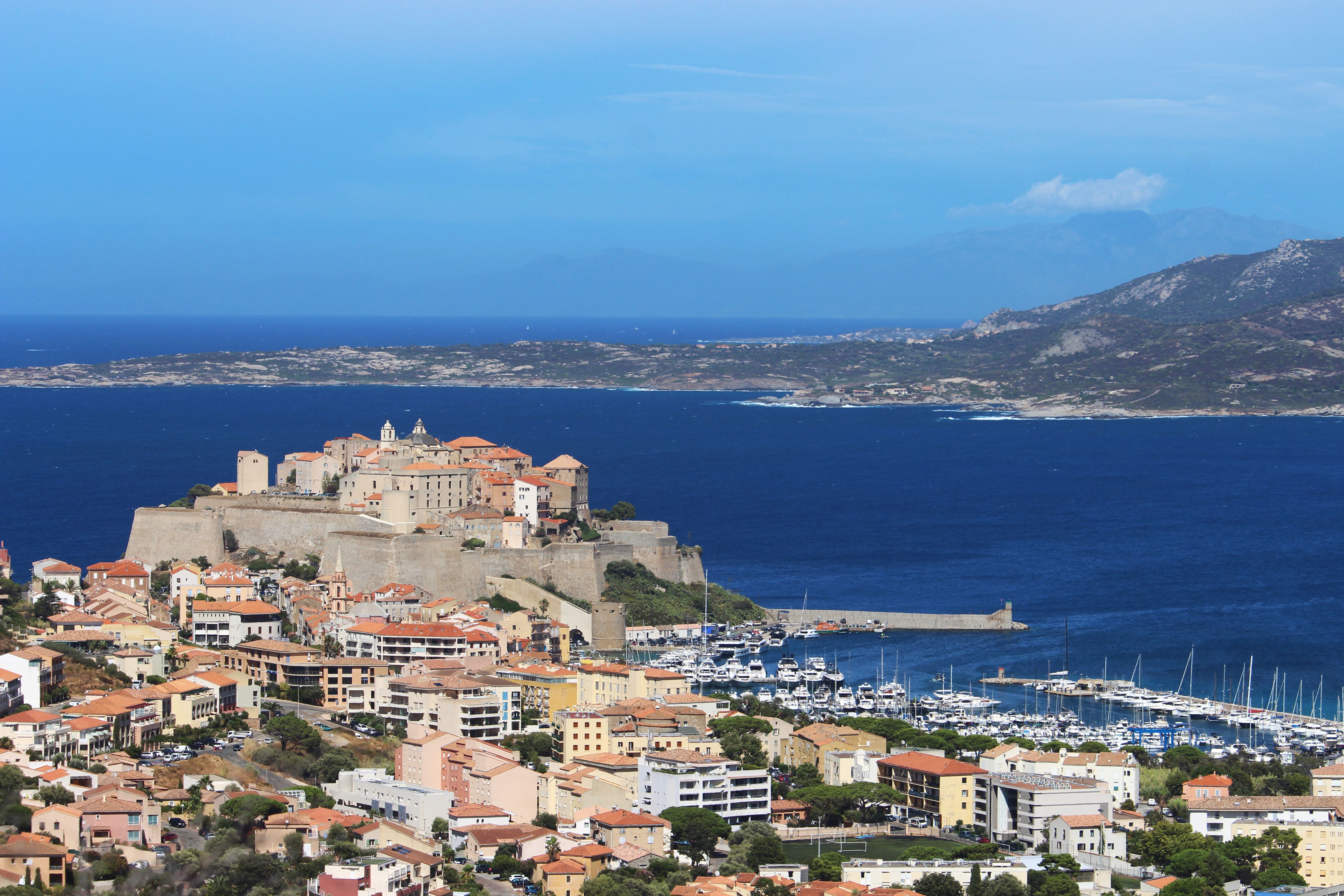
Corsica — turquoise coves below the maquis-covered mountains

The Isle of Beauty · Mediterranean France

Corsica

Wild mountains above turquoise coves. An island that smells of maquis at twenty miles and rewards those who venture beyond the coast.

No need to read on

Skip ahead — plan your Corsica escape now.

Tell us your dates and your pace. Personalised suggestions, never confirmed reservations.

Plan My Escape — £19.99

The Case for Going

The Mediterranean's wildest island.

Corsica's Ile de Beauté reputation is not marketing — it is geography. The island has 200 kilometres of coastline with water of a clarity that the French mainland cannot match, beaches ranging from long Atlantic-style white sand to sheltered coves enclosed by red porphyry rock, and an interior that rises through maquis scrubland and chestnut forest to alpine peaks above two thousand metres. The combination — mountain wilderness and Mediterranean beach — is available nowhere else in the same compact form.

The island has been French since 1768 — Napoleon Bonaparte was born in Ajaccio eleven months later — but its cultural identity is more complex: Genoese architecture in every port town, an indigenous language that is closer to Italian than French, a food culture rooted in mountain charcuterie and ewe's milk cheese rather than the baguette. The Corsicans' pride in this distinction is apparent in everything from the restaurant menus to the road signs.

For a couple seeking a Mediterranean island with more character and less polish than its competitors, Corsica is the answer — wilder, more self-contained, smelling (genuinely and distinctively) of the maquis scrubland that covers its hillsides, and capable of offering both extraordinary beaches and a mountain interior of surprising depth within the same five-day visit.

The Destination at a Glance

A French island with an Italian soul, an alpine interior, and Mediterranean water.

Corsica covers 8,680 square kilometres — larger than Luxembourg and Andorra combined — and rises to 2,706 metres at Monte Cinto. The island has four airports (Ajaccio, Bastia, Calvi, Figari) and is served by regular ferries from Marseille, Nice, and Livorno. The road network is adequate and occasionally alarming: mountain roads are narrow, hairpin-heavy, and best driven slowly and without schedule pressure.

The north is more developed and culturally French-leaning: Bastia is the main commercial capital, Calvi has the island's finest luxury hotel infrastructure. The west coast — the Gulf of Porto and the Calanques de Piana — is the island's most dramatic coastal scenery. The south — Porto-Vecchio and Bonifacio — has the finest beaches and the most polished luxury resort hotels. The interior is almost entirely undeveloped: mountain villages, chestnut forests, and the GR20 hiking trail that runs the length of the island along the main ridge.

The island is 90 minutes by ferry from Sardinia and 30 minutes by air from Nice. A Corsica week combined with two nights in Sardinia's Costa Smeralda is a natural extension for couples who want both islands in a single trip.

Best Time to Visit

When to go.

Jun

Our First Choice

The island at its most beautiful: wildflowers in the mountain meadows, the rivers still running from snowmelt, the sea warm enough to swim, and the roads not yet overwhelmed by August traffic.

Sep

The Ideal Month

The sea at its warmest, the island's peak crowds departing, and the chestnut harvest beginning in the interior forests. September light on the Calanques de Piana is the island's finest hour.

Jul – Aug

Peak Season

Maximum heat and maximum French holiday presence. The beaches are at their most beautiful and most crowded. Book accommodation eight months ahead and build in boat trips as your escape from the main beaches.

Where to Stay

Five worth knowing.

01

La Villa

Calvi, north-west Corsica

The island's most celebrated luxury address, overlooking the Golfe de Calvi from a hillside above the 13th-century Genoese citadel. Fifty-eight rooms and suites, a clifftop infinity pool, and a gastronomic restaurant — L'Alivu — that brings Corsican charcuterie and mountain herbs into a fine-dining context. The evening view from the terrace over the citadel to the sea is the island's finest composition.

Best for

Couples who want the full luxury hotel experience — poolside service, a serious restaurant, and a dramatic setting — in Corsica's most elegant northern town.

02

Hotel Genovese

Inside the Citadel, Bonifacio

Fifteen rooms inside the ancient citadel walls of Bonifacio, the medieval town built on a chalk limestone headland at Corsica's southern tip. The sea drops 70 metres below the windows. The hotel feels like a private house in the most atmospheric fortified town in France. The restaurant terrace cantilevers over the cliffs above the Strait of Bonifacio.

Best for

Couples who want to sleep inside a medieval citadel above a dramatic sea cliff — the most singular position in Corsican hotel accommodation.

03

Hôtel des Roches Rouges

Piana, western coast

A converted 1920s villa on the western coast near Piana, restored to its original art deco character with rooms named for the painters who stayed here. The red porphyry rock formations of the Calanques de Piana — a UNESCO World Heritage Site — begin three kilometres south. The pool is carved from the rock; the bar terrace faces the Gulf of Porto at sunset.

Best for

Couples who want a historic property of genuine character in the island's most dramatic coastal scenery, without the luxury hotel infrastructure.

04

Casadelmar

Porto-Vecchio, south Corsica

An ultra-contemporary property above Porto-Vecchio's bay — the island's luxury resort capital — with thirty-four rooms, a Michelin-starred restaurant, and access to the southern beaches (Palombaggia, Santa Giulia) that represent Corsica's finest sand. The contemporary architecture is a deliberate counterpoint to the island's village hotels; the service standards are the most polished on the island.

Best for

Couples who want Michelin-starred cooking, modern luxury facilities, and proximity to the south's finest beaches in a contemporary setting.

05

U Capu Biancu

Bonifacio, south Corsica

Forty-six rooms on a private headland south of Bonifacio, overlooking the Strait of Corsica towards Sardinia. Private beach below, an adults-preferred atmosphere, and one of the island's best pool terraces — carved into the white limestone with the sea on three sides. The proximity to the Lavezzi Islands marine reserve makes this the southern Corsica base for serious swimmers and snorkellers.

Best for

Couples who want adults-preferred seclusion, private beach access, and proximity to the southern beaches and the Lavezzi Islands.

Island and Mountain

What to do.

Calanques de Piana by boat

The red porphyry rock formations of the Calanques de Piana on the western coast — a UNESCO World Heritage Site — are most dramatically seen from the water. A private boat from Porto or Calvi delivers you into the formations themselves: sea caves in deep shadow, rock walls dropping to water the colour of green glass, and columns of crimson stone that photographers have been trying to capture honestly for two centuries. The road above provides the aerial view; the boat provides the experience.

Bonifacio and the Lavezzi Islands

Bonifacio at the southern tip is Corsica's most dramatically sited town: a medieval citadel built on a chalk limestone headland above the Strait of Bonifacio, the sea 70 metres below on three sides. A private boat from Bonifacio harbour takes you south to the Lavezzi Islands — a marine reserve of granite boulders and impossibly clear water where swimming is in depths you can see to the bottom of, 30 metres down.

The Gorges de la Restonica

Thirty minutes above Corte in the island's mountainous interior, the Gorges de la Restonica is a valley of mountain streams, glacial lakes, and granite peaks that bears no resemblance to the coastal Corsica. Hire a guide for the morning, walk to the Lac de Melo (1,711 metres), swim in the glacial water, and return to the coast for a late lunch. The contrast between the alpine interior and the Mediterranean beach is one of Corsica's most surprising gifts.

Palombaggia beach

In the south near Porto-Vecchio, Palombaggia is widely considered the finest beach in France and makes a compelling case for the title: three kilometres of white sand sheltered by umbrella pines, turquoise water over white granite, and — in June and September — a scale of emptiness that the postcard would struggle to show. A private boat from Porto-Vecchio delivers you to the beach's quieter northern end before the road access fills from mid-morning.

What to Eat and Drink

An island that tastes of the maquis.

Corsican charcuterie is among the finest in Europe — produced from semi-wild pigs that feed on acorns and chestnuts in the mountain forests, cured with the herbs of the maquis, and sold in every village in the island's interior. The lonzu (cured loin), coppa (cured neck), and figatellu (liver sausage, eaten grilled in winter) are the products that the island produces and that cannot be replicated elsewhere. Bring some home: the quality available at the Bastia market is significantly better than the supermarket cellophane version.

The brocciu — a fresh ewe's milk cheese with a texture between ricotta and cottage cheese, made only from November to June — is the island's defining cheese and the ingredient that appears in everything from the omelette au brocciu (the island's most common breakfast) to the chestnut-flour pastries of the interior. The chestnuts themselves — ground into flour and used in bread, pasta, polenta, and beer — are the interior's defining starch.

Corsican wine is underappreciated and sometimes extraordinary: the Nielluccio grape (genetically identical to Sangiovese but entirely distinct in character here) produces the finest reds from the Patrimonio appellation in the north; the Vermentino makes the island's best whites from the same region. The rosé from the Sartène area is one of France's finest. The Cap Corse Mattei aperitif — a quinine-bittersweet fortified wine from the northern cap — is the island's definitive aperitivo and available in the correct version only here.

The Bespoke Horizons View

The Mediterranean's finest secret, kept by the mountains.

Corsica is one of the Mediterranean's most consistently overlooked destinations — partly because it lacks the brand recognition of Santorini or Capri, partly because it requires a car and a degree of flexibility that the resort island model doesn't need. For couples who bring those things, it delivers more of what the Mediterranean was supposed to be than any of its more famous neighbours.

The week we build here moves between the coast and the interior: two days based in the north or west for the Calanques and the hiking, three days in the south for Palombaggia and Bonifacio. A private boat on at least two of those days. A morning in the Gorges de la Restonica for context. The brocciu for breakfast every morning. This Corsica rewards the couple who came to be surprised.

Napoleon called it "the island with a smell of home." We call it the Mediterranean's finest week for couples who are done with the obvious.

Essential Information

The practical detail.

Currency
Euro (€); cards accepted in hotels and most restaurants
Language
French (official); Corsican widely spoken; English in tourist areas
Flights from UK
2–2.5 hours to Ajaccio, Bastia, Calvi, or Figari (easyJet, British Airways seasonal)
Time zone
GMT +1 (summer: GMT +2)
Visa
No visa required for UK/EU citizens (French territory)
Getting around
Car hire essential — the island is mountainous and roads are slow
Tipping
Service sometimes included; 10% appreciated for good service
Budget range
£250–£1,200+ per person per night at the island's finest addresses

Frequently Asked

Questions, considered.

Plan Your Corsica Escape

Your personalised Corsica itinerary, in your inbox within minutes.

The hotel in the right part of the island, a private boat for the Calanques, Palombaggia before the road fills, and the brocciu omelette at the right village café — the Corsica that the photograph never quite captures.

Bespoke Horizons provides personalised travel planning and itinerary suggestions. We are not a booking agent and all recommendations are non-binding.

Ready to plan your Corsica escape?

Plan My Escape — £19.99