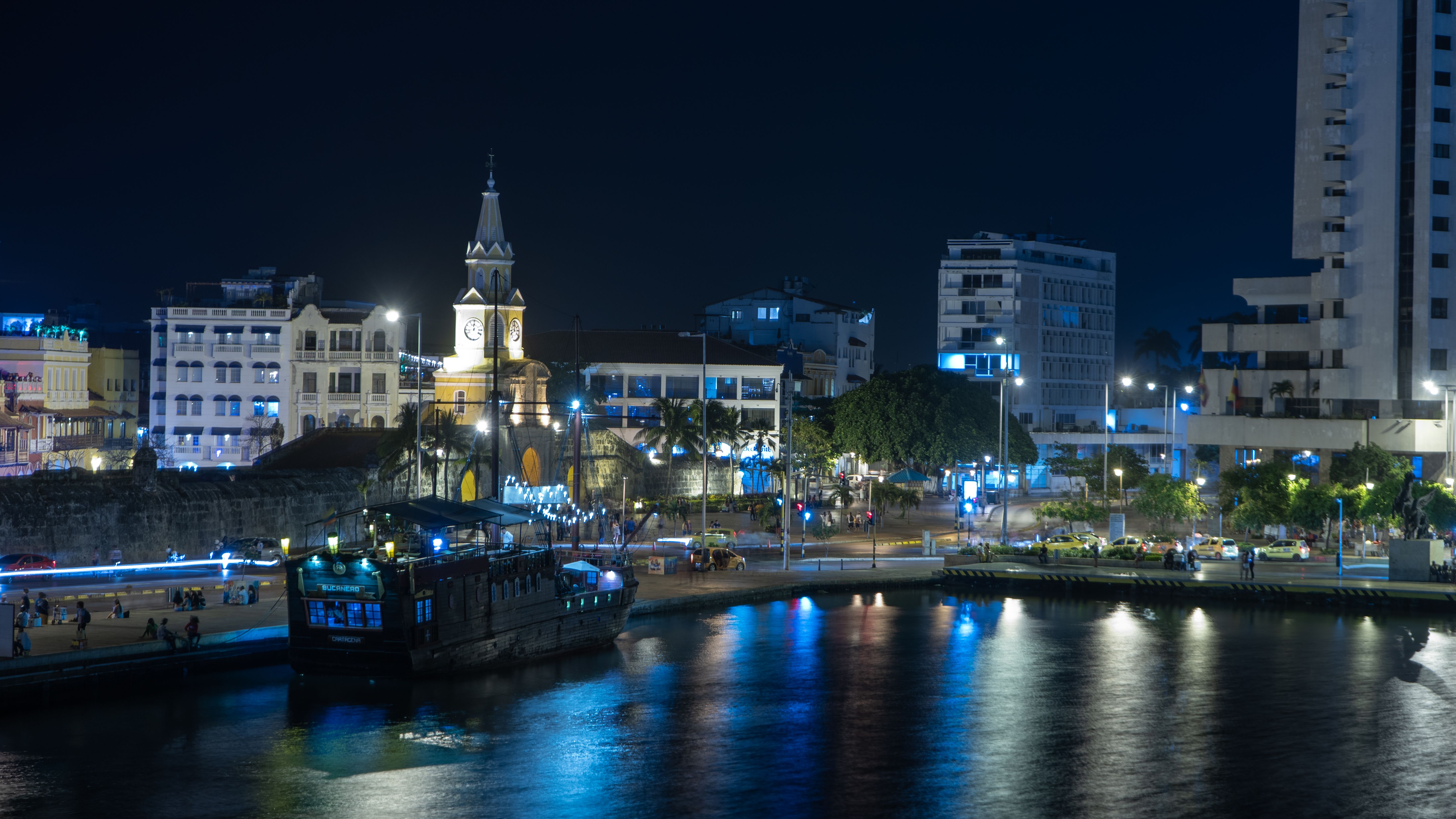
Cartagena — colonial balconies draped in bougainvillea above the cobblestone streets of the walled city

Colombia, South America · Caribbean Walled City

Cartagena

The Casa San Agustín's courtyard at dusk. The Castillo San Felipe above the bay in the afternoon light. The speedboat to the Islas del Rosario at 08:00. García Márquez set his most celebrated novel here and the city has been living up to the description ever since.

No need to read on

Skip ahead — plan your Cartagena escape now.

Tell us your dates and your pace. Personalised suggestions, never confirmed reservations.

Plan My Escape — £19.99

The Case for Going

The most intact Spanish colonial city in the Americas, on the Colombian Caribbean coast, with colonial mansions converted into the most atmospheric boutique hotels in the region.

Cartagena de Indias (the city's full name, distinguishing it from Cartagena in Spain) was founded by the Spanish in 1533 as the principal port of export for the gold and emeralds extracted from the South American interior — the wealthiest city in the New World for two centuries, the object of English privateers (Francis Drake sacked it in 1586; Sir Edward Vernon attacked with a 186-ship fleet in 1741 and was repelled by the 6 ships of Blas de Lezo), and the first South American city to declare independence from Spain in 1811. The 11-kilometre defensive wall that still completely encloses the historic centre was built as a response to these raids, and its completeness — no other Spanish colonial fortification in the Americas retains its full perimeter — led to UNESCO World Heritage inscription in 1984.

Gabriel García Márquez lived in Cartagena, set Love in the Time of Cholera here, and is buried in the cloister of the San Pedro Claver church in the old city. The Nobel laureate's descriptions of the city's heat, its colours, its social stratification, and its extraordinary physical beauty read as journalism rather than fiction to anyone who has walked the Calle de la Universidad at dusk. This is a city that matches its own legend.

The luxury hotel sector has arrived in the last two decades through the conversion of the colonial mansions that line the old city's cobblestone streets — buildings that spent the 20th century as government offices, family homes, and art schools are now some of the most atmospherically original hotel experiences in the Americas. The Casa San Agustín, the Tcherassi, and the Hotel Charlotte are not luxury hotels that happen to be in an old building; they are old buildings that happen to have been turned into excellent hotels.

The Destination at a Glance

Three zones: the old city walls, the Getsemaní neighbourhood outside them, and the Islas del Rosario 45 minutes offshore.

The walled city divides into two sectors: the historic core (El Centro, the most restored and most photographed neighbourhood, containing the largest colonial mansions and the UNESCO-designated streets) and the San Diego barrio (the quieter northern sector of the old city, historically the neighbourhood of middle-class merchants and now the location of the Tcherassi, the Hotel Charlotte, and a quieter restaurant and bar circuit away from the tourist concentration of the Calle del Arsenal). Bocagrande (the beachfront hotel district south of the old city, a 1970s peninsula of high-rises) is the commercial hotel alternative to the old city's colonial boutiques — positioned near the sea but without the architectural character that makes Cartagena distinctive.

Getsemaní (the barrio immediately outside the city walls on the inland side) is the most interesting neighbourhood development in contemporary Cartagena: a historically working-class community that has been gentrifying since 2015, with a street art programme (the most ambitious in Colombia outside Bogotá's Candelaria), new restaurant openings, and a social life centred on the Parque Trinidad that operates without the tourist infrastructure of the walled city. The Getsemaní walk (an evening circuit from the Puerta del Reloj through the barrio to Parque Trinidad and back through the city wall at the Puerta de la Media Luna) is the most useful orientation activity in Cartagena.

Best Time to Visit

When to go.

Dec – Apr

Dry Season

The best weather: northeast trade winds reducing the humidity, calm Caribbean for the Islas del Rosario, and the best reef visibility. Christmas and Easter are peak Colombian holiday weeks — the city is full and rates are highest.

Jun – Aug

Festival Season

The secondary dry season with the Festival Internacional de Música in late June (chamber music in the courtyards and fortresses of the old city). Hotter than December–April but significantly less crowded. July–August is Cartagena's most manageable month.

Our Pick

January

Post-Christmas crowds gone, the Hay Cartagena literary festival in mid-January, and the dry season in full effect: the best combination of weather, cultural programming, and manageable hotel availability.

Where to Stay

Five worth knowing.

01

Casa San Agustín

Old City (Ciudad Amurallada), Cartagena

Thirty-one rooms in three adjoining colonial mansions within the walled city — the most authentically positioned and most atmospherically distinctive luxury hotel in Cartagena. The Casa San Agustín occupies 17th and 18th-century buildings around a central courtyard of bougainvillea, frangipanis, and a frangipani-shaded fountain, with the original stone walls, brick barrel vaults, and wooden colonial ceilings retained throughout. The Alma restaurant (on the ground-floor terrace, opening onto the cobblestone Calle de la Universidad at dusk) and the rooftop pool (with views over the terracotta rooflines to the Caribbean beyond) are the hotel's social anchors; the service team's knowledge of the old city's restaurants, artisan workshops, and private courtyard bars is the most genuinely useful local intelligence available at any Cartagena hotel.

Best for

Couples who want the most atmospherically authentic luxury hotel in Cartagena — the Casa San Agustín's colonial mansions, the old city position, and the rooftop Caribbean view provide the most genuinely Cartagena experience available in a five-star property.

02

Sofitel Legend Santa Clara

Old City, Cartagena

A 17th-century Clarisa convent converted into 162 rooms and suites — the most historically significant and most grandly scaled luxury hotel in Cartagena, the former Convento de Santa Clara (founded 1617) retaining its original chapel (now a dining room), the cloister garden (now a pool courtyard), and the convent cells (now guest rooms with stone walls three feet thick and windows opening onto the inner garden). The Sofitel Legend operation brings a polished international standard to what is genuinely a remarkable building: the chapel ceiling frescoes, the Gothic stone arches above the pool terrace, and the bell tower view over the old city are historical features that no amount of boutique hotel charm can replicate.

Best for

Couples who want the most historically significant building in Cartagena's hotel portfolio — the Santa Clara's 17th-century convent conversion, the original chapel dining room, and the cloistered pool garden make it the most architecturally dramatic hotel in the walled city.

03

Hotel Charlotte Cartagena

Old City, Cartagena

Fourteen rooms in a restored colonial mansion in the San Diego neighbourhood of the old city — the most intimate and most design-focused of Cartagena's boutique luxury options, the property of a Colombian interior design team who spent three years restoring the 18th-century building to an aesthetic that layers contemporary Colombian craft with colonial architecture. The rooftop terrace (Cartagena's most private small-hotel rooftop, above the San Diego quarter's quieter streets) and the central courtyard breakfast (the most unhurried meal in Cartagena's luxury circuit) define the Charlotte's character. Fourteen rooms means a level of personalised attention that the larger convent conversions cannot replicate.

Best for

Couples who want the most intimate and most design-forward colonial mansion experience in Cartagena — the Hotel Charlotte's 14-room scale and the San Diego neighbourhood position (quieter than the Calle del Arsenal party street) make it the most peaceful old city base.

04

Tcherassi Hotel & Spa

Old City, San Diego Quarter, Cartagena

Seven suites in a colonial mansion owned by Colombian fashion designer Silvia Tcherassi — the most curated and the most personality-driven small hotel in Cartagena, with the designer's aesthetic (saturated tropical colour, handwoven Colombian textiles, the use of local craft in a luxury context) applied to every surface of a 17th-century building. The hotel spa (the most complete wellness offering in the old city, with Colombian traditional body treatments using locally harvested plants and clays) and the central courtyard (the most photographed hotel space in Cartagena, with its painted walls and fountain) make the Tcherassi the most visually distinctive property in the city.

Best for

Couples who want the most design-led and most visually distinctive hotel in Cartagena — the Tcherassi's seven-suite scale, the designer's Colombian aesthetic, and the spa programme make it the most fashion-conscious luxury property in the old city.

05

Villas Náyara Cartagena

Islas del Rosario, Caribbean Sea

Private over-water and beach villas on the Islas del Rosario archipelago — a national park of 27 coral islands 45 minutes by speedboat from Cartagena's Muelle de los Pegasos dock. The Islas del Rosario (the clearest Caribbean water within reach of Cartagena, the reef around the islands the most biologically rich marine environment accessible from the city) provide a complete contrast to the urban colonial experience of the walled city: white sand beaches, coral reef snorkelling from the villa dock, and a level of privacy and silence that is impossible within the city walls. The over-water villas (on stilts above the lagoon, accessible by footbridge, with direct water access for snorkelling from the private terrace) are the most complete Caribbean island experience available as a Cartagena extension.

Best for

Couples who want to combine Cartagena's colonial city experience with a private Caribbean island escape — the Villas Náyara's Islas del Rosario position provides the cleanest water and the most complete reef snorkelling within range of a city that is otherwise entirely landlocked behind its 17th-century walls.

Walls, Forts & Islands

What to do.

The walled city at dusk

The old city of Cartagena is most beautiful between 17:30 and 20:00 — the hour when the light turns gold on the ochre and yellow façades, the bougainvillea catches the last sun above the balconies, and the restaurants and bars open their terraces onto the cobblestone streets. The Calle de la Universidad (the most photographed street in the old city, running from the clock tower gate to the Plaza de Santo Domingo), the Calle del Arsenal (the bar street, the most social and the loudest), and the Plaza de Bolívar (the central square with the Bolívar equestrian statue and the Palacio de la Inquisición on its northern edge — the offices of the Spanish Inquisition in Cartagena, now a historical museum with the original instruments of torture on display) constitute the essential dusk circuit.

Castillo San Felipe de Barajas

The most formidable defensive fortification in Spanish colonial America — a volcanic-rock castle built from 1657 by Governor Pedro Zapata de Mendoza above the Cerro de San Lázaro hill overlooking the approaches to the city. The castle's external ramps (designed to force attacking cavalry to expose their flanks to the castle's cannon fire), the internal tunnel network (a system of ventilated passages connecting every defensive position, built to allow rapid troop movement and the rapid evacuation of gunpowder in case of fire), and the parapets above the dry moat provide the most complete experience of 17th-century military architecture available in the Americas. Visit at 06:00 (the castle opens at sunrise) or at 18:00 (the sunset view over the bay is the best in Cartagena) to avoid the midday heat and the tour group schedule.

Islas del Rosario reef

A private speedboat charter from the hotel dock (arrange through the concierge — the public day-trip boats from the Muelle de los Pegasos are overcrowded and visit the most trafficked reef sections) to the outer islands of the Rosario Corals National Natural Park, 45 minutes offshore in the clearest Caribbean water accessible from the Colombian coast. The northern outer islands (Isla del Tesoro and Isla Majagua) have the best-preserved coral and the most reliable sea turtle encounters; the captain will cut the engine at the reef edge and anchor over the coral for a two-hour snorkel session. The return trip can include the Aquarium of Isla San Martín de Pajarales (a controversial but impressive open-water exhibit of the regional marine species including Caribbean nurse sharks and the critically endangered sea turtle populations the park's rangers are monitoring) and lunch on Isla Grande at one of the open-air beach restaurants.

Getsemaní street art

The Getsemaní barrio's street art corridor (concentrated on Calle de la Sierpe, Calle del Guerrero, and the walls around Parque Trinidad) is the most significant outdoor art programme in the Colombian Caribbean — a neighbourhood-driven initiative that began in 2015 as a response to gentrification pressure and has produced an ongoing cycle of large-scale murals commissioned from Colombian and international artists. The murals address Afro-Colombian identity, the neighbourhood's social history, and the contemporary politics of gentrification with a directness and sophistication that distinguishes them from the decorative street art of tourism districts. A guided Getsemaní cultural walk (90 minutes, available through the Casa San Agustín concierge) provides the social and historical context that makes the art comprehensible rather than decorative.

What to Eat and Drink

Caribbean ceviche, arepas de choclo at the market, and Carmen's Colombian-Californian tasting menu.

Cartagena's food scene has been transformed in the decade since the city's international profile rose — Carmen is now one of the most discussed restaurants in South America, and a new generation of Colombian chefs has opened restaurants in the old city that apply precise technique to regional ingredients in a way that the previous generation's tourist-facing restaurants never attempted. The essential dining circuit: Carmen for the tasting menu (reserve two weeks in advance); La Cevichería for lunch (the seafood ceviche and the patacones — fried plantain rounds — that Bourdain ate on-camera and which remain exactly as good as they were then); El Gobernador for sunset cocktails; and the Mercado de Bazurto (the city's wholesale food market, an intensely local experience best approached with a guide) for the morning coffee and the arepas de choclo — grilled corn flatbreads filled with coastal cheese, eaten at wooden benches at 07:00.

The cocktail is the costeño aguardiente sour — the local anise-flavoured spirit (Colombia's national drink, sweeter and lower-proof than Mexican mezcal) in a cocktail form that the old city's rooftop bars have developed into their own distinct genre. The Casa San Agustín's rooftop bar version (with costeño honey and fresh tamarind) is the best single cocktail in Cartagena. Club Colombia (the most widely distributed Colombian lager, cold from a street-side cooler for the 10-minute Getsemaní walk between restaurant and bar) is the correct street-level drink.

The Bespoke Horizons View

The most beautiful city in South America, lived in by real people, and still sufficiently undiscovered to feel like a find.

Cartagena is in the middle of becoming something more polished than it currently is, and the window for experiencing it at its current degree of charm and authenticity is closing. The new restaurant openings, the increasing international flights, and the Hay Festival's profile are all drawing a traveller who has previously overlooked Colombia entirely. The city's combination of extraordinary colonial architecture, an atmospheric Caribbean setting, and a food and cocktail scene of genuine ambition is, at the current moment, available at prices that make it the best-value luxury city break in the Americas.

Our recommendation: four nights in the Casa San Agustín (old city immersion, the Alma restaurant terrace for dinner on the first and last nights), a morning visit to the Castillo San Felipe at 06:00, an afternoon visit to the Getsemaní street art with a guide, a day-trip to the Islas del Rosario by private speedboat, and Carmen for the tasting menu on night three. Arrive via Bogotá and add a night at the Four Seasons Casa Medina (Bogotá's most beautiful hotel, a 1945 colonial mansion in the Zona Rosa) for the city's extraordinary altitude-city context before continuing to the coast.

The bougainvillea on the balcony above your table. The aguardiente sour. The cobblestones in the lantern light at 22:00. García Márquez wrote about love in the time of cholera here. The city hasn't changed his description.

Essential Information

The practical detail.

Currency
Colombian Peso (COP); USD accepted at some hotels; use a card with no foreign transaction fees as COP cash from ATMs is the most efficient transaction method
Language
Spanish; English spoken at luxury hotels and tour operators; limited English elsewhere in the city
Flights from UK
No direct flights; typically via Bogotá (El Dorado International, 10.5 hours from London) then 55-minute connecting flight to Rafael Núñez International Airport (CTG), Cartagena; or via Miami (9 hours) then direct Cartagena connection
Time zone
GMT -5 (COT; Colombia does not observe daylight saving)
Visa
No visa required for UK citizens; tourist card issued on arrival; 90-day maximum stay
Climate
Hot and humid year-round (28–34°C). Two dry seasons: December–April (the principal dry season) and July–August. Rainy season: May–June and September–November — the Caribbean is calmer and the crowds thinner, but afternoon downpours are daily.
Safety
The old city (Ciudad Amurallada) and the Bocagrande hotel district are well-policed and safe for visitors. The areas outside the walls (particularly south of the old city) should be navigated with the same awareness as any Latin American city — take taxis or hotel transport after dark, use hotel-recommended restaurants, and keep valuables out of sight.
Budget range
Casa San Agustín from £350 per room per night; Sofitel Santa Clara from £280; Hotel Charlotte from £300; Tcherassi from £400

Frequently Asked

Questions, considered.

Plan Your Cartagena Escape

Your personalised Cartagena itinerary, in your inbox within minutes.

Casa San Agustín's rooftop pool at sunset, the Castillo at dawn, Carmen's tasting menu reservation strategy, and the private speedboat to the Islas del Rosario — the Cartagena itinerary built for couples who want the city before the crowds find it.

Bespoke Horizons provides personalised travel planning and itinerary suggestions. We are not a booking agent and all recommendations are non-binding.

Ready to plan your Cartagena escape?

Plan My Escape — £19.99