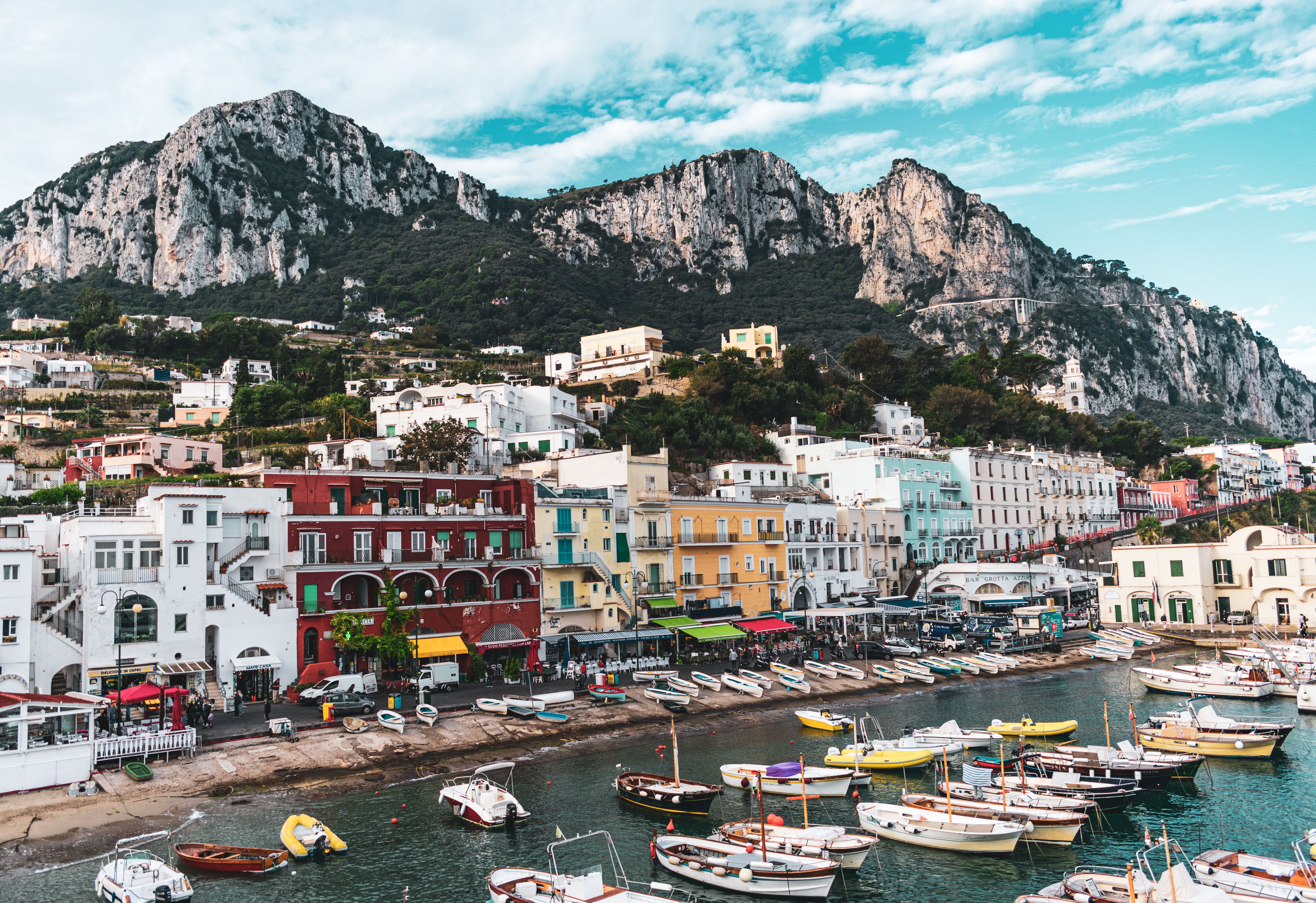
Capri — the Faraglioni sea stacks above the Tyrrhenian

Bay of Naples, Italy · Island Luxury

Capri

The Piazzetta at dusk when the day-trippers have gone. The Blue Grotto on the first boat. The island that still earns its legend.

No need to read on

Skip ahead — plan your Capri escape now.

Tell us your dates and your pace. Personalised suggestions, never confirmed reservations.

Plan My Escape — £19.99

The Case for Going

The island that invented the idea.

Capri invented the Mediterranean luxury island concept. The Roman Emperor Tiberius retired here in AD 27, built twelve villas, and governed the empire from the island's clifftops for eleven years. The German industrialist Krupp had a path carved into the cliff face in 1902 for his morning walks. Gracie Fields lived here for thirty years. Jacqueline Kennedy came for the linen trousers. The island has been receiving the world's most discerning visitors for two thousand years and, in its finest hotel rooms and at its most characteristic evening hour, still justifies every visit.

The challenge is a familiar one: Capri in the middle of an August day is extremely crowded. The ferries from Naples disgorge thousands of day-trippers who climb from the Marina Grande to the Piazzetta, photograph themselves against the bougainvillea, and return to the boats by five. The island they experience is real but incomplete. The island available to someone staying overnight is different: quieter, more itself, with the Piazzetta operating as an actual social stage rather than a photograph backdrop.

For a couple who understands that Capri requires timing — the early ferry, the evening stay, the morning for the Blue Grotto before the queue forms — the island delivers experiences that no amount of familiarity with the photographs has reduced to cliché. The Faraglioni rock stacks at sunset, seen from a pool above them. The Blue Grotto's electric light at eight in the morning. The limoncello that the barman at the Piazzetta café keeps in the freezer for guests who know to ask for it that way.

The Destination at a Glance

Ten square kilometres of limestone above the Bay of Naples — and two thousand years of people trying to describe it.

Capri covers 10 square kilometres of limestone and dolomite at the southern entrance to the Bay of Naples, 5 kilometres south of the Sorrento Peninsula. The island rises to 589 metres at Monte Solaro — accessible by chairlift from Anacapri — with cliffs dropping to the sea on most sides. No private cars are permitted on the island for visitors; movement is by foot, open-air taxi, funicular, and private boat.

There are two main settlements: Capri Town (at 145 metres, reached by funicular from the Marina Grande) and Anacapri (at 275 metres, reached by bus or on foot from the ferry landing). The Piazzetta — officially the Piazza Umberto I — is the social heart of Capri Town: a small square of four cafés and a church clocktower where the island's daily social performance takes place under the eyes of everyone else.

Capri is most easily reached from Naples (50 minutes by fast ferry from the Molo Beverello), Sorrento (20 minutes), or Positano (40 minutes). A private boat from Positano or Amalfi, arriving at the Marina Piccola rather than the main ferry terminal, provides the most theatrical arrival on the island.

Best Time to Visit

When to go.

May – Jun

Preferred Window

The island in full flower — wisteria, bougainvillea, jasmine. Warm enough to swim from late May. The day-tripper numbers below their summer peak. The gardens of Augustus open and empty by seven in the morning.

Sep – Oct

Post-Season

October on Capri — warm, golden, and largely yours. The summer crowds depart by mid-September; the ferries continue through October; the hotels at their most attentive. The Blue Grotto visits in October can be arranged virtually without waiting.

Jul – Aug

Peak Season

Maximum crowds, maximum prices — and still magnificent for those who plan correctly. Stay overnight, arrive at the Blue Grotto before nine, and plan afternoons around a private boat. Book twelve months ahead.

Where to Stay

Five worth knowing.

01

Capri Palace Jumeirah

Anacapri

The island's finest hotel and one of Italy's most celebrated addresses: a villa complex in Anacapri with white cubic rooms, the island's best spa (L'Olivo, the only Michelin two-starred restaurant on Capri, is here), and a pool of the right temperature and a view of the Tyrrhenian that no terrace in Capri Town equals. Adults-preferred in atmosphere and policy.

Best for

Couples for whom the Michelin restaurant and the finest spa on the island are the primary reasons to come — Capri's definitive luxury hotel.

02

J.K. Place Capri

Marina Grande hillside

Twenty-two rooms in a converted late 19th-century villa on the hillside above Marina Grande. Intimate, residential in feel, with a rooftop terrace that offers one of the island's best views across the bay to the mainland. The design is by Michele Bönan — contemporary within period architecture. The pool is small; the service is the most attentive on the island.

Best for

Couples who want a private-house atmosphere, outstanding service, and the contemporary design that most Capri hotels don't offer.

03

Grand Hotel Quisisana

Capri Town, Via Camerelle

The grande dame of Capri — operating as a hotel since 1845, positioned on the Via Camerelle in the heart of Capri Town, with terraced gardens, two pools, and 150 rooms covering every category from classic to suite. The terrace restaurant in the evening, when the island quietens after the day-trippers leave, is the island's most social setting for a long Italian dinner.

Best for

Couples who want the full weight of Capri's hotel history, a central location for walking to the Piazzetta and the Marina Piccola, and the island's most iconic address.

04

Villa Brunella

Via Tragara, Capri Town

Twenty rooms on the hillside above the Via Tragara cliff walk, with terraces looking south towards the Faraglioni rock stacks. A family-run hotel of genuine warmth rather than corporate polish. The restaurant — one of Capri's best for fish — is reason enough to stay. Small, characterful, and significantly better value than its competitors for the view it delivers.

Best for

Couples seeking the Faraglioni view from a room terrace, with a genuinely good restaurant below and a family atmosphere that distinguishes it from the luxury competition.

05

Punta Tragara

Via Tragara, cliff above the Faraglioni

Le Corbusier designed the original villa; it became a hotel in 1973. Forty-four rooms, two pools positioned above the Faraglioni sea stacks, and a setting — the end of the Via Tragara cliff path, above the most photographed view in Capri — that no other hotel on the island can replicate. The Michelin-starred restaurant Monzù is the island's second-best dining address after L'Olivo.

Best for

Couples who want the Faraglioni sea stacks directly below their pool and terrace — the most dramatic hotel position on the island.

Island Hours

What to do.

The Blue Grotto

The Grotta Azzurra on the north-western coast is a sea cave where light enters through a submerged opening and illuminates the interior walls in an extraordinary electric blue. The effect is genuinely remarkable — one of nature's finest optical phenomena, available within forty minutes of the ferry terminal. The condition is timing: go on the first boat of the morning, before the queue forms, and the experience is unhurried and unforgettable. The boatman's song echoing off the cave walls is provided whether you want it or not.

Via Krupp and the Gardens of Augustus

The Gardens of Augustus above the Via Krupp provide the island's finest free view: the Faraglioni rock stacks below, the Marina Piccola, the cliff path descending in tight switchbacks to the sea. Walk down the Via Krupp itself (subject to occasional rockfall closures) to the Marina Piccola, hire a small boat, and circumnavigate the island to see the cliffs from below. Return to the Marina Grande by water rather than by the ascending path.

Monte Solaro by chairlift

The chairlift from Anacapri to the summit of Monte Solaro (589 metres) takes twelve minutes each way, ascending through terraced gardens and pine woods to a summit with a view across the Tyrrhenian that includes Vesuvius, the Amalfi Coast, and on clear days the outline of Sicily. The single-seat chairs provide an unobstructed view in both directions. Go in the morning before the cloud builds. Have a coffee at the summit bar and descend at leisure.

The Piazzetta at dusk

The Piazza Umberto I — four cafés, one church, twenty tables, and the entire social apparatus of an island — transforms at six in the evening when the last day ferries leave and the remaining guests take the tables. Order something expensive, watch the island's daily social performance, and stay through dinner. The correct table is the one with a clear view of the clocktower; book ahead at Caffè Tiberio or the Grand Café.

What to Eat and Drink

Tomatoes, lemon, and the original insalata Caprese.

Capri's food credentials begin with the insalata Caprese — the combination of local tomatoes, fresh buffalo mozzarella, basil, and olive oil that was reportedly invented on the island in the 1920s. At its best (which means: made with tomatoes grown in the island's volcanic soil, the mozzarella from the morning's delivery, and oil from the surrounding groves), it is among the best things Italy serves. At its worst — the version in cellophane at the ferry terminal — it is a cliché. Order it only at a restaurant that makes it correctly, which is most of the serious ones.

For dining: L'Olivo at the Capri Palace Jumeirah holds two Michelin stars — Andrew Zangerl's cooking (Austrian-trained, Mediterranean in ingredient) is the finest on the island by a significant margin. Monzù at Punta Tragara holds one star. For something more informal and equally good: Da Paolino in the lemon grove below Capri Town, where the tables are set under actual lemon trees and the ravioli alla Caprese (stuffed with caciotta cheese, marjoram, and lemon) arrives as it has for fifty years.

The limoncello: made from the island's sfusato amalfitano lemons, ice-cold from the freezer, served in a small frozen glass. The version at the Quisisana's bar is among the island's best. The local white wine — Capri DOC, made from Falanghina and Greco grapes — is clean, mineral, and the correct accompaniment to the fish of the day.
The Bespoke Horizons View

Two thousand years of visitors, still a reasonable amount of room at the right hour.

Capri suffers from the same problem as Positano and Dubrovnik — a reputation so large that the experience of arriving without preparation is often disappointing. The island in the middle of an August afternoon, crammed with day-trippers from Naples, is genuinely challenging. The same island at seven in the morning, when the water is flat and the Blue Grotto's first boats are setting out, is the most beautiful thing in the Bay of Naples.

The week we build here is built around that distinction: the early ferry or the overnight stay, the morning for the Grotto, the afternoon for the Via Krupp, the evening for the Piazzetta when it belongs to the residents and the guests and no one else. The Capri that earns its reputation is available — it is simply not available at noon on a Saturday in July.

Tiberius built twelve villas here and governed an empire. He was not wrong about the location.

Essential Information

The practical detail.

Currency
Euro (€); cards widely accepted
Language
Italian; English spoken in all hotels and tourist areas
Flights from UK
2.5 hours to Naples; 50-minute ferry to Capri from Naples or Sorrento
Time zone
GMT +1 (summer: GMT +2)
Visa
No visa required for UK/EU citizens
Getting around
No cars permitted for tourists — walks, taxis, and funicular only
Tipping
Coperto (cover charge) included; rounding up appreciated
Budget range
£500–£3,000+ per person per night at the island's finest hotels

Frequently Asked

Questions, considered.

Plan Your Capri Escape

Your personalised Capri itinerary, in your inbox within minutes.

The right hotel above the Faraglioni, the Blue Grotto before the queue, L'Olivo for the evening that merits it, and the Piazzetta at the right hour — Capri as it has been enjoyed for two thousand years by those who understood how to arrive.

Bespoke Horizons provides personalised travel planning and itinerary suggestions. We are not a booking agent and all recommendations are non-binding.

Ready to plan your Capri escape?

Plan My Escape — £19.99