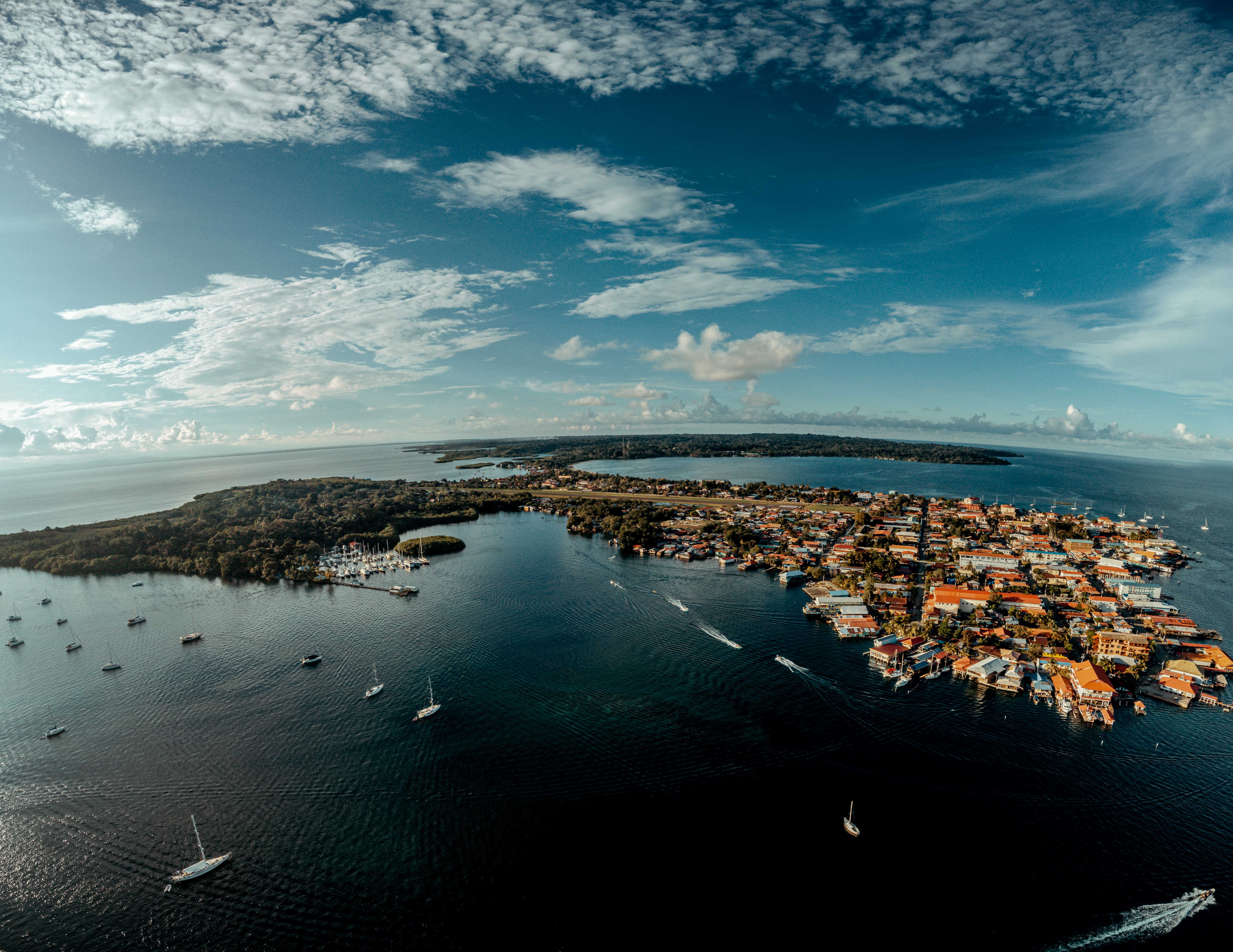
Belize — the turquoise Caribbean above the Mesoamerican Barrier Reef

Central America · Barrier Reef & Maya Heartland

Belize

The Blancaneaux's river veranda in Francis Ford Coppola's Highland jungle. The Crystal Maiden's glittering bones in the ATM cave. The Great Blue Hole from the dive boat at dawn. The only Central American country where English is the first language. Small, specific, and entirely itself.

No need to read on

Skip ahead — plan your Belize escape now.

Tell us your dates and your pace. Personalised suggestions, never confirmed reservations.

Plan My Escape — £19.99

The Case for Going

The only country in Central America with a British colonial heritage, an intact Maya heartland, and the world's second-largest barrier reef within its waters.

Belize is a country that most of its nearest neighbours don't quite know what to do with: the only English-speaking nation in Central America (a British colony until 1981), sharing the Yucatán Peninsula with Mexico and Guatemala, facing the Caribbean on its 240-mile coastline, and containing the Mesoamerican Barrier Reef — the most biologically diverse reef system in the Western Hemisphere — entirely within its territorial waters. It is, by the standards of its region, a small country; its population of 400,000 is smaller than many Caribbean islands, and its tourist infrastructure, while growing, remains significantly less developed than Costa Rica or Mexico's Pacific coast.

These qualities are precisely what make it compelling for the traveller who has exhausted the more polished destinations. The ATM cave — accessible only with a licensed guide, involving wading through an underground river, and arriving at a chamber where 1,100-year-old Maya skeletal remains lie exactly as they were placed — is the most affecting and least sanitised archaeological experience in the Americas. The Caracol Mayan site (larger in area than present-day Belize City, the most complete Maya city in Belize, still largely unexcavated) is reached by a four-wheel-drive track through 45 miles of forest that eliminates the casual visitor.

And Coppola's lodges. Francis Ford Coppola discovered Belize in 1981, bought a rainforest property in the Mountain Pine Ridge, and spent the next two decades developing it into what became the Blancaneaux Lodge — a place that feels like the retreat of an extremely interesting person who happens to have left the house unlocked. The Turtle Inn on the Placencia Peninsula followed. Both are staffed by Belizeans who have worked the properties for decades and understand hospitality as personalised care rather than scripted service.

The Destination at a Glance

A country of two zones: the jungle interior (the Maya Heartland, the Cayo District, the forest reserves) and the Caribbean coast (the barrier reef, the cayes, the Blue Hole).

The Cayo District in western Belize (the interior region bordering Guatemala) is the Maya Heartland: a landscape of rainforest, river valleys, and limestone cave systems that was the agricultural and ceremonial core of the Classic Maya civilisation between 250 and 900 CE. The Mountain Pine Ridge Forest Reserve (an unusual highland ecosystem of pine forests and granite outcroppings within the tropical zone, home to the Rio Frio caves and the Thousand Foot Falls — the highest waterfall in Central America) and the Vaca Forest Reserve (the location of Caracol) are the Cayo's principal protected areas.

The Caribbean coast is the reef and island zone: Ambergris Caye (the most developed and most visited of Belize's 200+ islands, home to the diving and snorkelling infrastructure closest to the northern reef) and the Placencia Peninsula (a thin strip of land on the southern coast, the most relaxed and most resort-focused coastal area in Belize) are the two primary bases. Between them: Caye Caulker (the most popular backpacker island, increasingly developing luxury options), Turneffe Atoll (the most complete atoll ecosystem in Belize, accessible from Ambergris or Belize City for serious divers), and the Lighthouse Reef Atoll (location of the Blue Hole).

Best Time to Visit

When to go.

Nov – Apr

Dry Season

The definitive season: the best reef visibility (30+ metres on the outer atolls), the lowest humidity, and the northeast trade winds keeping the coast comfortable. Christmas and Easter peak hard — book El Secreto and Turtle Inn 6+ months in advance.

May – Jun

Early Wet

The jungle at its most green, dramatic afternoon rain showers that clear quickly, significantly reduced rates and availability, and whale shark aggregations at the Gladden Spit Marine Reserve (April–June, the most concentrated whale shark encounter in the Western Hemisphere).

Our Pick

February

The dry season's sweet spot: peak clarity on the reef, the jungle interior comfortably warm without the pre-wet-season heat, and before the Easter demand spike. February's calm northeast trade winds provide the best Blue Hole conditions of the year.

Where to Stay

Five worth knowing.

01

Blancaneaux Lodge

Mountain Pine Ridge, Cayo District

Francis Ford Coppola's private highland jungle lodge — the director's own property since 1981, opened to guests in 1993, set above a tumbling river in the Mountain Pine Ridge Forest Reserve of western Belize at 1,100 feet elevation. The Blancaneaux was Coppola's personal hideaway for two decades before becoming a hotel; the sense of privileged access to a private world has never been designed out. Fifteen villas and cabanas (each with a private plunge pool or veranda above the river) in a forest clearing, the on-site hydroelectric plant (the lodge is entirely self-powered), the orchid greenhouse, and the wine cellar (Coppola's own Rubicon Estate wines from Napa are a house specialty) make the Blancaneaux the most personality-rich lodge in Belize. The Caracol Mayan ruins (the most extensive Maya site in Belize, a 3-hour drive from Belmopan but 45 minutes from the lodge) and the Actun Tunichil Muknal cave system (the most significant Maya cave burial site in the Americas, accessible only with a licensed guide) are the Blancaneaux's nearest archaeological attractions.

Best for

Couples who want the most characterful and personality-rich jungle lodge in Belize — the Blancaneaux's Coppola provenance, the highland rainforest setting, and the access to Caracol and ATM cave make it the most distinctive land-based Belize experience.

02

Turtle Inn

Placencia Peninsula, southern Belize

A second Coppola property, this one on the palm-fringed Placencia Peninsula on the Caribbean coast — the most indulgent beach resort in Belize, rebuilt by Coppola after Hurricane Iris destroyed the original property in 2001. The 21 private cottages (in Balinese and Belizean architectural styles, each with an outdoor shower, private plunge pool or garden, and a terrace above the beach) and the three restaurants (including an excellent Italian kitchen using Coppola's own olive oil and tomatoes imported from his Californian farm) create a coastal retreat that functions independently of the Great Barrier Reef access but is best combined with a morning boat to the reef's more southerly atolls.

Best for

Couples who want the most luxurious beach retreat in Belize — the Turtle Inn's Placencia location, the private cottage architecture, and the Coppola food programme are the most complete coastal Belize experience, positioned at the southern end of the barrier reef.

03

Copal Tree Lodge

Punta Gorda, southern Toledo District

A working cacao farm converted into a lodge in the deep south of Belize — the most immersive agri-tourism luxury property in the country, a National Geographic Unique Lodge set on 1,200 acres of rainforest and cacao plantation in the Toledo District, the most culturally intact and least visited region of Belize. The 24 rooms and a treehouse (the Canopy Suite, positioned in the rainforest canopy above the lodge, the most dramatic accommodation option in Belize) are built around the farm's working chocolate production operation — guests participate in the harvest, fermentation, and drying of the cacao beans that supply the lodge's own craft chocolate bar. The Toledo District's Kek'chi and Mopan Maya villages (accessible by traditional dugout canoe on the Rio Grande) and the Temash-Sarstoon National Park (one of the least visited protected areas in Central America) are the lodge's nearest cultural and ecological attractions.

Best for

Couples who want the most immersive and most remote luxury lodge experience in Belize — the Copal Tree's working cacao farm, the Toledo District's cultural depth, and the canopy treehouse make it the most distinct and least commercially polished Belize property.

04

Chaa Creek

Macal River Valley, Cayo District

A 365-acre private nature reserve on the banks of the Macal River in the Cayo District of western Belize — the most established and most comprehensively programme-driven lodge in the country, open since 1981 as one of Central America's original eco-lodges. The 23 cottages (built in Belizean colonial style with thatched roofs and mahogany interiors) and the Natural History Museum on the property (the most complete Maya artefact collection in private ownership in Belize) make Chaa Creek the most educationally rich lodge in the country. The Macal River kayaking programme, the butterfly farm, the lodge's Belize indigenous medicinal plant trail, and the guided Caracol day-trip operation (the most professionally run in the region) are the activity pillars.

Best for

Couples who want the most comprehensively curated eco-lodge experience in Belize — the Chaa Creek's 40-year history, the private natural history museum, and the breadth of its guided activity programme make it the most complete single-property Belize experience.

05

El Secreto

Ambergris Caye

Fourteen over-water and beachfront suites on Ambergris Caye — the most northerly and most visited of Belize's Caribbean islands, positioned directly on the Mesoamerican Barrier Reef (the second longest barrier reef in the world, after Australia's Great Barrier Reef). El Secreto is the most exclusive property on Ambergris Caye: 14 suites maximum occupancy, a no-children policy, and direct over-water access to the reef for snorkelling from the private dock. The Blue Hole (the famous underwater sinkhole 60 miles offshore, 300 metres in diameter and 125 metres deep, declared a World Heritage Site by UNESCO in 1996) is accessible by day-trip charter from the resort's dock — a 90-minute boat ride to the site that is the most dramatic single dive destination in the Caribbean.

Best for

Couples who want the most exclusive adults-only reef access property in Belize — the El Secreto's 14-suite maximum occupancy, the over-water architecture, and the direct Blue Hole charter access make it the premier barrier reef luxury base in the country.

Cave, Reef & Jungle

What to do.

Actun Tunichil Muknal

The ATM cave — the most extraordinary and least sanitised archaeological experience in the Americas. A licensed guide (mandatory, only available through accredited operators) leads a group of a maximum ten visitors through 45 minutes of forest walking, wading knee-deep through an underground river, swimming through a carved stone passage (the mouth of the cave, the entrance point that the Maya used for 1,000 years), and climbing barefoot over stalagmite formations to reach the inner chambers where the skeletal remains of Maya sacrificial victims — including the Crystal Maiden — rest exactly as they were placed between 700 and 900 CE. The Maya considered caves the entrance to Xibalba, the underworld; the objects deposited here (incense burners, ceramic vessels, jade ornaments) were ritual offerings at the point of greatest spiritual significance in the Maya world. No photography is permitted (cameras have been banned since 2012 after a tourist dropped one on a skull). This is the experience that defines the Belize jungle interior.

Great Blue Hole day-trip

A charter boat from Ambergris Caye or Belize City at 05:30 for the 90-minute crossing to the Lighthouse Reef Atoll — the outer atoll of the Belize barrier reef system, 60 miles offshore. The Blue Hole itself (300 metres in diameter, 125 metres deep, the largest underwater sinkhole in the world) offers diving to 40 metres through an overhang of stalactites to the cave entrance, where nurse sharks rest in the darkness and the water column below extends to a geological mystery. The most affecting aspect is not the marine life (the deep water is food-poor by reef standards) but the dive profile: dropping from turquoise reef into absolute darkness, the cave walls closing in, the stalactites overhead proving the pre-Ice Age land surface. After the Blue Hole, the day-charter typically visits Half Moon Caye (a seabird nesting reserve, home to the red-footed booby colony) and Long Caye Wall — wall diving on the outer atoll face where visibility regularly exceeds 50 metres.

Caracol Maya site

The largest Maya city in Belize — a site of 88 square miles containing approximately 36,000 structures, at its Classic Period peak home to an estimated 150,000 people, and still only 20% excavated. The central acropolis (Caana — Sky Palace — at 43 metres the tallest structure in Belize and still the tallest man-made structure in the country) rises above the jungle canopy in the south of the Vaca Forest Reserve, accessible by 45 miles of unpaved road from San Ignacio (four-wheel drive essential; guided tours from the Blancaneaux Lodge reduce the transfer logistics considerably). The comparative scale of Caracol to Tikal (the Guatemalan rival that Caracol defeated in battle in 562 CE, a victory recorded on Caracol's Altar 21 stele) and to all other Belizean Maya sites makes it the essential Maya history site in the country.

Whale sharks at Gladden Spit

The Gladden Spit Marine Reserve (off the southern Belize coast, accessible from Placencia in 45 minutes by fast boat) hosts the most reliably predictable whale shark aggregation in the Western Hemisphere between April and June each year. The whale sharks (the world's largest fish, reaching 12 metres in length, entirely harmless filter feeders) gather at the Gladden Spit drop-off on the three-day period around each full moon to feed on the spawning aggregations of cubera snapper, dog snapper, and mutton snapper — a feeding event that concentrates dozens of whale sharks at the surface in conditions suitable for snorkelling alongside them. The aggregation is time-limited and location-specific (within a 50-metre radius of the snapper spawn site) and represents one of the most remarkable wildlife encounters in the Caribbean. Placencia-based operators manage the access carefully to avoid disturbing the aggregation.

What to Eat and Drink

Belizean stew chicken, the reef's freshest lobster, and the Coppola kitchen's Italian produce flown from Napa.

Belizean cuisine is a creolised kitchen — the food heritage of British colonialism, Garifuna fishing communities, Maya agricultural traditions, and the Mennonite farming families of the Cayo District who supply much of the country's dairy and vegetables — expressed primarily through the most direct and unfussy cooking in the Caribbean. The national dish (stew chicken and rice and beans — coconut-milk rice cooked with red kidney beans, stewed chicken on the bone with recado paste, and a side of plantain) is served at every local restaurant at a price point that embarrasses the luxury lodge cuisine it operates alongside.

The reef supplies the best seafood in Central America: Belizean spiny lobster (harvested only during the open season, June 15 to February 14, the closest approximation to sustainable Caribbean lobster fishing available) is grilled at the Turtle Inn's beachfront restaurant in a manner that respects the product rather than obscuring it. The Garifuna community of the southern coast (particularly around Dangriga and Hopkins) produces the most culturally distinct cooking in the country: hudut (mashed plantain in coconut fish stew), sere (fish soup with coconut milk and cassava dumplings), and cassava bread (the starchy flatbread baked on clay griddles that sustained the Garifuna's Atlantic crossing from St. Vincent in 1797) are the most significant food experiences unavailable at the lodge restaurants.

The Bespoke Horizons View

The Caribbean destination that hasn't been finished yet — and that's the point.

Belize is a country where the infrastructure frequently fails to match the quality of the experiences — roads wash out, transfers take longer than expected, and the domestic flight schedule operates on a frequency that assumes you have time to wait. These are features, not bugs, for the traveller who has come to see something unfinished and uncrowded: the ATM cave's skeletal remains would be behind glass in a visitor centre if this were Mexico; the Caracol site would have a car park and a gift shop if Guatemala were marketing it.

The correct Belize itinerary: fly via Miami to Belize City, transfer immediately to a domestic flight or lodge vehicle (do not spend time in Belize City), three nights at Blancaneaux for the ATM cave and Caracol, transfer to Placencia for the Turtle Inn and the reef (four nights), day-trip to the Blue Hole or Gladden Spit whale sharks depending on the season, and a final night at El Secreto for the Ambergris snorkelling before the Houston or Miami connection.

The Crystal Maiden's bones glitter in your torchlight in the cave. You wade back through the underground river in silence. Nobody has cleaned it up. Nobody has charged extra for the experience. Belize keeps its best things exactly as it found them.

Essential Information

The practical detail.

Currency
Belize Dollar (BZD); US Dollar universally accepted at a 2:1 fixed rate; all luxury hotel prices quoted in USD
Language
English (official, the only Central American country where English is the primary language); Kriol, Spanish, and Garifuna also spoken
Flights from UK
No direct flights; typically via Miami (8.5 hours) or Houston (9.5 hours) then 2-hour connecting flight to Philip Goldson International Airport (BZE), Belize City; total journey 14–16 hours
Time zone
GMT -6 (CST; Belize does not observe daylight saving)
Visa
No visa required for UK citizens; tourist card issued on arrival; 30-day initial stay, extendable
Climate
Tropical: warm year-round (26–32°C). Dry season: November–April (the best diving visibility on the reef). Wet season: May–October (lush jungle, lower prices, hurricane risk July–October). The Cayo District (western jungle) is drier than the coast.
Getting around
Domestic prop-plane flights from Belize City (Municipal and Philip Goldson airports) to Placencia, San Pedro (Ambergris Caye), and Dangriga are the recommended inter-regional transport — road infrastructure is poor and distances deceptively long on single-lane highways
Budget range
Blancaneaux Lodge from £500 per villa per night; Turtle Inn from £350; Copal Tree Lodge from £400 including meals; El Secreto from £600

Frequently Asked

Questions, considered.

Plan Your Belize Escape

Your personalised Belize itinerary, in your inbox within minutes.

The ATM cave permit, Blancaneaux's river villa, the Blue Hole charter timing, and the Turtle Inn's lobster season — the Belize itinerary that connects the jungle interior and the barrier reef without losing a day to logistics.

Bespoke Horizons provides personalised travel planning and itinerary suggestions. We are not a booking agent and all recommendations are non-binding.

Ready to plan your Belize escape?

Plan My Escape — £19.99